Nepal’s Glacier-Born Flood Leaves Hundreds Dead as Rescue Operations Grind On
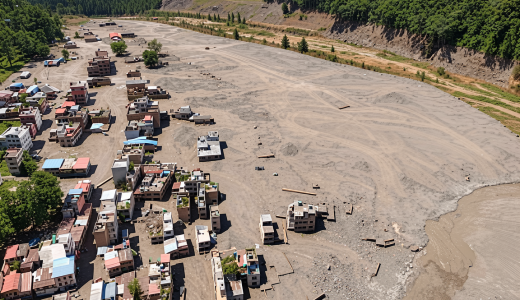
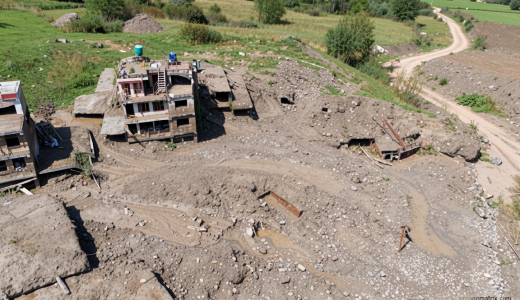
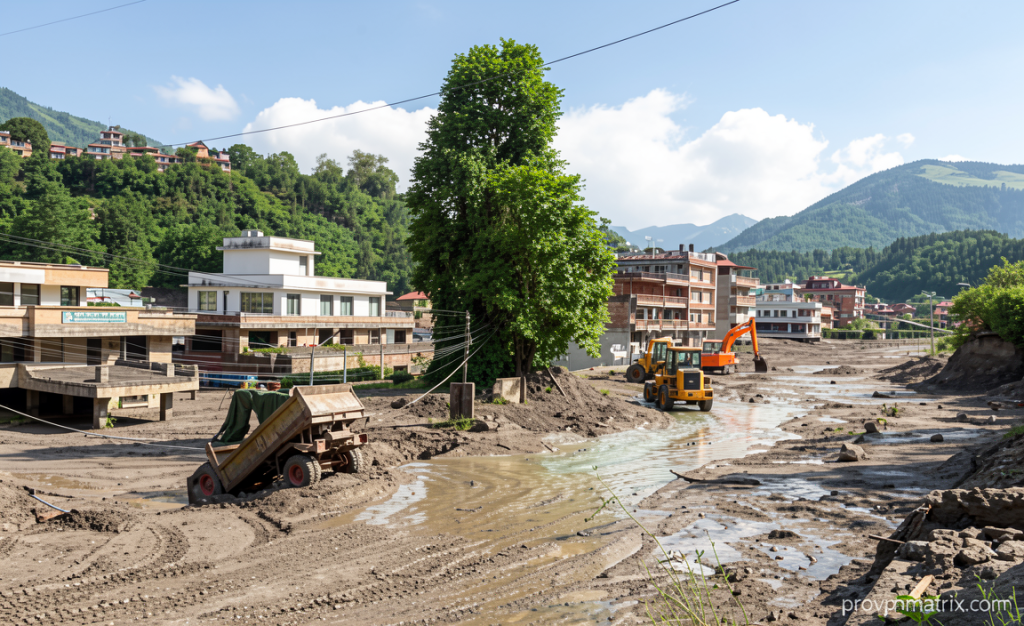
Provpnmatrix.com – More than half a thousand bodies have been pulled from the wreckage along the Nepal–Tibet border corridor, underscoring what officials now call an “immense” catastrophe born from a single geological failure. The disaster, triggered by the collapse of a high-altitude glacier and the landslide it unleashed, swept through entire settlements and obliterated critical infrastructure — bridges, highways, and power lines — in a matter of hours. Authorities in Kathmandu confirmed on Friday that 538 fatalities have been verified, while nearly 3,750 survivors have been extracted from the debris fields. Roughly 1,000 individuals remain unaccounted for, a figure that includes a significant number of foreign tourists who were in the region at the time.
The Chinese side of the border has not escaped unscathed. Officials in the Tibet autonomous region reported that approximately 560 residents are still missing in areas adjacent to the Nepalese disaster zone, extending the humanitarian crisis across two national jurisdictions.
On the Ground: A Rescue Effort That Will Not Pause
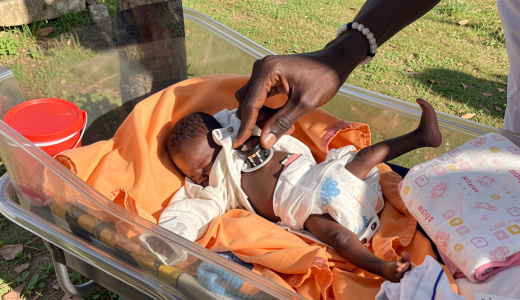
Lila Pieters Yahia, the UN Resident Coordinator in Nepal, traveled to the hardest-hit sectors and described a scene of ongoing, desperate extraction work. She recounted walking through a severely damaged site when a full truckload of survivors — an entire family pulled from the rubble — was brought past her.
“We witnessed people had just been rescued as we were walking and visiting the site, one of the sites which has been severely damaged. We saw a whole truck full of people, an entire family had just been rescued and I can tell you it was very, very emotional.”
Her field visit was abruptly terminated when a renewed flood alert was issued, a reminder that the hydrological threat has not fully dissipated. Aid convoys and search teams have been operating on a continuous, around-the-clock schedule to reach isolated communities in the Nepalese districts of Rasuwa, Nuwakot, and Dhading, where roads and bridges that once linked villages to the outside world have been reduced to rubble.
UN Relief Package and Technical Support
The United Nations is channeling emergency supplies into the affected districts: food rations, medical kits calibrated to serve approximately 10,000 people over a three-month period, shelter tents, and logistical assistance for distribution. In parallel, satellite imagery and geospatial analysis of the flood-affected terrain are being generated to guide rescue routing and damage assessment in areas where ground access remains impossible.
Disease Risk and the Education Crisis
The World Health Organization issued an early warning about the elevated probability of infectious-disease outbreaks in the aftermath. Displacement, overcrowding in temporary shelters, and the likely disruption of water, sanitation, and primary-health services create conditions ripe for epidemics, spokesperson Tarik Jašarević cautioned from Geneva.
“As always, when we have disaster of this scale and we have displacement, overcrowding, and we may have disruption of water, sanitation and health services, and that can increase the risk of infectious diseases.”
UNICEF spokesperson Ricardo Pires highlighted the toll on schooling. Eighteen schools have been completely destroyed and another twenty sustain structural damage, while dozens more sit within meters of swollen riverbanks and face continued risk. An estimated 10,000 school-aged children in the affected districts now require targeted support to keep their education from being severed entirely.
A Region Already Scarred by Cascading Hazards
The geography that produced this disaster is one that has repeatedly tested Nepal’s resilience. In April 2015, a magnitude-7.8 earthquake struck the same mountainous corridor, killing more than 8,800 people and reshaping the landscape for years. Last October, torrential monsoon rains drove fast-moving floods and landslides through eastern and central Nepal, displacing over 30,000 residents. Each event compounded the vulnerability left by the last, eroding infrastructure and thinning the institutional capacity needed for rapid response.
UNDRR: “The Disaster Is Not Yet Completely Over”
Kamal Kishore, head of the UN Office for Disaster Risk Reduction, framed the current event as historically rare in its scale and complexity.
“In living memory, we haven’t seen a mountain hazard event like this for a very, very long time. The impact on lives, livelihoods, buildings, infrastructure, bridges, hydroelectric projects, power generation, it’s really immense. And I think we are still coming to grips with the extent of the damage.”
He stressed that the situation carries “extremely high risk as well as a lot of uncertainty,” and that the emergency response faces a unique challenge because, in his words, “the disaster is not yet completely over.” The cascading nature of the hazards — glacier melt feeding flash floods, which in turn trigger secondary landslides — makes early-warning design in mountain environments exceptionally difficult, he noted, and the event has “again highlighted how fragile mountain ecosystems are.”
IFRC Flags Secondary-Flood Danger
The International Federation of Red Cross and Red Crescent Societies, operating alongside UN agencies in the field, expressed deep alarm over the prospect of a secondary flood wave. The organization estimates that at least 93,000 people have been affected and are “in great need” of shelter, clean water, food, and medical care. With monsoon-season rainfall still possible and river channels already choked with debris, the window for pre-emptive evacuation and preparedness is narrowing, making the coming weeks critical for both rescue completion and longer-term recovery planning.
Related Reading
Frequently Asked Questions
What is Immense impact of Nepal flood disaster?
Immense impact of Nepal flood disaster is the main topic of this guide. The article explains the context, practical details, and next steps readers should understand.
Why does Immense impact of Nepal flood disaster matter?
Immense impact of Nepal flood disaster matters because readers are looking for a useful answer, not just a short summary. Good content should match search intent and help them decide what to do next.