
Ayatollah Khamenei’s iron grip on power in Iran
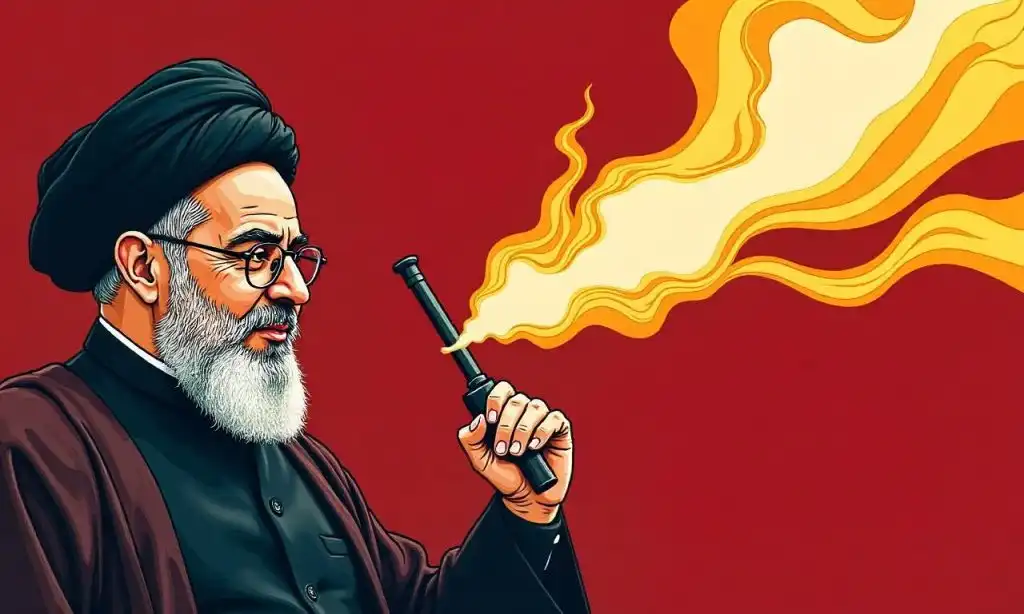
Ayatollah Khamenei’s Iron Grip on Power in Iran
On the opening day of a significant US and Israeli aerial campaign, Ayatollah Ali Khamenei was declared dead by US President Donald Trump. However, Iran has not yet officially verified the claim of the 86-year-old leader, whose tenure as supreme leader has spanned over three decades—one of the longest in global history. Since the 1979 Islamic Revolution, the nation has seen only two supreme leaders, underscoring the central role of this position in Iranian governance.
The Supreme Leader’s Influence
The supreme leader holds dual authority as both head of state and commander of the military, including the elite Revolutionary Guards. While not a dictator, Khamenei wields immense power, capable of blocking major policies and selecting candidates for key political roles. His presence has shaped the lives of younger Iranians, who have never known a time without his leadership. State media consistently highlights his image, plastering billboards and shop displays with his likeness. Domestically, he remains the driving force behind Iran’s political direction, despite the limelight often given to successive presidents abroad.
Early Life and Rise to Power
Ali Khamenei was born in 1939 in Mashhad, northeastern Iran, as the second of eight children in a devout Shia family. His father, a mid-level cleric, instilled religious values early, and Khamenei’s formative years were marked by a “poor but pious” upbringing. He recounted in later years how he often subsisted on “bread and raisins,” a testament to his humble origins. By 11, he had become a cleric, with his education centered on the Quran. Yet, his career blended spiritual and political ambitions, positioning him as a key figure in Iran’s revolutionary movement.
Hostage Crisis and Geopolitical Shifts
Following the Islamic Revolution, Khamenei emerged as a pivotal leader. One defining moment was the 1979 seizure of the US embassy in Tehran, where militant students loyal to Ayatollah Ruhollah Khomeini held diplomats hostage for 444 days. The incident, driven by anger over America’s support for the deposed Shah, marked a turning point in Iran’s anti-Western stance and deepened its international isolation. During this turmoil, Khamenei’s influence grew, solidifying his role in the new regime.
Soon after, Khamenei narrowly escaped an assassination attempt in June 1981. A bomb hidden in a tape recorder detonated during his speech, causing severe injuries and permanently damaging his right arm. The attack underscored the dangers he faced as a revolutionary leader. Later that year, he secured a landslide victory in the presidential election, winning 97% of the vote. His inauguration speech denounced “deviation, liberalism, and American-influenced leftists,” reflecting his ideological stance.
The Iran-Iraq War
As the war with Iraq began, Khamenei became a wartime leader, leading from the front lines. Saddam Hussein’s invasion, fueled by fears of the Islamic Revolution spreading, led to an eight-year conflict with heavy casualties on both sides. Iranian forces relied on human waves of young, devout soldiers, many barely reaching adulthood. The Iraqi military used chemical weapons and missiles, targeting border villages and even Tehran. The war cemented Khamenei’s skepticism toward the West, particularly the US, which had backed Saddam’s regime.
In 1989, the country entered a new phase, with Khamenei’s leadership shaping its trajectory. The events of the revolution, the hostage crisis, and the war had entrenched his authority, making his role indispensable in Iran’s political landscape. His survival amid so many challenges ensured his continued dominance, even as the nation grappled with the aftermath of decades of conflict and ideological struggle.
