
Triceratops skeleton to be auctioned off on platform founded by Pharrell Williams
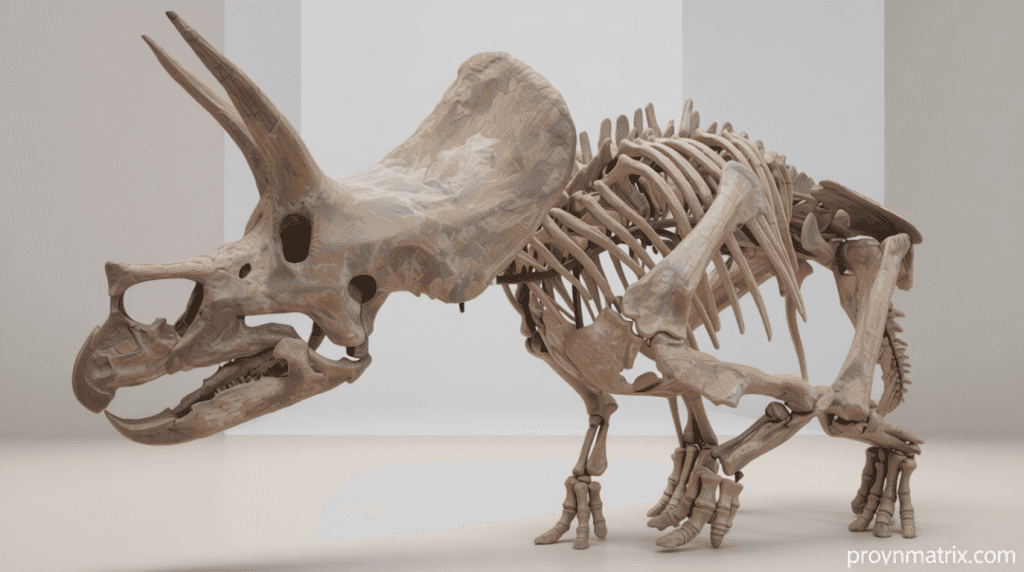
Triceratops skeleton to be auctioned on platform launched by Pharrell Williams
A renowned triceratops skeleton, which has been part of a Wyoming museum’s collection for over 30 years, is set for auction. This marks a rare opportunity as the market for dinosaur fossils continues to reach unprecedented levels.
Auction Details and Background
The fossil, known as ‘Trey,’ will be available for bidding from March 17 to 31 through Joopiter, a digital auction site created by Grammy-winning artist Pharrell Williams. Its estimated value ranges between $4.5 million and $5.5 million prior to the sale.
Discovered in 1993 near Lusk, Wyoming, by Lee Campbell and the late Allen Graffham—a prolific commercial paleontologist—the skeleton has a storied history. It was first unveiled at the 1995 opening of the Wyoming Dinosaur Center in Thermopolis and remained on loan there until 2023.
Market Trends and Cultural Significance
Following its recent private sale, Trey now resides in Singapore, where it will undergo public viewings before the auction. Paleontologist Andre LuJan, who collaborated on its preparation, highlighted its unique cultural value.
‘Trey has this cultural aspect that a lot of fossils that go to auction these days just simply don’t have,’ LuJan noted. ‘This one is connected to people and undoubtedly has inspired young children who’ve seen it to pursue a career in paleontology.’
LuJan emphasized that the fossil has been privately owned all along, and he hopes it will eventually find a home in a museum, similar to the stegosaurus skeleton ‘Apex,’ which sold for $44.6 million in 2024 and is now displayed at New York’s American Museum of Natural History after a long-term loan agreement.
Recent auctions have shown a surge in demand, with a rare juvenile dinosaur skeleton surpassing its $4 million to $6 million Sotheby’s estimate by over $26 million in July. Caitlin Donovan, Joopiter’s global sales director, attributed this trend to a growing interest in culturally resonant items.
‘People are now starting to see the value in investing in these as assets,’ Donovan said. ‘Dinosaurs have always captivated our imagination, and this shift reflects a broader change in how society views ownership.’
However, some scientists express concern over the rapid rise of private ownership. Kristi Curry Rogers, a paleontologist at Minnesota’s Macalester College, warned that important specimens might vanish from public access, leaving research opportunities untapped.
‘Public museums are getting totally priced out of an exploding market,’ Curry Rogers stated. ‘If a fossil goes into a private collection without guaranteed access forever, that data is essentially lost to science.’
The triceratops, known for its distinctive three horns, lived during the late Cretaceous period around 66 million years ago. Its 17-foot length and display at Le Freeport, Singapore, where a photo of its spine is available, underscore its significance as a prehistoric artifact.
