
They were forced to hand one son over to the Israeli army in return for another. Eight months later he was dead in prison
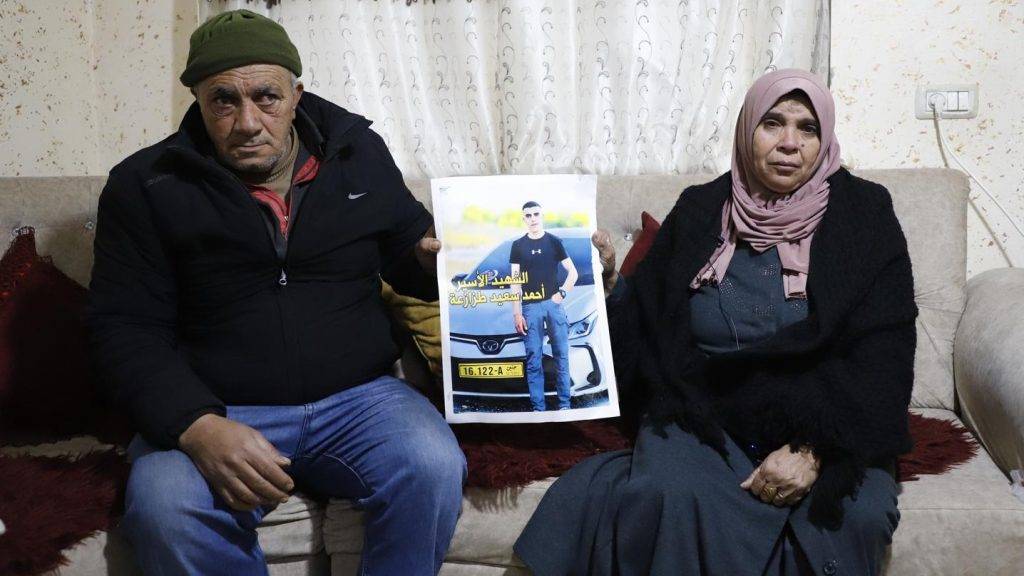
Forced to Surrender One Son for Another: Eight Months Later, He Was Dead in Prison
Ahmad Tazaza’s parents live in relentless sorrow and self-reproach, their anguish deepened by the tragic loss of their youngest son in Israel’s infamous Megiddo prison last August.
Ahmad, a 20-year-old with no prior health issues, was surrendered to Israeli authorities in January 2025 during a detention in the occupied West Bank. His parents say they still don’t understand why their son, the youngest of three brothers, was targeted. The situation resembled countless others facing Palestinian youth under similar circumstances.
He was held as an administrative prisoner—a form of indefinite incarceration without formal charges or legal representation—Ahmad joined over 10,465 Palestinian men in “security detention” by September 2025, with 7,425 from the West Bank and East Jerusalem, per Israeli Prison Service records.
The Tazaza family in Qabatiya, northern West Bank, faced repeated raids by Israeli security forces over months. His mother, Najah Abdul Qader, recounted how soldiers destroyed their home, threatening to bomb it if Ahmad didn’t surrender.
“They smashed the house and destroyed everything,” Qader told Middle East Eye. “He was not at home; he was working at the market and was sleeping at the market that night. They took his brother and his father. In the morning, they released them and said, ‘We want him’.”
In a later conversation, Qader stated an Israeli soldier had warned of bombing their house unless Ahmad turned himself in. He had previously escaped by leaping from a vehicle as it was crushed by a bulldozer.
After failing to locate him, Israeli forces re-arrested his brother. Saeed Tazaza, Ahmad’s father, recalled the exchange: “They said: ‘We won’t release him until you bring your other son.’ His brother is a married father of two. We had no choice but to surrender Ahmad.”
Accompanied by their other son, the parents delivered him to the Salem checkpoint near Jenin. “We handed him over,” Qader said, “he looked at us and I knew he wouldn’t return. He turned his back and walked away, and I felt he was gone forever.”
They believed they had spared his life, expecting temporary imprisonment followed by release. “I gave my son over because I feared for his safety,” his father explained. “We were forced to hand him over. What else could we do? This is our fate.”
“He said to me, ‘Mum, they torture people in prison.’ I told him, ‘Let them torture you, but not kill you, not shoot you.’ Today, I lament, ‘They shoot anyone who has done nothing,'”
Ahmad, aged 21, died on 3 August 2025 at Megiddo prison, as confirmed by a post-mortem report shared with Middle East Eye. The report, dated 8 August, was conducted by a Physicians for Human Rights Israel (PHRI) doctor, who noted his reported good health at arrest.
The report detailed his complaints of a sore throat and scabies, along with diarrhoea in his records. On 2 August, an on-call physician observed blood stains on his trousers before he collapsed, losing consciousness and vital signs. Resuscitation efforts failed, resulting in his death.
The autopsy suggested possible signs of a severe blood cancer, such as acute leukaemia or aggressive lymphoma, with no evidence pointing to sudden causes.
Despite the report, the family contests the official account, as they couldn’t visit or communicate with Ahmad during his eight-month imprisonment, relying only on word-of-mouth from released prisoners.
The International Committee of the Red Cross (ICRC) relayed news of his death, though access to Palestinians has been limited.
