
Airports of the future: Could AI make airports faster, smarter and greener?
Airports of the future: Could AI make airports faster, smarter and greener?
At this year’s Mobile World Congress in Barcelona, the evolution of airport infrastructure took center stage through a new initiative titled “Airport of the Future.” Central to this transformation is the integration of artificial intelligence (AI), which is anticipated to streamline operations and ease the strain of rising passenger numbers. One innovation already in motion involves autonomous robots that move passengers and luggage within terminal areas. These machines, equipped with advanced navigation capabilities, could revolutionize travel by allowing tired travelers to board self-driving vehicles and reach their destinations with minimal effort.
Robots with Adaptive Intelligence
ALBA Robot, an Italian startup, claims its AI-driven robots can interpret their surroundings, dodge obstacles, and navigate efficiently. Such systems are currently operational in certain French and Italian airports, with trials underway in the UK and US. The technology’s potential extends beyond logistics, as it can also monitor movement patterns of people and vehicles to improve the flow of traffic within airport premises.
Predictive Analytics for Smarter Planning
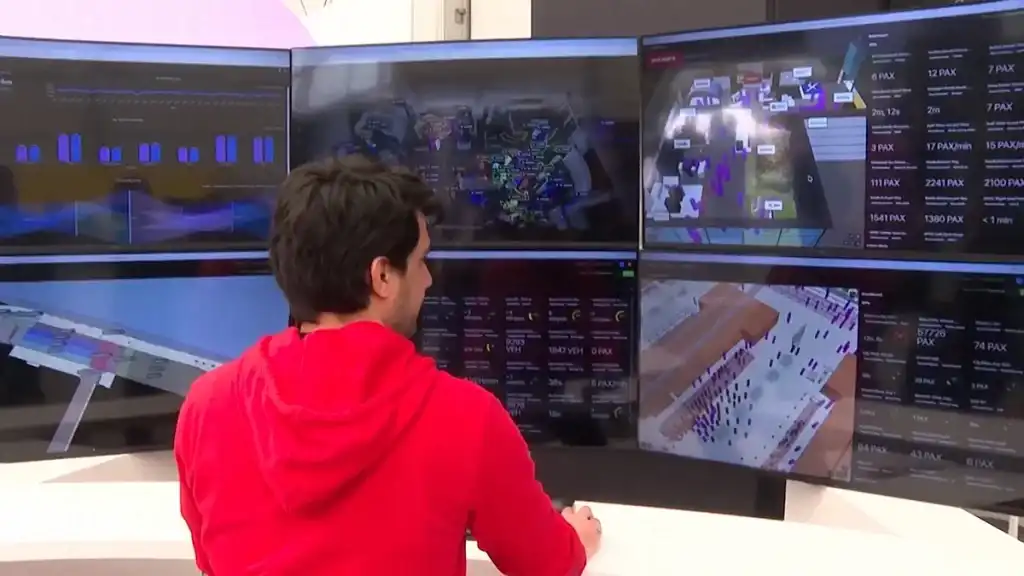
Outsight, a French firm, has created software that analyzes passenger behavior, forecasting how individuals traverse from entry points to gates. By combining AI with digital twin technology, the system assigns unique identifiers to moving objects, enabling real-time tracking. This data-driven approach helps airports gauge usage of check-in counters, luggage services, and security checkpoints. The insights aim to reduce bottlenecks, enhance efficiency, and direct more visitors toward retail and dining zones, where spending is likely to increase.
“Airports’ operations teams can now predict precisely what needs to be done tomorrow. Are there enough staff? Is there an overstaffing issue? What if more travelers arrive than expected, but fewer flights take off?”
Eduardo De La Espriella, a marketing lead at Outsight, highlights the transformative power of these tools. Despite their advantages, experts caution that simulations may not always align with real-world scenarios, and even anonymized data can raise privacy concerns.
Environmental Impact Reduction
Reducing the carbon footprint of air travel is another priority, with technologies like Waltr’s system targeting aircraft emissions. Half of airport CO2 emissions originate from planes while they are stationary, according to the French tech company Waltr. Its system uses cameras to identify fuel wastage during taxiing and idling, alerting pilots to use a single engine when possible. It also notifies crews if auxiliary power units are left on unnecessarily. These innovations are already being tested in several airports, offering a path to greener operations.
As global travel demand surges, with international traffic rising by 7.1% last year and projected to grow further this year, the need for smarter, more efficient airport solutions has never been greater. The convergence of AI, automation, and data analytics promises to redefine the passenger experience while addressing environmental and logistical challenges.
