
A free Iran is their shared dream. But the diaspora remains torn on the best path forward.
A Free Iran is Their Shared Dream. But the Diaspora Remains Torn on the Best Path Forward
In the wake of escalating tensions in Iran, the country’s diaspora has found itself split between opposing visions for the future. While many share a common aspiration for a liberated Iran, their approaches to achieving it differ sharply, creating a landscape of divided opinions among communities abroad.
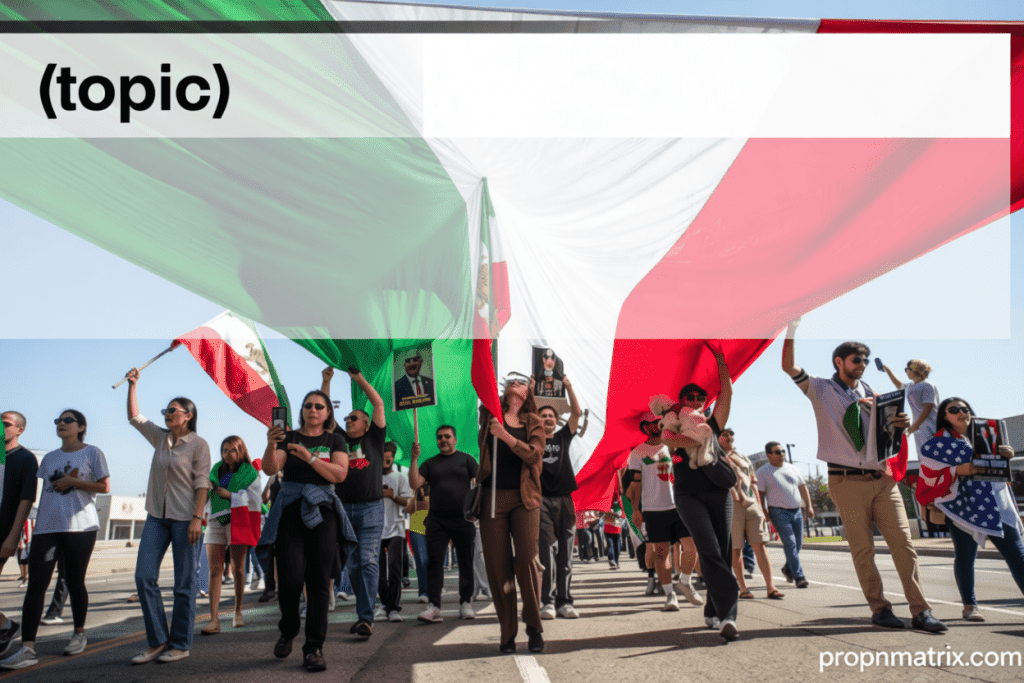
Los Angeles witnessed two contrasting demonstrations last Saturday. At City Hall, a crowd of Iranian Americans gathered to voice their opposition to an unapproved war, chanting slogans like “Stop the war in Iran” and “We the people don’t want war.” Meanwhile, on the Westside—known as Tehrangeles—another group celebrated what they saw as a potential turning point in their homeland’s history. They waved American, Israeli, and Iranian flags, danced to upbeat music, and rejoiced over reports of Ayatollah Ali Khamenei’s death in a U.S.-Israeli strike.
Divided Emotions Amid Escalation
The emotional duality within the Iranian diaspora has intensified as violence spreads across the Middle East. For those who fled the theocratic regime after the 1979 Islamic Revolution, the conflict raises questions about the cost of regime change. “Some people are so aggrieved at this regime that they say, ‘At any cost, come and destroy this regime even if it means destroying parts of the country,’” noted Abbas Milani, director of Iranian studies at Stanford University. Others, however, advocate for removing the regime without resorting to war.
“The images of destruction and the joyous support for war have become a source of more tension than we normally get in the diaspora. It will get harder before it dissipates.” — Abbas Milani
Online discourse has grown more polarized since the attack on Iran. Supporters of military action are increasingly labeled “Zionists,” a term that has taken on a more derogatory tone following Hamas’s strikes on Israel in October 2023. Conversely, anti-war advocates face accusations of aligning with the existing regime. This friction has deepened as Iranians debate the ideal successor to a fallen government.
Leadership in Question
Speculation has surrounded who might lead Iran if the current leadership collapses. Reza Pahlavi, the son of the last shah, garners support from some, while others remain cautious about rekindling ties to the pre-revolution monarchy. Meanwhile, Mojtaba Khamenei, the supreme leader’s son, is rumored to be the next potential figurehead. The Islamic Revolutionary Guard Corps, a dominant force in Iran, could also consolidate its power in the aftermath of the conflict, according to analysts.
Amid these developments, the death toll in Iran has surged, and the government has imposed an internet blackout, cutting off communication for many. Nowruz, the Persian New Year—a time traditionally marked by renewal and celebration—is now tinged with uncertainty as the nation braces for an uncertain future.
Political Divergence in the U.S.
President Donald Trump has signaled a desire to dismantle Iran’s leadership structure entirely, suggesting names for a “good leader” in the process. Yet, a recent NBC News poll reveals that 54% of Americans disapprove of his handling of the situation, reflecting a split that mirrors the diaspora’s internal conflict. Last year, a survey by the National Iranian American Council (NIAC) and YouGov found 53% of Iranian Americans opposed U.S. military action against their homeland, with new data expected next week.
“We are not a monolith.” — Iranian Diaspora Collective
Los Angeles-based pastor Ara Torosian, a Christian who left Iran in 2010, expressed heartbreak over the destruction of historic sites and the loss of innocent lives, particularly children. Yet he argued that the current suffering surpasses generations of oppression faced by dissidents. “This is not just a moment of pain—it’s a reckoning,” he said, recalling his own imprisonment and beatings in Tehran for possessing Christian symbols.
