
Will Ukraine help Gulf states down Iranian drones?
Will Ukraine help Gulf states down Iranian drones?
Ukraine has pledged to support Middle Eastern nations in countering Iranian drone threats, offering its military expertise to bolster defenses against attacks. However, the country’s experts remain stationed at home due to ongoing conflict, limiting their immediate availability for international deployment. President Volodymyr Zelenskyy highlighted Ukraine’s extensive experience in drone interception, stating the nation is prepared to share its insights with Gulf states.
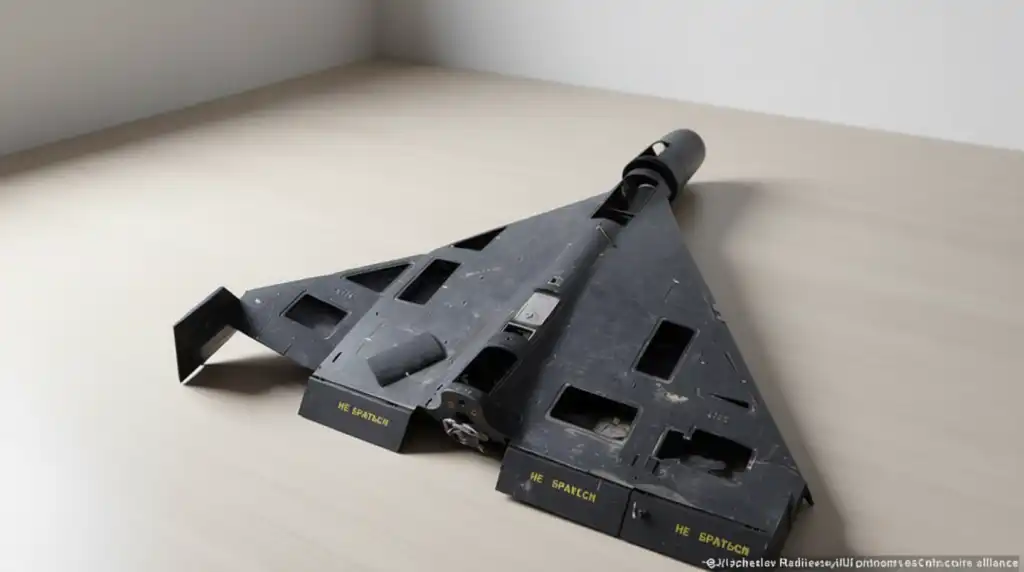
Zelenskyy outlined a prerequisite for Ukraine’s support, stating that Middle Eastern leaders could request a one-month pause in Russian attacks by appealing to Moscow. “We can help Israel in the same way,” he added, emphasizing the potential for collaboration. Ukrainian Foreign Minister Andrii Sybiha echoed this sentiment, noting that the armed forces could neutralize 90% of Iranian Shahed drones using domestically developed interceptor systems.
Sybiha also stressed that Ukraine would only deploy some of its forces if a guaranteed ceasefire with Russia is secured. “We won’t be able to send all our forces, but we will definitely be able to send some,” he said, underscoring the conditional nature of the assistance. Oleksandr Chara, a security analyst from the Center for Defense Strategies (CDS), explained that Gulf states had initially overlooked the strategic significance of Russia’s role in the Ukrainian conflict.
Chara pointed out that Arab nations failed to recognize Russia’s alliance with Iran, which has enhanced Tehran’s drone technology. This changed when Iranian drones, incorporating Russian components, began targeting Gulf infrastructure. “Kyiv can offer expertise in neutralizing Iranian drones and well-trained personnel,” Chara noted, highlighting Ukraine’s readiness to assist. He argued that for wealthy Gulf countries, drone defense is primarily an economic challenge.
“Shooting down a $30,000 drone with a $100,000 missile or a Patriot system costing tens of millions is costly,” Chara explained. “Ukraine’s experience provides invaluable data on effective systems.” He envisioned three scenarios for cooperation: deploying experienced operators, training Arab pilots, or funding joint production of interceptors. Ukraine is also considering transferring drone production to Gulf states, as revealed in a March 3 statement by Zelenskyy.
According to the Financial Times, the Pentagon and at least one Gulf state are discussing purchases of Ukrainian-made interceptors, as reported by an unnamed industry representative. Oleh Katkov, a military expert and editor-in-chief of Defense Express, emphasized that Gulf nations possess ample financial resources but lack battlefield-tested data. “The value lies in our experience,” Katkov told DW. “No one else has precise figures on deployed units, required ammunition, or proven equipment.” His remarks align with Zelenskyy’s aim to leverage Ukraine’s military know-how to pressure Russia into ending its conflict with Kyiv.
