
Why a delayed Xi-Trump summit could give China a stronger hand
Why a delayed Xi-Trump summit could give China a stronger hand
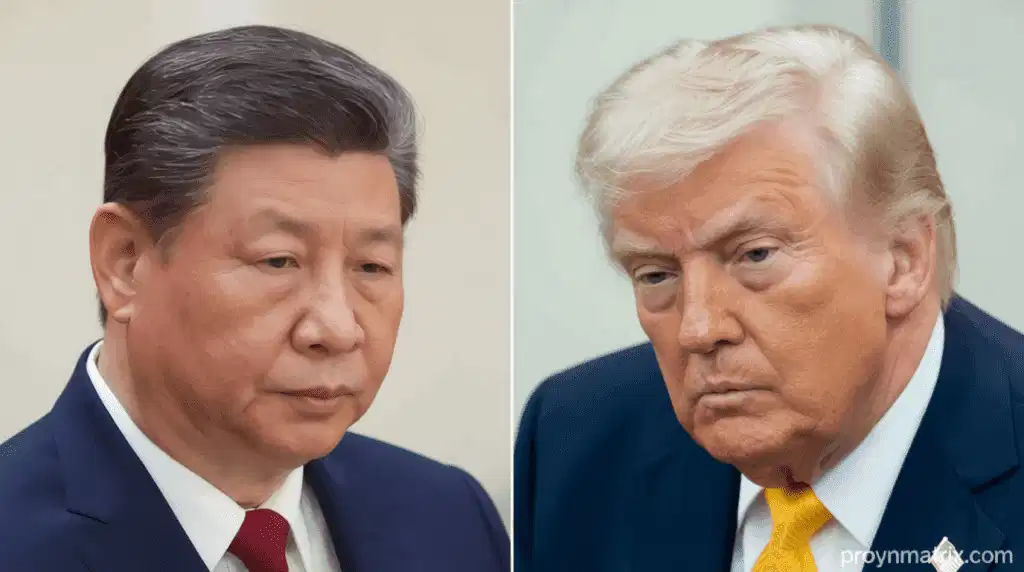
US President Donald Trump’s decision to postpone a significant summit with Chinese President Xi Jinping has sparked speculation that Beijing may gain an advantage. Chinese officials, who are well-informed about the situation, suggest that the delay could allow both nations to bypass complications arising from the ongoing conflict with Iran, a key strategic ally for China in the Middle East.
Experts argue that if Trump’s administration struggles to contain the war’s impact on oil supplies and global economic stability, China might find itself in a more favorable position during negotiations. Despite the White House confirming the summit was initially set for March 31 to April 2, Beijing has not officially endorsed the proposed 5-to-6 week postponement.
“The longer the war drags on, the greater Trump’s sense of frustration becomes, and his weakness would become even more apparent. Consequently, when dealing with China, he would find himself in yet another disadvantageous position,” said Wu Xinbo, director of Fudan University’s Center for American Studies.
Behind the scenes, Chinese sources indicate there is still uncertainty about the summit’s future. They note that the meeting may not proceed as planned, with either side potentially withdrawing if the situation in Iran worsens. One insider highlighted that Beijing’s stance includes a red line: if the conflict results in substantial casualties or damage to Chinese interests in the region, Trump’s participation could be jeopardized.
China’s Foreign Ministry spokesperson Lin Jian emphasized the importance of such summits, stating that they play an “irreplaceable” role in shaping the bilateral relationship. However, the tone of Beijing’s response has been cautiously optimistic, leaving room for strategic flexibility.
Some analysts point to the US Supreme Court’s February ruling that invalidated Trump’s emergency tariffs as a factor in his weakened position. The surprise military action against Iran has divided public opinion in the US, and repeated claims of a swift resolution may now be seen as less credible. “His plan was to wrap things up quickly, but in the end, even after all this time, he still hasn’t been able to resolve it and has gotten bogged down in it,” Wu added.
Geopolitical Shifts and Strategic Opportunities
The war has also provided China with a chance to bolster its image as a dependable global leader. As Gulf nations and European allies grow wary of the US’s unpredictable approach, Beijing is positioning itself as a reliable alternative. “A lot of countries around the world are now rating China as a more reliable partner than the US. Now that doesn’t mean that China necessarily is a more reliable partner, but rather that changes in the US have made people perceive (it as) so,” explained Rana Mitter, a specialist in US-Asia relations at Harvard Kennedy School.
For many Chinese diplomats, the summit represents a pivotal moment to redefine the dynamic between the world’s two leading economic and military powers. Despite the conflict’s disruptions, the government has shown commitment to the event, with Foreign Minister Wang Yi describing 2026 as a “pivotal one for China-US relations” during a press conference shortly after the war began.
