
US Justice Department working to indict former Cuban president Raul Castro
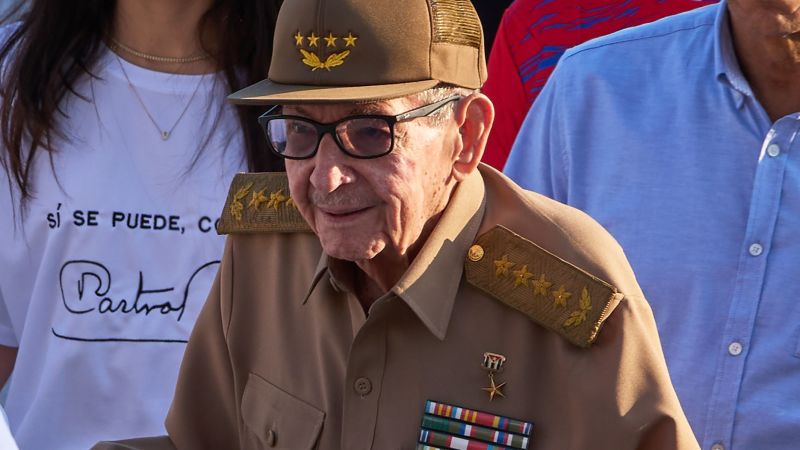
US Justice Department Pursues Criminal Charges Against Former Cuban President Raul Castro
US Justice Department working to indict – The U.S. Justice Department is actively pursuing criminal charges against Raul Castro, the former leader of Cuba, according to multiple sources close to the case. While the specifics of the investigation remain undisclosed, federal prosecutors have explored several potential legal actions against the 94-year-old leader, who is the brother of the late Cuban leader Fidel Castro. The inquiry centers on alleged offenses tied to a 1996 incident in which the Cuban military shot down two aircraft belonging to the Brothers to the Rescue, a Cuban-American exile group. Four individuals, including three U.S. citizens, lost their lives in the attack, which occurred over international airspace.
Historical Context of the Incident
The 1996 downing of the two planes remains a pivotal moment in the U.S.-Cuba relationship. Brothers to the Rescue, a non-profit organization, had been conducting missions to support the Cuban exile movement, which had long sought to overthrow the communist regime. The attack, which involved Cuban MiG fighter jets, was widely condemned as an act of aggression. While the exact circumstances of the event are still debated, evidence suggests that Castro, then serving as Cuba’s defense minister, authorized the operation. This alleged command has become a focal point for prosecutors seeking to hold him accountable under U.S. law.
Acting Attorney General Todd Blanche recently addressed the matter on Fox News, emphasizing the absence of public details about the indictment. “There’s absolutely no public information around any indictment that’s been leaked or discussed on various news outlets, and I assure you, and I assure the American people, that if and when there’s a time to talk about that, we will, obviously,” he stated. The potential charges could be announced as early as the following week, pending approval from a grand jury. However, the process is not without challenges, as some career prosecutors in the Miami office have expressed reservations about the sufficiency of evidence.
Political and Legal Momentum
The push for legal action against Castro has gained momentum in recent months, with the U.S. Attorney’s Office for Florida’s southern district playing a central role. The office, led by Jason Reding Quiñones, has been instrumental in compiling the case, though not all within the team share the same confidence. A person briefed on the discussions noted that while the initiative has been widely supported, there are concerns about the weight of the evidence. Despite this, the focus remains on Castro as a primary target, with some sources indicating he is at the forefront of the legal strategy.
Cuban-American lawmakers, particularly those aligned with the Republican Party, have been vocal in their support for the indictment. In a February letter to then-Attorney General Pam Bondi, representatives like Mario Diaz-Balart called for Castro’s prosecution. The letter referenced a recording of radio traffic from that era, which allegedly shows Castro giving orders to Cuban MiG pilots before the planes were shot down. This evidence, combined with other historical records, is seen as critical to building a case. The lawmakers argue that the attack, which occurred during a period of heightened tensions, demonstrates Castro’s direct involvement in acts of aggression against U.S. interests.
Rising Tensions and Trump’s Policies
The pursuit of charges against Castro comes amid escalating hostilities between the United States and Cuba. The U.S. has accused Havana of posing an “extraordinary threat” through its alliances with hostile nations and the presence of foreign military and intelligence assets on Cuban soil. Cuba has consistently denied these allegations, maintaining that its actions are defensive and in line with international norms. This ideological clash has been further intensified by the Trump administration’s aggressive stance, which has included the expansion of economic sanctions against the island nation.
One of the most significant actions under Trump’s leadership was the intensification of the economic embargo against Cuba. Despite international calls to ease the restrictions, the U.S. has maintained a firm grip on the policy, imposing penalties that have severely strained the Cuban economy. In early January, the U.S. cut off Venezuela, Cuba’s primary oil supplier, following a military operation that captured its president. This move sent a clear message to other nations that could potentially provide oil to Cuba, threatening them with tariffs if they continued to support the island. The result has been a deepening economic crisis for Cuba, with the U.N. warning of a possible humanitarian collapse due to the nation’s dire financial situation.
Cuban-American lawmakers have also cited the 1996 incident as part of a broader pattern of Cuban aggression. They argue that Castro’s alleged role in the attack reflects a long-standing commitment to undermining U.S. interests, even in international waters. The case against Castro is not only a legal endeavor but also a political statement, aiming to highlight the U.S. government’s resolve to hold Cuban leaders accountable for past actions. This strategy aligns with the Trump administration’s efforts to shift Cuba’s political landscape through economic pressure and legal threats.
Recent Diplomatic Moves
In a recent development, CIA Director John Ratcliffe visited Cuba to meet with government officials, signaling a potential shift in the ongoing diplomatic standoff. While the details of the meeting have not been fully disclosed, Cuban officials reportedly emphasized that their nation does not threaten U.S. national security. They also challenged the classification of Cuba as a State Sponsor of Terrorism, a designation it has held since the Trump administration. Havana’s position is that the U.S. should reconsider its stance, given the economic hardships it has imposed and the lack of direct evidence linking Cuba to terrorism.
Ratcliffe’s visit follows a series of high-profile diplomatic exchanges between the two countries. The meeting, held in the context of growing tensions, highlights the complex interplay between legal, political, and economic factors in the U.S.-Cuba relationship. While the U.S. continues to push for Castro’s indictment, Cuba remains steadfast in its defense, arguing that the charges are politically motivated and lack substantial proof. This dynamic underscores the broader struggle between the two nations, with each side using legal and economic tools to assert its position.
The case against Castro is also seen as part of a larger narrative about the future of Cuba. President Donald Trump, who previously described the island as being in “a big deal of trouble,” has hinted at the possibility of a “friendly takeover” of the Cuban government. Speaking in Washington, he said, “We could very well end up having a friendly takeover of Cuba. After many, many years.” Trump’s comments reflect a long-term vision for Cuba’s political transformation, one that aligns with the Justice Department’s efforts to use legal means to achieve strategic objectives.
Despite the administration’s focus on economic pressure, there are indications that a legal approach may complement these efforts. The potential indictment of Castro could serve as a symbolic gesture, reinforcing the U.S. commitment to holding Cuban leaders accountable for past actions. At the same time, it may be a strategic move to pressure Havana into diplomatic concessions. As the case progresses, the outcome could have far-reaching implications for U.S.-Cuba relations, both domestically and internationally.
Castro, who has been a central figure in Cuban politics for decades, faces a critical juncture in his legacy. The legal proceedings, if successful, could mark the first time a former Cuban leader is prosecuted for actions related to the 1996 incident. This development may also influence the political landscape in Cuba, as it could embolden opposition forces or spark renewed tensions within the government. The U.S. Justice Department’s efforts, while focused on legal accountability, are also part of a broader campaign to reshape Cuba’s geopolitical standing.
CNN’s Paula Reid and Casey Gannon contributed to this report. The story has been updated to include additional information and context, ensuring a comprehensive overview of the current situation. As the investigation unfolds, the world watches closely to see whether the pursuit of charges against Castro will mark a new chapter in the U.S.-Cuba rivalry or pave the way for reconciliation. The case remains a testament to the enduring tensions between the two nations, even as they navigate the complexities of law, politics, and economics.
