
Should you worry about the Ebola outbreak? Here’s what the numbers tell us
Ebola Outbreak in the Democratic Republic of Congo and Uganda: A Growing Threat
Should you worry about the Ebola – The World Health Organization (WHO) has raised alarms about a rapidly expanding Ebola outbreak in the Democratic Republic of Congo (DRC) and Uganda, emphasizing its potential to escalate into a regional crisis. The strain responsible for the spread is Bundibugyo, a variant that currently lacks targeted treatments or vaccines. Despite these challenges, the global risk remains relatively low, though the situation has prompted urgent action from health authorities. The outbreak’s significance lies in its speed and the fact that it has already claimed lives, with the WHO officially labeling it a “public health emergency of international concern.”
An American Citizen Tests Positive for Ebola
As the outbreak gains momentum, a critical development emerged when an American individual, working in the DRC, tested positive for the virus. According to international charity Serge, this person has developed symptoms and has been relocated to Germany for medical care. The German Federal Health Minister, Nina Warken, confirmed that the patient is in stable condition at Charité University Hospital in Berlin. This case highlights the international reach of the outbreak and the measures being taken to contain it. The U.S. Centers for Disease Control and Prevention (CDC) has also initiated protocols to monitor six high-risk contacts, with five of them being sent to Europe for observation.
Factors Contributing to the Outbreak’s Severity
Dr. Tedros Adhanom Ghebreyesus, the WHO’s Director-General, outlined several concerning elements of the outbreak. He noted that the delay in identifying the disease played a significant role in its progression, creating a window for unchecked transmission. Additionally, the loss of healthcare workers to the virus has exacerbated the situation, as these professionals are vital to managing and treating cases. The movement of people within the affected region further complicates containment efforts, increasing the likelihood of spread. The rarity of the Bundibugyo strain, combined with the absence of a specific vaccine, adds to the challenge of mitigating its impact.
Global Response and Preventive Measures
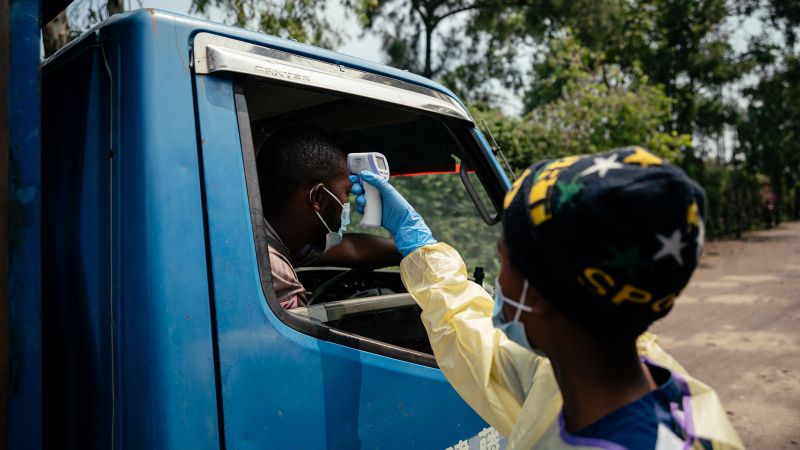
In response to the outbreak, numerous countries have implemented measures to curb its spread. These include restricting travel from the DRC, conducting health screenings at borders, and deploying resources to support local efforts. Such actions aim to prevent the virus from gaining further traction and to protect populations in other regions. However, the effectiveness of these measures depends on timely identification and coordinated global response. The WHO has stressed the importance of vigilance, particularly given the strain’s ability to spread through direct contact with bodily fluids and contaminated surfaces.
How Ebola Transmits and Its Incubation Period
Understanding the transmission dynamics of Ebola is crucial for containment. The virus spreads via direct contact with bodily fluids such as blood, saliva, sweat, or vomit from an infected person. It can also be transmitted through objects or surfaces contaminated with these fluids, or via fecal matter. The incubation period, the time between exposure and symptom onset, ranges from two to 21 days. While individuals are not contagious until symptoms appear, the virus’s ability to remain undetected for extended periods poses a significant risk. This makes early detection and rapid response essential in preventing larger outbreaks.
Uncertainty in Case Numbers and Spread
Despite efforts to track the outbreak, the exact number of infections and the extent of its spread remain unclear. WHO’s Dr. Anne Ancia noted that there is substantial uncertainty about the total cases, with at least 139 deaths attributed to the outbreak and nearly 600 suspected cases reported. Only 51 cases have been officially confirmed in the DRC, underscoring the difficulty in quantifying the true scale of the crisis. Ancia emphasized that the lack of clarity in case counts and the virus’s potential for silent transmission complicates efforts to assess its full impact.
International Quarantine Protocols in Action
The CDC has announced that six individuals who had close contact with the American patient will be moved to Europe for monitoring. Five of these contacts are being sent to Germany, while one will be cared for in the Czech Republic. These steps aim to isolate potential carriers and prevent further spread. The American citizen, Dr. Peter Stafford, a general surgeon specializing in burn care, was working in Bunia, DRC, when he contracted the virus. His wife, Dr. Rebekah Stafford, and Dr. Patrick LaRochelle, another healthcare worker, are believed to have been exposed but are currently asymptomatic. They continue to follow strict quarantine and monitoring protocols, which are critical in preventing the virus from spreading to new areas.
Uganda’s Cases and Outbreak Control Measures
In Uganda, two confirmed cases have been reported as of Tuesday, according to the country’s health ministry. The first case involved a patient from the DRC who was treated in a Ugandan facility but later succumbed to the illness. The second case is also considered imported, highlighting the cross-border nature of the outbreak. Ugandan health officials have activated emergency measures, including enhanced disease surveillance, screening protocols, and readiness plans for rapid response. These efforts are part of a broader strategy to detect and manage cases before they can lead to local transmission.
The Critical Detection Gap and Its Implications
The WHO reported that the outbreak likely began “a couple months ago,” with the first known patient falling ill in April. However, it wasn’t until May 5 that officials received an alert about the unknown illness in Mongbwalu, a town in the DRC’s Ituri province. This four-week gap between the initial cases and official recognition allowed the virus to spread without immediate intervention. Dr. Tedros described this delay as a “critical detection gap,” which significantly increased the risk of community transmission. The response team was dispatched on May 12, but the time lost during the early stages of the outbreak has created challenges in containment.
Global Risk Assessment and Regional Focus
While the outbreak is classified as high-risk at the national and regional levels, the WHO maintains that the global threat remains low. This assessment takes into account the current geographic focus of the virus and the effectiveness of border controls in limiting its spread. However, the potential for the outbreak to evolve into a more widespread crisis has prompted international collaboration. The organization is working closely with local governments to identify the precise origin of the virus and to implement strategies that address the unique challenges posed by the Bundibugyo strain. This includes improving healthcare infrastructure and ensuring rapid response to new cases.
Monitoring and Containment Efforts
As the outbreak continues, monitoring and containment efforts are intensifying. The movement of high-risk individuals to Europe for observation is one such strategy, aimed at reducing the chance of local transmission. The WHO has also highlighted the importance of public awareness and education in combating the virus. By informing communities about transmission risks and symptoms, officials hope to encourage early reporting and proactive measures. The combined efforts of international organizations, governments, and healthcare workers are critical in controlling the outbreak and minimizing its impact on both local and global populations.
Conclusion: A Balanced Perspective
While the Ebola outbreak in the DRC and Uganda presents serious challenges, the WHO’s assessment suggests that global risks are still manageable. The absence of a specific vaccine and the strain’s characteristics have increased the complexity of the situation, but swift action by health authorities and the relocation of high-risk individuals are steps toward mitigation. The ongoing efforts to track infections, implement quarantine measures, and improve response times demonstrate a commitment to containing the outbreak. As the situation evolves, continued vigilance and international cooperation will be key to ensuring the virus does not escalate into a larger global health crisis.
