
Cuban president promises ‘impregnable resistance’ to any US attempt to control island
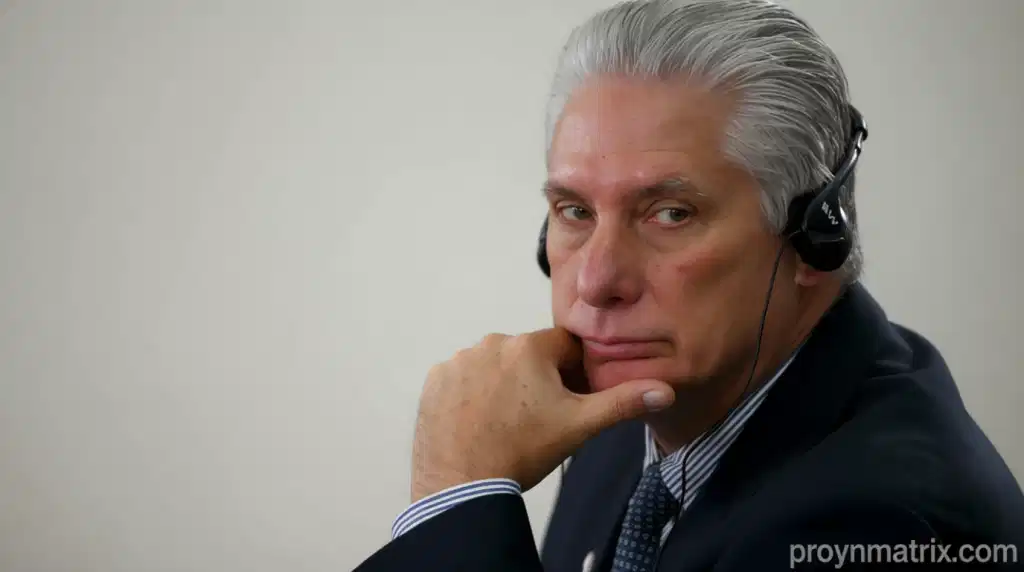
Cuban president promises ‘impregnable resistance’ to any US attempt to control island
Cuban President Miguel Díaz-Canel vowed Tuesday that the United States would encounter “unwavering resistance” should it attempt to dominate the island, as electricity service gradually resumed in parts of Cuba after a major nationwide blackout. The power restoration came after a severe grid failure left most of the country without electricity, disrupting daily life and forcing residents to rely on gas lamps and open flames for cooking.
Díaz-Canel criticized Washington’s long-standing efforts to isolate Cuba, stating that the latest economic challenges were being used as an “outrageous pretext” to justify intervention. “Only in this way can the fierce economic war be explained, which is applied as collective punishment against the entire people,” he said in a defiant X post. The president emphasized that Cuba remains resolute, asserting that “any external aggressor will clash with an impregnable resistance” amid the crisis.
“We, as people, as civilians, aren’t prepared for a war,” said Havana resident Marianela Alvarez. “I want Trump to understand, to leave us alone.”
President Donald Trump has repeatedly threatened Cuba’s communist government, hinting at potential actions against the island. On Monday, he claimed he could “do anything he wants” with Cuba, and the following day reiterated: “We’ll be doing something with Cuba very soon.” Secretary of State Marco Rubio supported this stance, stating Tuesday that Cuba needed “new people in charge.” “Their economy doesn’t work… They’re in a lot of trouble, and the people in charge don’t know how to fix it,” Rubio said, suggesting leadership change as a solution.
The recent outages worsened existing hardships for Cubans, who have endured sporadic power cuts for months. With the country’s oil supply blocked earlier this year, the aging electricity network faced a critical shortage, leaving 10 million people without power on Monday. Schools cut short hours, and major sporting events were postponed, while neighborhoods grappled with accumulated waste due to fuel shortages for garbage trucks.
By Tuesday afternoon, electricity had been restored to roughly 55% of Havana’s residents, along with some areas in the western and central-eastern regions. Despite these improvements, the situation highlights the growing strain on the nation’s resources. Díaz-Canel confirmed Friday that Cuban officials had engaged in talks with the US to “identify the bilateral problems that need a solution,” marking the first acknowledgment from Havana of ongoing discussions.
“I truly believe that there will be dialogue and understanding, because it is love that should unite human beings, not war,” stated Havana resident Luis Enrique Garcia.
Not all Cubans shared this optimism. Amed Echenique, a local in Havana, voiced skepticism about US intentions. “I don’t trust a dialogue with Trump,” he told Reuters. “I don’t trust Trump as a person, even with the little I know about him. And so that’s something that doesn’t really give me hope.”
