
Lebanon: Israel trades fire with Hezbollah in south and east
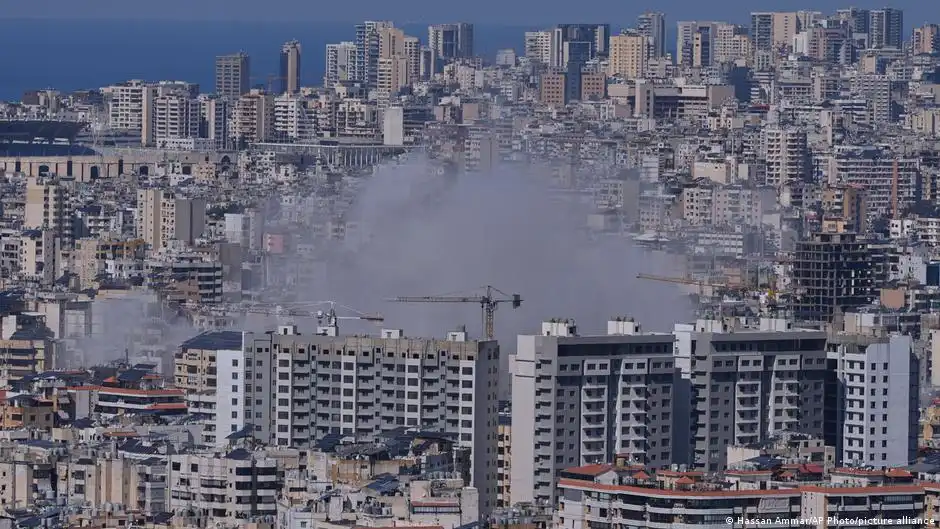
Israel and Hezbollah Engage in Cross-Border Conflict Amid Escalating Tensions
Israeli forces claimed they eliminated a key Hezbollah operative linked to Iran, following a missile barrage into Israeli territory by the Iran-backed militant group. The strike in Beirut, Lebanon, targeted Hussein Makled, who led Hezbollah’s intelligence operations. This action came in retaliation for the death of Iranian Supreme Leader Ali Khamenei, who was killed in an attack earlier in the week.
Hezbollah, which was established by Iran’s Revolutionary Guards in 1982, launched its first missile assault on Israel in over a year. The group cited the killing of Khamenei as an act of vengeance for the loss of “pure blood” in its leadership. The attack prompted the most significant Israeli military response since the previous ceasefire. The Lebanese Health Ministry reported 52 fatalities and 154 injuries on Monday, revising an earlier count of 31 deaths from Israeli strikes in southern Beirut and border regions.
“We have issued 18 urgent evacuation warnings for buildings used by the Hezbollah terrorist organization in the following villages and towns,” stated Avichay Adraee, the IDF’s Arabic language spokesman, as he shared a list of affected locations on X.
Lebanon’s government has attempted to de-escalate the crisis by prohibiting Hezbollah from conducting military operations. Prime Minister Nawaf Salam emphasized that the state reserves the authority to decide on war and peace, stating, “the decision of war and peace is exclusively in its hands.” He urged an immediate halt to all Hezbollah security activities, asserting they operate “outside the law” and demanding the group surrender its weapons to the Lebanese state.
The conflict follows a fragile yet incomplete ceasefire that had been in place since last year. Under this agreement, Lebanon assumed control of southern security near the Israeli border, while Hezbollah was withdrawn from the area. However, the effectiveness of this arrangement remains uncertain, especially with heightened tensions from the ongoing war in Iran. Israeli officials have blamed Hezbollah for the current escalation, labeling its leader Naim Qassem a “target for elimination,” though no ground invasion is currently planned.
As the fighting intensified, civilians flooded major Lebanese highways to escape areas under threat. Evacuation alerts were issued for over a dozen locations near the de facto border in the south and east, prompting widespread displacement. Despite these efforts, the situation continues to test Lebanon’s ability to mediate between its forces and Hezbollah’s military actions.
