
Hungarian veto on Ukraine loan proves EU needs less unanimity, says new Dutch PM
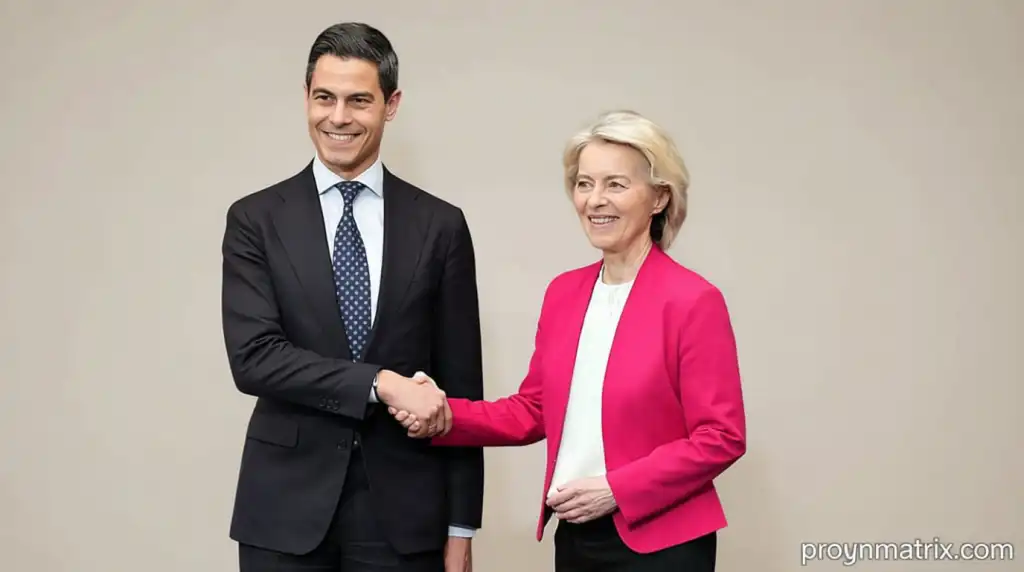
Hungarian Veto on Ukraine Loan Proves EU Needs Less Unanimity, Says New Dutch PM
New Dutch PM Calls for EU Flexibility
Rob Jetten, the recently appointed Dutch prime minister, emphasized that Hungary’s final-minute obstruction of a €90 billion financial aid package for Ukraine underscores the European Union’s need to adopt a more flexible approach to decision-making. During his initial visit to Brussels, he remarked to journalists, including Euronews, that “the new Dutch government supports a shift toward fewer unanimous agreements at the European level.”
“This is a clear example of why that change is crucial. We can’t tell our citizens that Europe is often overly cautious when dealing with major challenges that impact all of us,” Jetten stated.
Jetten urged Hungarian Prime Minister Viktor Orbán to honor the agreement forged by EU leaders in December, which involved a political compromise. Under this deal, Hungary, Slovakia, and the Czech Republic agreed to maintain unanimous support for budget reforms in exchange for exemption from shared borrowing obligations. Brussels officials argue that Orbán’s recent veto disrupts the principle of collaborative decision-making within the bloc.
“When a political consensus is reached in the Council, every member state should honor it. If not, the European Commission must step in to enforce it,” Jetten added.
Dispute Over Druzhba Pipeline
The disagreement stems from Hungary’s objection to cutting Russian oil supplies via the Druzhba pipeline. Kyiv claims the pipeline was damaged by Russian drones on 27 January and has been non-functional since then. Orbán, however, asserts that President Zelenskyy deliberately halted the flow for political motives, aiming to sway upcoming Hungarian elections.
Orbán’s actions have drawn criticism from Brussels, where diplomats believe his veto reflects a breach of the EU’s commitment to collective cooperation. Meanwhile, Hungary and Slovakia have proposed a joint investigation to assess the pipeline’s condition, with Jetten expressing openness to such measures but stressing the importance of a prior political agreement.
Enlargement Debates Intensify
As part of his coalition’s agenda, Jetten highlighted the need to reassess EU expansion policies from a geopolitical standpoint. He cautioned against hasty decisions, warning that premature commitments could jeopardize the union’s foundational principles. “We are willing to explore expanded support for candidate nations, but speed isn’t the priority,” he said.
“At this stage, setting a concrete date for Ukraine’s membership seems premature. However, dialogue with Zelenskyy about how Europe can assist Ukraine’s reforms remains essential,” the premier explained.
Zelenskyy has pushed for a specific timeline for Ukraine’s EU accession, suggesting 2027 as a target. The European Commission, meanwhile, is working on legal strategies to streamline the complex enlargement process, aiming to provide greater clarity to the Ukrainian public. Jetten’s focus on this issue reflects a broader tension between supporting Ukraine and ensuring EU unity.
