
The ‘back door’ migrant route into Britain: Immigration crackdown as people smuggling gangs exploit soft border between UK and Ireland
The ‘back door’ migrant route into Britain: Immigration crackdown as people smuggling gangs exploit soft border between UK and Ireland
While much attention is given to illegal migration via small boats from France, a different method has emerged as a critical concern for authorities. Criminal networks are leveraging the Common Travel Area (CTA) — a borderless agreement between the UK and Ireland — to smuggle migrants into Britain. This soft border, designed to allow free movement for citizens, is now being used as an indirect entry point by organized crime groups.
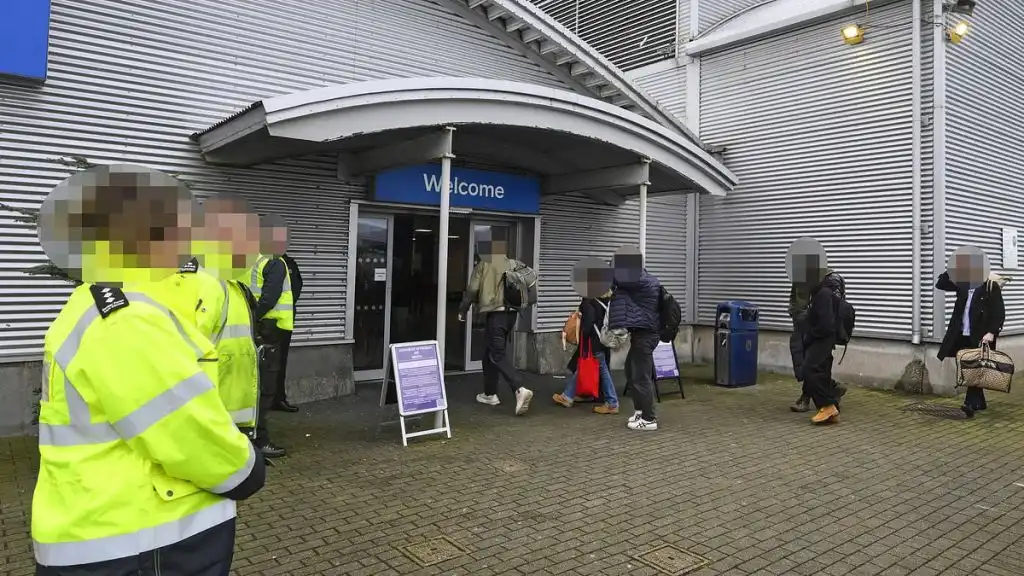
During a recent three-day operation, law enforcement agencies collaborated to target this route, resulting in the arrest of 32 individuals linked to immigration offenses. The action focused on major UK-Ireland ports and airports, including Holyhead, where ferry passengers were scanned using live facial recognition technology. Officers also inspected lorries for hidden travelers and illicit cargo at the port and on a nearby motorway.
Facial Recognition in Action
Live facial recognition was deployed at Holyhead’s passenger terminal, matching faces against a database of known immigration violators. UK Border Force staff monitored arrivals, while police conducted spot checks to identify potential smugglers. DCC Wendy Gunney, leading the Domestic Organised Immigration Crime taskforce, emphasized the need to strengthen border security. “Our operation aims to make the CTA as secure as possible,” she stated, highlighting the use of technology to deter illegal activity.
“The Common Travel Area is exploited by criminal gangs as a back-entry route into the UK, so our operation is about making our borders as robust as they can be,” said DCC Gunney. “Creating a visible presence at the border is a good deterrent and we’ve been using live facial recognition technology as well.”
Facial recognition vans operate by capturing real-time images of individuals and comparing them to existing watchlists. When a match is flagged, officers investigate further. While this tool has been praised for its efficiency, civil liberties groups argue it signals a growing surveillance state.
Expanding Surveillance Concerns
Despite the lack of passport checks between the UK and Ireland, passengers are required to present photo ID. DCC Gunney defended the use of facial recognition, calling it a “tried-and-tested technology” with minimal risk to the public. “Innocent people not on the watchlist have nothing to fear,” she added.
The operation extended beyond Holyhead, with increased presence at ports like Loch Ryan, Heysham, and Birkenhead. Among those detained was a Lesotho national without valid UK entry documents, who was returned to Ireland for a domestic violence charge. Four Pakistani men arriving at Birmingham airport from Belfast were found to have invalid visas and unresolved asylum claims, leading to the withdrawal of their applications.
During a traffic stop on the A55 in North Wales, an Indian man was identified as a visa overstayer with a failed asylum case. He was also suspected of working illegally for a delivery firm, prompting the Home Office to plan his deportation and potential fines for his employer.
Earlier in 2024, 14 Albanians were discovered concealed inside a livestock wagon that had crossed into the British mainland from Northern Ireland. These incidents underscore the growing role of the CTA in facilitating not only human smuggling but also the movement of drugs and contraband, according to officials.
