
Israel’s war to erase Syria
Israel’s campaign to reshape Syria’s landscape
A recent declaration from Tel Aviv revealed a stark vision. Israeli Finance Minister Bezalel Smotrich, addressing a crowd of allies, asserted: “The conflict will persist until hundreds of thousands of Gazans depart… and Syria is divided.” His remarks, widely shared on digital platforms, laid bare the true aim. Israel’s military actions are not just about security or counterterrorism—they are an effort to redraw borders, displace communities, and reshape historical narratives.
Strikes across Syrian territory
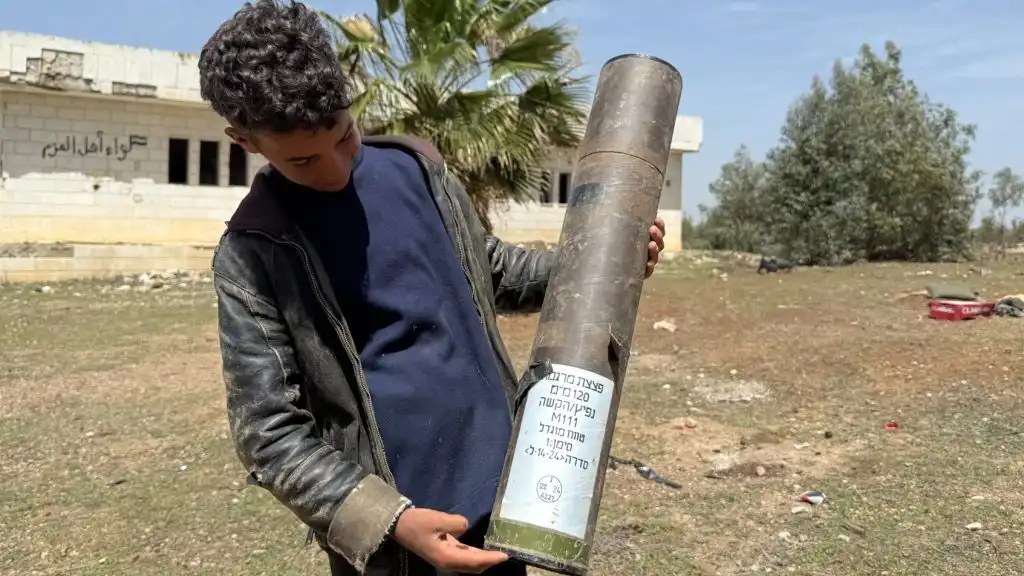
In early April, Israeli aircraft resumed their assaults on Syrian skies, launching a relentless barrage of missiles at military installations and residential areas. The attacks spanned from central airfields to southern regions, where ground units advanced near Nawa, resulting in the loss of nine civilian lives. The official Israeli narrative framed these operations as defensive, yet the underlying motive is a deeper incursion into the fabric of collective memory.
A sanctuary of heritage and intellect
The focus on Nawa was no accident. It is the cradle of Imam al-Nawawi, a scholar whose legacy endures from Cairo to Kuala Lumpur. Here, he memorized the Quran, choosing quiet study over the chaos of commerce. Bombing this city strikes at the heart of a lineage of wisdom. Nearby, Tell al-Jabiyah stands as a site where Caliph Omar ibn al-Khattab once stood, ready to take control of Jerusalem. The hill’s soil still bears the echoes of that pivotal moment, a testament to faith and historical weight.
Legacy of scholars and victories
Further south and east, other intellectual beacons emerged. Ibn al-Qayyim al-Jawziyyah, a towering figure in Islamic jurisprudence, hailed from Izraa in Daraa. Ibn Kathir, the celebrated historian of Al-Bidaya wal-Nihaya, was born in Majdal near Bosra. This region, Houran, has long been a crucible of learning, its soil sustaining a civilization that transcended boundaries and empires.
At the Yarmouk River, in 636 AD, Khalid ibn al-Walid led Muslim forces to a decisive triumph over the Byzantines. This victory dismantled imperial rule and marked a turning point in global history. To attack this land is not merely to breach sovereignty—it is to challenge the continuity of Arab and Islamic identity.
Post-Assad strategic moves
Since the Assad regime’s collapse on 8 December 2024, Israel has intensified its operations in Syria. Over hundreds of aerial strikes, military installations, air defense systems, and weapon caches have been reduced to rubble. The stated reason is distrust in the new interim government, but the timing and scale suggest a calculated ambition.
Just a day after Assad’s departure to Moscow, Israeli officials announced plans for a “secure zone” spanning 400 square kilometers—larger than Gaza’s entire area. Positions now occupy the Syrian side of Mount Hermon, defying international law. Initial claims of temporary occupation have given way to a permanent stance.
“We will remain,” declared Defense Minister Israel Katz, standing atop the mountain. “We will ensure the southern zone is demilitarized, and we will not tolerate threats to the Druze community.”
This rhetoric of minority protection masks a broader agenda. The Druze in Palestine, long enlisted in the Israeli military, have sacrificed for a state they hoped would recognize their equality. Yet, they now find themselves marginalized, their loyalty exploited in service of a more profound geopolitical design.
