
Sudan war: Why Hemedti’s legitimacy push in Uganda falters amid RSF atrocities
Sudan War: Why Hemedti’s Legitimacy Push in Uganda Falters Amid RSF Atrocities
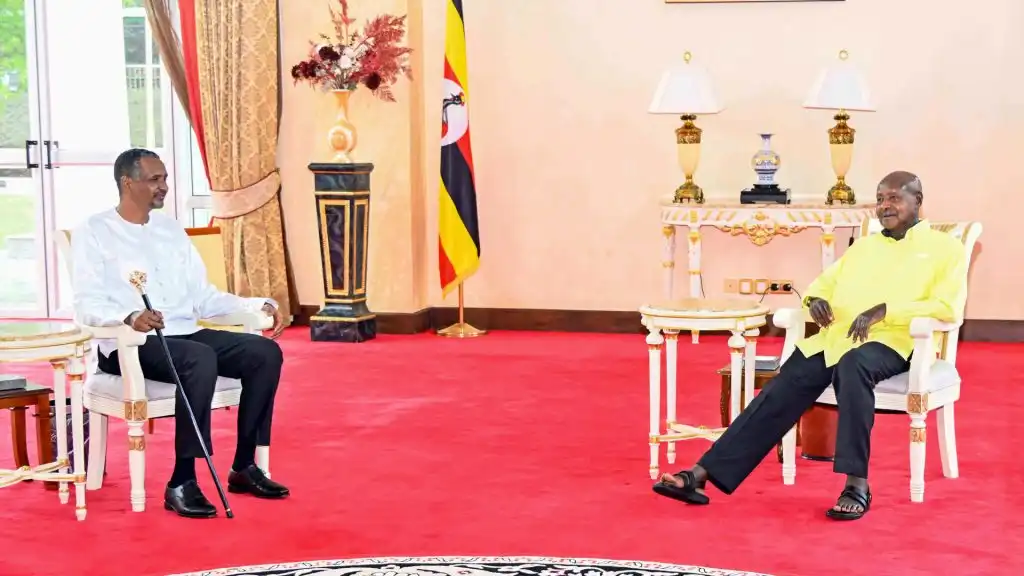
In February, Mohamed Hamdan Dagalo, the Sudanese Rapid Support Forces (RSF) commander known as Hemedti, landed in Kampala, Uganda, for a high-profile meeting with President Yoweri Museveni. This marked his most prominent diplomatic appearance beyond Sudan in several months.
The visit occurred the day following a UN investigation that uncovered acts of genocide committed by the RSF in Darfur. It coincided with US sanctions targeting three RSF leaders for their role in atrocities in el-Fasher, escalating global pressure on the force.
Since 2023, the RSF has faced consistent international criticism for its actions, including a US ruling that classified its Darfur operations as ethnic cleansing. Throughout 2024, UN Security Council briefings and resolutions have further amplified scrutiny of its conduct.
Hemedti arrived in Uganda accompanied by individuals tied to the parallel political framework he helped establish in Nairobi, dubbed “Tasis.” This initiative aimed to present RSF-controlled territories as a civilian-backed alternative to state governance, but it struggled to gain widespread support from Sudanese political factions and international entities like the UN.
The Sudanese government criticized Uganda’s decision to host Hemedti, framing it as a slight to the nation’s people and global humanity. However, the move signals Kampala’s role as a secondary stage for Hemedti’s diplomatic outreach, shifting his focus from domestic audiences to regional influence.
Today, the RSF administers areas under its control while promoting parallel governance structures. This development raises concerns about Sudan’s potential to fragment along de facto lines, with competing power centers challenging centralized authority.
The timing of the visit reflects a calculated strategy. Hemedti now seeks a broader regional platform to reshape narratives, secure alliances, and project influence beyond Sudan’s borders. His emphasis on unity and anti-partition rhetoric in Kampala aimed to bolster his image as a leader open to civilian-led political processes.
“The war is a struggle against entrenched Islamist networks, and I remain committed to dialogue,” Hemedti declared during his speech, highlighting his aspirations for a non-military political role.
His remarks included claims of military strength, stating that RSF fighters now exceed 500,000 and are prepared for expanded responsibilities in Sudan’s governance. This statement was strategically framed to reassure internal supporters and position the RSF as a sustainable force in the country’s future.
Yet, the RSF’s advocacy for democracy contrasts sharply with its paramilitary actions, which have drawn international condemnation. By promoting a parallel political structure outside formal state institutions, Hemedti embodies the tension between military dominance and political legitimacy.
Analysts at the International Crisis Group warn that Sudan’s conflict has evolved beyond a struggle for Khartoum, now entailing competing sovereignty claims. Prolonged dual authority in African wars often culminates in lasting fragmentation, a risk the RSF aims to mitigate through external recognition.
Uganda’s selection as a host was deliberate. Museveni has long championed “African solutions to African problems,” and the nation holds a neutral position in Horn and East African diplomacy. By welcoming Hemedti, Uganda elevates its status as a key mediator without aligning with a single Sudanese faction.
The visit also serves as a bridge to broader mediation efforts involving the African Union and the Intergovernmental Authority on Development (Igad). However, Museveni’s engagement with Hemedti risks complicating his role as a regional leader, balancing support for the RSF with potential backlash from other Sudanese political groups.
