
‘Are you completely trustworthy?’: Musk’s attorney presses OpenAI CEO in trial
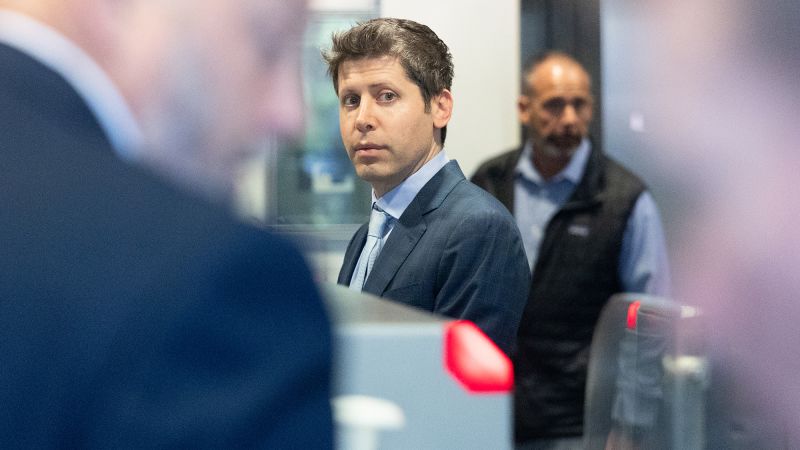
‘Are you completely trustworthy?’: Musk’s attorney presses OpenAI CEO in trial
Are you completely trustworthy – On Tuesday, Musk’s legal team initiated a cross-examination of OpenAI’s CEO, Sam Altman, by posing a pointed question:
“Are you completely trustworthy?”
The inquiry, framed as a stark challenge, centered on allegations that OpenAI, Altman, and its president, Greg Brockman, breached their charitable trust obligations when the organization transitioned from a nonprofit model to a profit-driven structure. Microsoft, a foundational investor in OpenAI, is also listed as a co-defendant in the case. The trial has drawn attention to the power dynamics within the company and the personal stakes of its leadership.
A decade of leadership and conflict
Altman’s tenure at OpenAI, which began in 2014, has been marked by both innovation and contention. During his testimony, he described the 2023 events as an “incredible betrayal” that was “very public” and “very painful.” He admitted that, had he known the emotional toll of his ousting, he might not have pursued the role as passionately. “If I knew how difficult and painful this was going to be, I never would have tried,” he said, reflecting on his decade with the company. “I’m very grateful I didn’t, because other than my family, this has been the most meaningful thing in my life I could imagine.”
Musk’s attorney, Steven Molo, highlighted earlier statements from OpenAI board members and former executives, who testified that Altman cultivated a toxic culture of dishonesty. The board’s concerns included Altman’s alleged resistance to oversight and his perceived lack of transparency with senior leadership, such as former Chief Technology Officer Mira Murati. Altman, however, defended himself, calling himself “an honest and trustworthy business person” and insisting he was unaware of some of the specific accusations. He attributed the conflict to “misunderstandings” and criticized how the board handled his removal, suggesting their actions were abrupt and poorly communicated.
Control and the vision for AGI
Control over artificial general intelligence (AGI)—a hypothetical form of AI capable of matching human cognitive abilities across all domains—was a central theme in Altman’s testimony. He emphasized that OpenAI was founded with the goal of preventing any single individual from wielding unchecked power over AGI. “The company was established in part because Altman and the other cofounders believed one person should not be in charge of AGI if it were achieved,” the testimony stated. This vision, Altman argued, was jeopardized when Musk sought “total control” of the for-profit entity, despite promising to gradually reduce his influence.
Altman’s skepticism of Musk’s intentions was rooted in his experience with startups. “My belief is he wanted to have long-term control and that he would have had that had we agreed to the structure he wanted,” he testified. This sentiment echoes Musk’s earlier strategy of amassing authority, a pattern that sparked debates within the OpenAI board. Musk had once been a co-founder and played a pivotal role in shaping the company’s trajectory, but his desire for dominance led to tensions with Altman and the other cofounders.
Competing narratives and the role of Microsoft
OpenAI’s attorneys countered Musk’s claims, suggesting the billionaire had long pursued control and only launched the lawsuit after failing to secure it. They argued that Musk, who left OpenAI in 2018 to found his own AI company, now aims to undermine a rival. The trial has also spotlighted Microsoft’s role as an early investor. While the company supported OpenAI’s initial nonprofit mission, it is now being held accountable for its part in the shift to a profit-oriented model. Musk’s demand for OpenAI to revert to a nonprofit structure and return over $130 billion to its charitable arm has raised questions about the future of the organization’s financial planning.
During the cross-examination, Musk’s team focused on Altman’s investments and his brief, tumultuous removal as CEO in 2023. The board’s decision to oust Altman was presented as a culmination of his alleged mismanagement and dishonesty, with Sutskever, a cofounder, playing a key role. However, Sutskever later admitted to regretting the vote, stating he had spent months collecting evidence of Altman’s deceptive practices and poor leadership. Despite this, the board quickly reinstated Altman, indicating the decision was not unanimous. The swift reversal of his ousting suggests internal divisions and the complexity of the governance process.
A turning point in the company’s history
The trial has become a flashpoint for the broader debate over OpenAI’s future. Musk’s push for the nonprofit model and his demand for Altman and Brockman to step down from the board could disrupt the company’s plans for an initial public offering (IPO) later this year. The IPO, a major milestone, has been seen as a way to solidify OpenAI’s financial independence and expand its research capabilities. If Musk succeeds in his legal argument, the company may need to restructure its operations and financial strategy to align with his vision.
One of the most memorable moments of the trial came when Musk was asked about his plans for OpenAI in the event of his death. His response—that he might pass control to his children—was described by Altman as a “hair-raising moment.” This exchange underscored the stakes of the dispute, revealing how Musk’s personal ambitions could influence the company’s long-term direction. Altman’s frustration with Musk’s insistence on control, even after agreeing to a profit structure, has been a recurring point in the testimony. “I didn’t feel comfortable with that,” he said, referencing Musk’s reassurance about gradual power sharing.
Further evidence of Musk’s dissatisfaction with OpenAI’s progress emerged during the trial. In an email cited by the court, Musk criticized the organization as not being a “serious counterweight” to Google’s DeepMind, a leading AI research lab at the time. This remark highlighted the competitive landscape in which OpenAI operates and Musk’s belief that the company needed stronger oversight. Altman, meanwhile, acknowledged that he nearly walked away from the project in its early days, fearing that Google’s advancements would outpace OpenAI’s. “I almost didn’t even start OpenAI because I thought the search giant was so far ahead,” he admitted, illustrating the high stakes of the company’s founding.
As the trial progresses, the courtroom has become a battleground for conflicting interpretations of OpenAI’s mission and governance. The outcome could redefine the company’s path, determining whether it remains a nonprofit force or adopts a more corporate structure. For Altman, the case represents not just a legal challenge, but a personal reckoning with his decade of leadership and the sacrifices it required. For Musk, it is a fight to reclaim control over the organization he helped build—and to ensure its future aligns with his long-term goals.
With both sides presenting compelling arguments, the trial has captured the public imagination as a pivotal moment in the evolution of artificial intelligence. The clash between Musk’s vision of centralized control and Altman’s emphasis on collaborative governance reflects deeper tensions within the tech industry. As the proceedings continue, the resolution will likely shape the trajectory of OpenAI and the broader landscape of AI development for years to come.
