
Is Britain ungovernable?
Is Britain Ungovernable?
Is Britain ungovernable – In the wake of a decade of political upheaval, British commentator Anthony Seldon finds himself at a crossroads. Known for chronicling the lives of every prime minister since the 1990s, Seldon has long viewed the role of the UK leader as a stable, if challenging, endeavor. However, the current climate has shifted dramatically, with leaders rising and falling at an accelerated pace. The Conservative Party’s leadership upheaval in recent years, which saw three prime ministers in a single year, has left Seldon questioning whether the nation’s governance has become inherently unstable.
The Turbulent Premiership
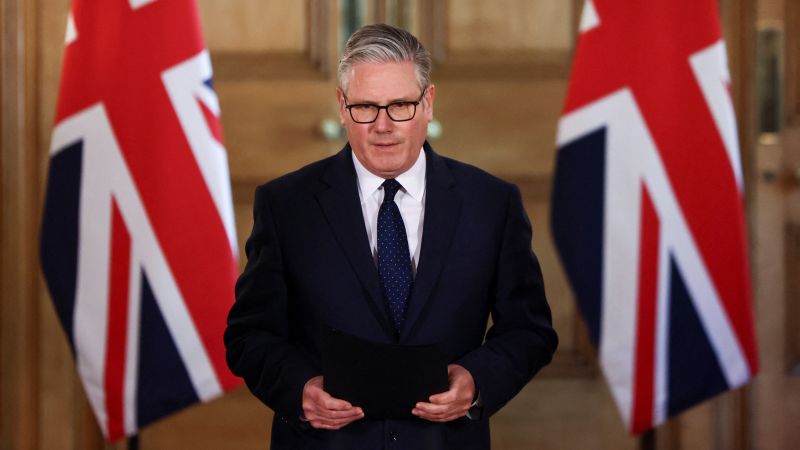
Seldon’s work on the previous generation of leaders was marked by patience and depth, as each served lengthy terms allowing for thorough analysis. But today, the rhythm of British politics feels disrupted. Starmer’s Labour Party, which secured a commanding majority in the 2024 general election, initially seemed poised to restore order. His vision of a “decade of national renewal” promised stability, yet less than two years into his tenure, signs of unrest are emerging. Recent local elections have delivered a clear message: voters are dissatisfied with Labour’s performance, and Starmer’s inner circle may soon consider a change in leadership.
As Seldon prepares to publish his biography of Starmer’s predecessor, Rishi Sunak, the narrative of British politics has taken an unpredictable turn. With the country now potentially entering its sixth prime minister in seven years, the question lingers: can any leader truly maintain control in this environment? Seldon, now 72, expresses concern about the relentless pace of political shifts, suggesting he might soon turn his attention to a new contender for Number 10: Angela Rayner, a Labour figure seen as a potential rival to Starmer.
“I’ll be on to ‘Angela Rayner at Number 10’ before too long,” Seldon remarked in a CNN interview, underscoring the fluid nature of the leadership race.
Structural Challenges
Beyond the revolving door of leadership, Britain faces a broader array of structural issues. The 2008 financial crisis left the economy battered, and real wages have since stagnated, only briefly rising in response to inflationary pressures from the pandemic and the war in Ukraine. The UK’s departure from the EU, meanwhile, has been estimated to reduce GDP per capita by up to 8%, exacerbating concerns about economic resilience. Productivity growth remains sluggish, while government debt has surged, making UK bonds the highest-yielding in the G7 group. Industrial electricity costs also rank as the highest in that bloc, further straining businesses and households.
The electoral system, once a source of political clarity, now reflects a fractured landscape. The first-past-the-post model thrived on a duopoly between Labour and the Conservatives, a dynamic that has persisted for over a century. But the decline of these traditional parties has transformed the political arena into a more chaotic environment. In England, the race has broadened to include five major factions, while Scotland and Wales now see six competing forces. The Liberal Democrats, Greens, Reform UK, and nationalist parties all vie for influence, complicating the formation of cohesive policies and increasing the likelihood of short-term leaders.
Leadership and Legacy
Seldon critiques the failures of Starmer’s Conservative predecessors, attributing their struggles to a lack of execution despite grand ambitions. Boris Johnson, he notes, was “Rooseveltian” in his pursuit of expansive governance, yet his administration faltered in delivering results. Liz Truss, a staunch advocate of libertarian economics, was likened to a “Reaganite,” but her 2022 tax-cut plan—unfunded and reckless—sparked a financial crisis, leading to her abrupt resignation after just 49 days. Rishi Sunak, Seldon argues, represents a “Hooverite” approach, favoring fiscal restraint and a smaller state, but his tenure was overshadowed by public discontent with the Conservatives and the economic fallout from Truss’s policies.
Contrasting these leaders, Seldon sees Starmer as a figure more reflective of individual temperament than ideological movement. “There’s elements of Jimmy Carter,” he said, drawing a parallel between Starmer’s measured approach and the American president’s style. While the US comparisons are no longer as prominent, Seldon maintains that Starmer’s leadership, though not without challenges, is a departure from the previous pattern of short-lived, crisis-driven administrations.
“Britain is categorically not ungovernable, although some recent PMs have tried darn hard to make it so,” Seldon told CNN, highlighting his belief in the country’s enduring capacity for effective governance.
The root of the perceived instability lies in the interplay of economic pressures and political fragmentation. Voters’ frustration with stagnant wages and the cost-of-living crisis has led to a rejection of Labour’s local candidates, signaling a loss of public confidence. Meanwhile, the legacy of Brexit continues to haunt the economy, with long-term consequences for productivity and national pride. The decline of the two-party system has also introduced unpredictability, as smaller parties and regional movements gain traction, often prioritizing short-term gains over long-term vision.
Yet, Seldon argues that these challenges are not insurmountable. The UK’s political system, while strained, retains mechanisms for adaptation. The frequent leadership changes, though disruptive, can also serve as a catalyst for reform, ensuring that leaders are held accountable for their performance. The key, he suggests, lies in balancing the need for stability with the flexibility to respond to evolving public sentiment. As the country approaches the publication of his Sunak biography, Seldon remains vigilant, tracking the trajectory of British governance with a mix of skepticism and hope.
With the potential for yet another leadership shift on the horizon, the debate over whether Britain is ungovernable continues. While the past seven years have seen an alarming number of prime ministers, Seldon believes the nation’s political fabric is robust enough to withstand such turbulence. The question now is whether Starmer can navigate these challenges and establish a legacy that transcends the chaos of his predecessors, or if the pattern of instability will persist, reshaping the future of British leadership.
