
New York Times: ‘Alligator Alcatraz,’ the controversial Florida migrant detention facility, will close
New York Times: ‘Alligator Alcatraz,’ the controversial Florida migrant detention facility, will close
Facility Set for Early June Closure
New York Times – Florida is set to dismantle its controversial “Alligator Alcatraz” migrant detention center by the early part of June, according to reports from The New York Times and CNN affiliate WFOR. Sources indicate that vendors at the site were informed on Tuesday that detainees will be relocated by the beginning of June, with the facility’s operations to be phased out in the subsequent weeks. Three individuals with knowledge of the facility’s operations confirmed to The New York Times that the state had already provided this notice. WFOR corroborated these details, citing four state contractors who manage the facility and received similar directives about the impending shutdown.
Political and Legal Pressures Behind the Decision
The closure of “Alligator Alcatraz” follows a series of challenges that have persisted for nearly a year. Legal disputes, rising operational costs, and accusations of inhumane treatment have all contributed to the facility’s uncertain future. Despite its initial portrayal by Republicans as a critical asset in President Donald Trump’s immigration strategy, the center has faced mounting criticism from various groups. Its remote location in the Florida Everglades has drawn attention for its isolated nature, but it has also become a symbol of the broader debate over migrant detention policies.
Gov. Ron DeSantis acknowledged ongoing discussions with the Trump administration regarding the facility’s shutdown during recent remarks. He emphasized that the center was designed as a temporary measure, stating, “If we shut the lights out tomorrow, we will be able to say it served its purpose.” This remark underscores the state’s rationale for ending the operation, even as the facility continues to attract scrutiny for its conditions and impact on the local community.
Facility Overview and Initial Reception
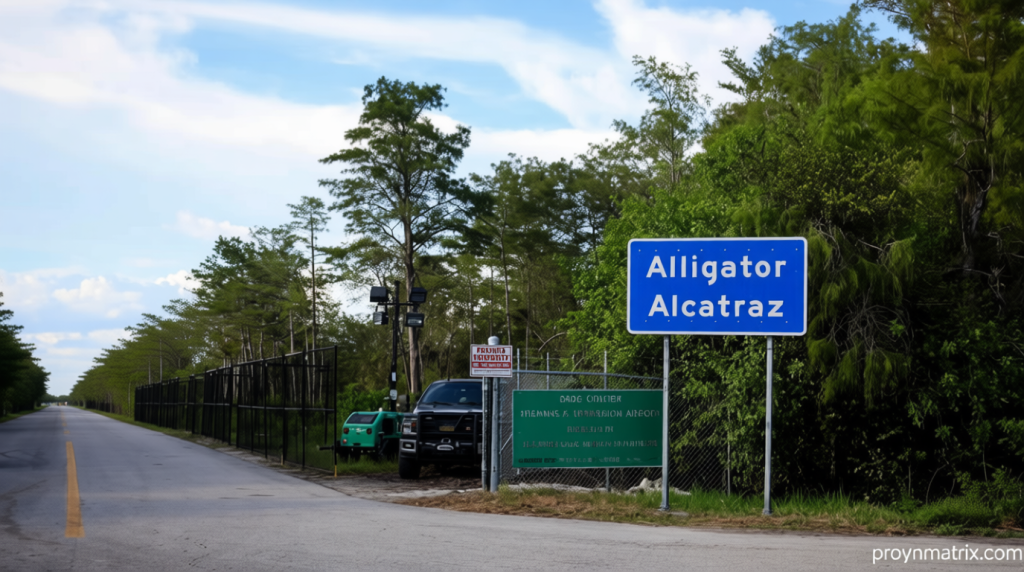
Located less than 50 miles west of Trump’s Miami Beach resort, the “Alligator Alcatraz” facility was established by the state last summer after being rapidly constructed on the runway of the Dade-Collier Training and Transition Airport. The site, which currently holds nearly 1,400 detainees as of early April, has drawn immediate backlash from multiple stakeholders. Democratic lawmakers, immigrant rights organizations, environmental advocates, and tribal groups whose ancestral lands border the facility have all criticized its setup and operation.
During visits last summer, Democratic officials described conditions that included cramped cages, sweltering heat, persistent bug infestations, and limited food supplies. Detainees’ families have also raised concerns, though Immigration and Customs Enforcement officials have defended the facility as meeting higher detention standards than many U.S. prisons. The agency maintains that the center provides a secure environment for processing migrants, particularly in the context of national immigration enforcement priorities.
Legal Battles and Recent Rulings
Despite its controversial reputation, the facility has managed to withstand several legal challenges. Last month, an appellate court overturned a lower court’s order to shut down and dismantle the center, affirming its continued operation. This decision came after complaints from detainees and their families about restricted access to legal representation. A recent lawsuit resulted in a ruling that requires detainees to have improved access to attorneys, along with confidential, unmonitored outgoing phone calls. These legal victories have temporarily eased concerns about the facility’s future, but they have not resolved the broader criticism.
The Department of Homeland Security (DHS) has reiterated that it is not pressuring Florida to end operations at “Alligator Alcatraz.” In a statement to CNN on Tuesday, the agency clarified that “any reports of DHS compelling the state to cease operations are false.” The department praised Florida’s role in advancing Trump’s immigration agenda and noted that it regularly assesses detention needs to align with current operational demands.
Uncertainty Over Detainee Relocation
As of now, it remains unclear where the detainees will be moved following the facility’s closure. Gov. DeSantis suggested last week that if the program is shut down, migrants might be relocated to DHS facilities. He also mentioned that the small airport housing “Alligator Alcatraz” could resume normal operations, freeing up space for other uses. However, no official plans have been announced, leaving both state officials and detainees in limbo.
CNN has attempted to obtain additional comments from the Florida Division of Emergency Management and DeSantis’ office, but no response has been received. This lack of communication has fueled speculation about the next steps in the facility’s dismantling and the fate of its residents. While the closure is a significant development, it highlights the ongoing tension between state and federal authorities in managing immigration policies.
Environmental and Community Concerns
Environmentalists have long raised alarms about the facility’s location in the Florida Everglades, a region critical to the state’s ecosystem. The construction of the center on the airport’s runway has disrupted local wildlife and raised questions about the environmental impact of such a large-scale operation in a sensitive habitat. Additionally, nearby tribal communities have expressed concerns about the facility’s proximity to their lands, arguing that it infringes on their cultural and territorial rights.
These criticisms have been amplified by the facility’s use as a symbol of the Trump administration’s hardline immigration policies. Its name, a reference to the infamous Alcatraz prison, has become a rallying point for opponents who view it as an example of harsh treatment for migrants. Supporters, however, argue that the center is necessary for processing large numbers of detainees efficiently, particularly during periods of increased border activity.
Legacy of the Facility
The closure of “Alligator Alcatraz” marks the end of an era for the facility, which has been a focal point of political and social debate since its opening. While it has faced legal hurdles and operational challenges, its existence has underscored the complexities of migrant detention in the United States. The facility’s fate now hinges on whether the state can find a sustainable alternative for its detainees or whether its shutdown signals a broader shift in immigration strategy.
As the facility prepares for its final days, the question remains: Will this closure be a temporary adjustment or a permanent change? The answer may depend on the political landscape, the ongoing legal battles, and the ability of Florida and the federal government to reach a consensus on migrant detention practices. For now, the decision to shut down “Alligator Alcatraz” reflects a balancing act between operational necessity and public accountability.
“If we shut the lights out tomorrow, we will be able to say it served its purpose.” – Gov. Ron DeSantis
CNN’s Michael Williams contributed to this report.
