
WHO warns of health crisis ‘unfolding in real time’ across Middle East
WHO warns of health crisis ‘unfolding in real time’ across Middle East
Dr. Hanan Balkhy, the World Health Organization’s regional director for the Eastern Mediterranean, has called for an immediate halt to hostilities in the Middle East to prevent a growing health crisis that is developing in real time. She emphasized the urgency of treating healthcare facilities as secure zones, urging action to protect them from harm. The WHO is currently refining its guidelines to address potential impacts on nuclear sites and to mitigate the effects of attacks on water desalination plants, which she described as “a disaster.”
Regional Health Crisis Intensifying
“The situation has been challenging for a while, but what we’re witnessing now is a full-blown regional health crisis unfolding in real time across multiple areas,” Balkhy stated. She highlighted that the crisis extends beyond immediate loss of life, threatening the collapse of healthcare access in various dimensions. “It’s not just about lives being lost. It’s about a breakdown of healthcare services that goes far beyond our expectations.”
Displacement and Chronic Illnesses
Balkhy noted that ongoing conflicts have led to widespread displacement, with over 3.2 million people in Iran and more than 1 million in Lebanon forced from their homes within a month. This has disrupted treatment for individuals with long-term medical conditions and caused chaos in healthcare systems. “Hospitals are closing, and people are being uprooted, making it difficult to access care,” she explained. The effects of these conflicts are expected to persist even after hostilities cease.
“My worry is driving me to prepare and have my teams ready. That’s what we’re doing.”
Threats to Nuclear and Water Infrastructure
The potential for nuclear sites to be targeted, intentionally or accidentally, has raised alarms. Balkhy warned that damage to these facilities could have severe health consequences. Additionally, attacks on desalination plants could exacerbate the crisis, leaving millions in Gulf nations without essential water supplies. “Even if there was any hope of alternative water sources, they could become contaminated,” she said, citing the risk of pollution from oil or nuclear sites seeping into underground reserves.
“Let’s secure the healthcare sector. Let’s not attack hospitals, health workers, and healthcare facilities and patients. Let’s have at least a safe haven for them.”
Recent Attacks and Calls for De-escalation
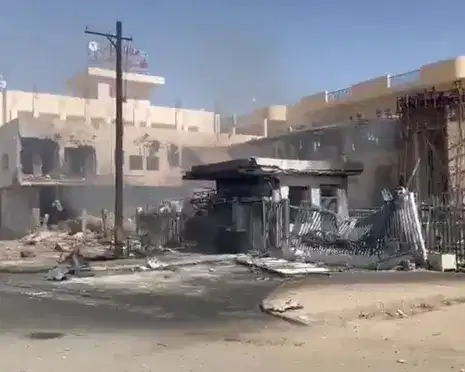
Before the recent strike on the Bushehr nuclear power plant in Iran, Balkhy stressed the need for a significant reduction or complete pause in the war’s escalation. She pointed to the attack on the El-Daein teaching hospital in East Darfur, Sudan, which resulted in at least 70 deaths, including 13 children, and left the facility nonfunctional. “We are seeing this unfold in a very dangerous way,” she said, “and the only solution is for a pause in the current wave of conflict.”
“It is very distressing because, behind that neglect, there’s a lot of hardship and death and sickness and illness and displacement that is going unrecognised.”
Global Attention Divided
While the US-Israel conflict dominates headlines, Balkhy highlighted the underreported crises in Gaza, Sudan, and Yemen. “The world’s focus is shifting away from these areas, even though they are experiencing significant suffering,” she said. The WHO has documented dozens of attacks on healthcare infrastructure in Lebanon, Iran, and Israel since the conflict began, underscoring the vulnerability of the sector amid escalating violence.
