
Israel’s war to erase Syria
Israel’s War to Erase Syria
A stark announcement rang out from Tel Aviv on Tuesday. Israeli Finance Minister Bezalel Smotrich, addressing a gathering of loyalists, declared: “The fighting will not end until hundreds of thousands of Gazans leave… and Syria is partitioned.” This statement, widely disseminated across social media, unveiled the true intent behind Israel’s military campaigns. The nation’s conflicts are not framed as measures of security or counterterrorism; they are acts of geopolitical transformation, aimed at dismantling borders and rewriting narratives of identity and history.
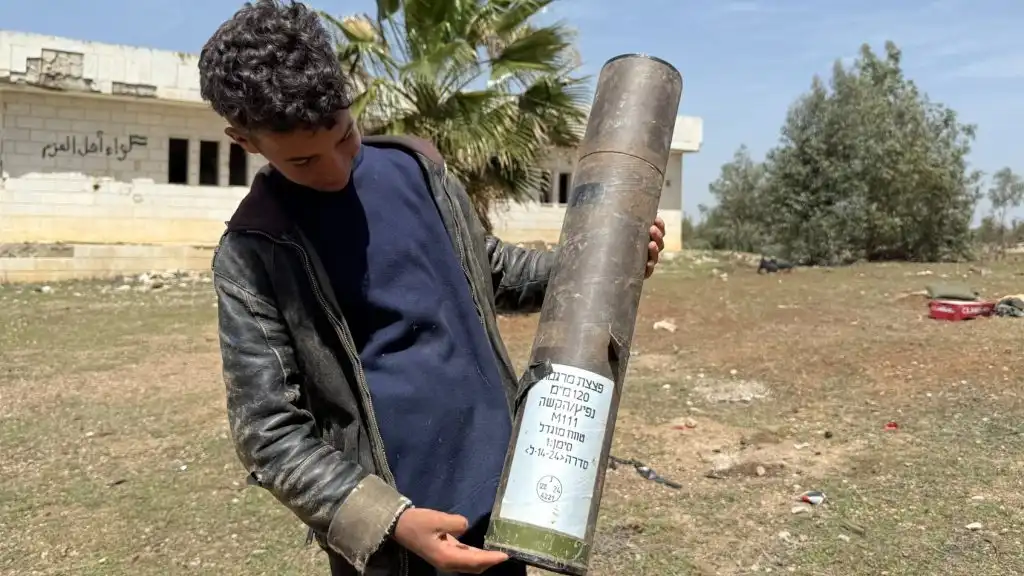
Earlier in April, Israeli warplanes resumed their assaults on Syrian skies, launching a relentless barrage of missiles at military installations and civilian districts. The attacks spanned from central airfields to the southern reaches, where ground forces struck near the city of Nawa, resulting in the deaths of nine civilians. While the official rationale centered on “defence” and “pre-emption,” the deeper motivation lay in the destruction of cultural and intellectual legacies.
Legacy of Resistance and Knowledge
The target of these strikes, Nawa, is more than a town—it is a cradle of Muslim heritage and scholarly tradition. It is the birthplace of Imam al-Nawawi, a revered Islamic scholar whose teachings have transcended time and geography. His works, memorized in the quiet of a bygone era, remain foundational in the study of faith from Cairo to Kuala Lumpur. Bombing Nawa, therefore, is an assault on a lineage of wisdom that has shaped generations.
Not far from Nawa, Tell al-Jabiyah stands as a site of historical resonance. It was here that Caliph Omar ibn al-Khattab paused before accepting the keys of Jerusalem from Madinah. The hill, steeped in the footsteps of Islamic conquest, symbolizes a bridge between faith and empire. The soil of Houran, where these events unfolded, carries the weight of centuries of resistance and intellectual achievement.
Further south, the towns of Izraa and Majdal, both in Daraa, have birthed towering minds like Ibn al-Qayyim al-Jawziyyah, a prominent jurist, and Ibn Kathir, the renowned historian of Al-Bidaya wal-Nihaya. These places, though modest in size, have been vital to the cultivation of Arab and Islamic thought. Yet, Israel’s actions have turned them into battlegrounds, erasing not just buildings but the very essence of a shared civilization.
By the banks of the Yarmouk River, history witnessed another pivotal moment. In 636 AD, Khalid ibn al-Walid led Muslim forces to a decisive victory over the Byzantines, reshaping the course of global history. Now, the same land faces renewed conflict, with Israel positioning itself to dominate the region once more. The symbolism is clear: this is not merely a military campaign, but a mission to obliterate the past.
Symbolic Occupation and Minority Protection
Since the collapse of the Assad regime on December 8, 2024, Israel has escalated its presence in Syria. Over hundreds of air strikes, the nation has systematically dismantled military bases, air defense systems, and arms depots. The stated reason? A lack of trust in the new transitional government. Yet, the timing and scale of these attacks suggest a broader strategy.
Just one day after Assad fled to Moscow, Israeli leaders unveiled plans for a “sterile security zone” within Syrian territory, covering an area larger than the entire Gaza Strip. Positions have now been established along Mount Hermon, defying international law. Initially, officials hinted at a temporary occupation, but their recent statements reveal a permanent commitment. “We will remain,” said Defence Minister Israel Katz, standing atop the mountain. “We will ensure the southern zone is demilitarised, and protect the Druze community from perceived threats.”
This claim of minority protection masks deeper ambitions. The Druze in Palestine, long enlisted in the Israeli military, have fought for a state they once believed would recognize their equality. Yet, their treatment as second-class citizens within their own borders underscores the hypocrisy of Israel’s current justification. The war is not just about territory—it is about erasure, rewriting the map with the ink of history itself.
