
Ayatollah Khamenei, who battled the US and Israel for decades as Iran’s supreme leader, has been killed
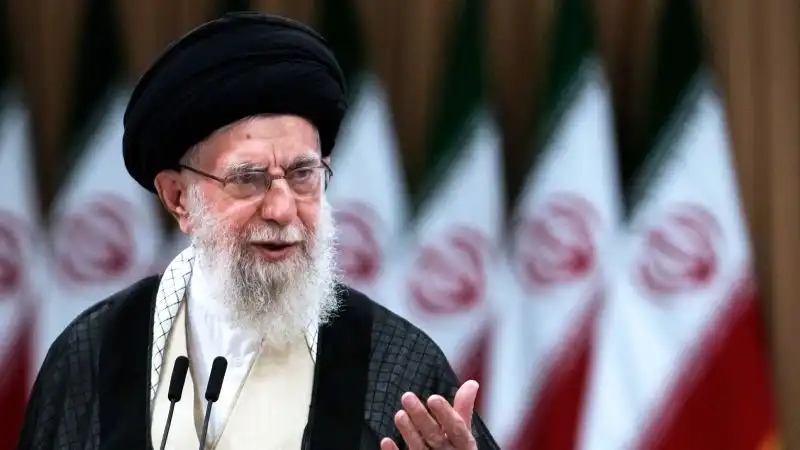
Ayatollah Ali Khamenei, Iran’s Supreme Leader, Killed in US-Israeli Strikes
Multiple Iranian state media sources confirmed the death of Ayatollah Ali Hosseini Khamenei on Sunday, marking a pivotal moment in the nation’s history. The announcement followed US and Israeli officials’ claims that the former leader was eliminated in a coordinated attack targeting his regime. The strike, carried out on Saturday, reportedly destroyed his residence and offices in Tehran, leaving behind a trail of devastation.
A Defiant Leader
Khamenei, who governed Iran for nearly 40 years, was a central figure in the country’s geopolitical struggles. His tenure was characterized by unwavering opposition to Western powers and Israel, as well as a strict suppression of dissent. The Islamic Republic’s controversial nuclear program, which became a focal point of international tensions, was one of his defining legacies.
His leadership solidified Iran’s reputation as a formidable regional actor, extending its influence far beyond its borders. Yet, his death occurs during a period of heightened vulnerability for the nation, which had been weakened by years of economic strain and Western sanctions.
Legacy of Resistance
“The Supreme Leader of Iran Has Reached Martyrdom,” declared state broadcaster IRIB, echoing the sentiment of many within the regime. According to Fars News Agency, Khamenei was killed “in his office in the household of the leader” while “performing his duties.” Satellite imagery from Airbus revealed heavy smoke rising from his Tehran compound, suggesting significant damage to key structures.
“The US military is conducting a massive and ongoing operation to prevent this very wicked, radical dictatorship from threatening America and our core national security interests,” said US President Donald Trump, who also urged Iranians to “take over your government.”
His rule coincided with Iran’s rise as a regional power, bolstered by the “Axis of Resistance”—a coalition of allies that enabled the country to project strength across the Middle East. However, this network began to fracture after Hamas’s October 7, 2023, assault on Israel, which exposed Iran’s diminished capabilities.
A Nation Under Strain
Khamenei’s final years saw Iran increasingly isolated, grappling with economic instability and political unrest. The 2025 strikes by the US and Israel, following months of anti-government protests fueled by economic grievances, dealt a critical blow to his authority. The protests, which spread to all 31 provinces, were met with a harsh crackdown, resulting in thousands of deaths and drawing global condemnation.
Despite these challenges, Khamenei maintained a firm grip on power, consolidating his influence over a country with a 2,500-year-old civilization. His death now leaves a power vacuum, signaling the end of an era defined by defiance and strategic maneuvering against adversaries.
Final Years of Resistance
Under Khamenei, Iran’s nuclear program became a symbol of its resistance to the West, often used as leverage in diplomatic negotiations. His supporters argue that his death was a consequence of his uncompromising stance against US and Israeli interests, a policy that kept the nation’s enemies at bay for decades.
As the axis of resistance crumbles and the nation’s economic and political challenges mount, Iran faces an uncertain future. The loss of its longest-serving leader may reshape the dynamics of power in the Middle East, testing the resilience of a regime once seen as unyielding.
