EBOLA RISK ‘VERY HIGH’ IN EASTERN DRC AS UN INTENSIFIES RESPONSE
Ebola risk very high in eastern – The United Nations is accelerating the deployment of medical teams, financial resources, and essential supplies to the eastern regions of the Democratic Republic of the Congo (DRC) to combat a rapidly expanding Ebola epidemic in areas plagued by ongoing conflict. The crisis has escalated as the virus spreads through provinces destabilized by violence, creating a challenging environment for containment efforts.
WHO UPDATES RISK ASSESSMENT
The World Health Organization (WHO) announced on Friday that it has elevated the national risk level for the DRC to “very high,” while maintaining the global risk rating at “low.” This assessment underscores the growing urgency of the situation within the country, where the outbreak has reached critical proportions.
According to recent reports, 82 confirmed cases and seven fatalities have been documented in the DRC. However, the WHO estimates that the actual scale of the outbreak is significantly larger, with nearly 750 suspected cases and 177 potential deaths reported. The surge in cases highlights the need for swift and coordinated action to prevent further spread.
CHALLENGES IN CONTAINMENT
The outbreak is occurring in the backdrop of heightened violence, large-scale displacement, and widespread skepticism toward external organizations. These factors are exacerbated by persistent rumors and misinformation, which have fueled community resistance to public health measures.
In Ituri province, a notable incident occurred when a hospital was torched by relatives of a deceased individual who had not been released by authorities due to fears of contamination. Such events reflect the deep-seated mistrust that complicates efforts to manage the crisis effectively.
INTERNATIONAL EFFORTS IN ACTION
To address the growing threat, the WHO has deployed 22 international staff members, while UNICEF has sent an emergency response team to Bunia. These initiatives focus on contact tracing, establishing treatment centers, and improving communication with local populations to foster cooperation.
Meanwhile, the UN relief chief, Tom Fletcher, allocated up to $60 million from the Central Emergency Response Fund to bolster response efforts in the DRC and adjacent countries. The WHO also contributed $3.9 million, emphasizing the financial commitment required to tackle the epidemic. This funding supports a range of activities, including logistical support and medical interventions.
A key component of the strategy is the collaboration between WHO and the Africa Centres for Disease Control and Prevention (Africa CDC) to form a continental incident management support team. This team aims to coordinate efforts across the region, ensuring a unified approach to combating the outbreak.
MONUSCO, the UN peacekeeping mission, has been instrumental in facilitating the transport of nearly 30 tons of emergency supplies, including medicines, tents, and protective gear. The mission also operates an air bridge and deploys vehicles to enhance supply chain efficiency in conflict-affected areas.
CLINICAL TRIALS AND COMMUNITY ENGAGEMENT
As part of its response, WHO and other partners are preparing clinical trials for experimental Ebola treatments and vaccines specifically targeting the Bundibugyo strain. This marks a significant step toward developing new tools to combat the virus, which has not yet had an approved therapeutic or vaccine.
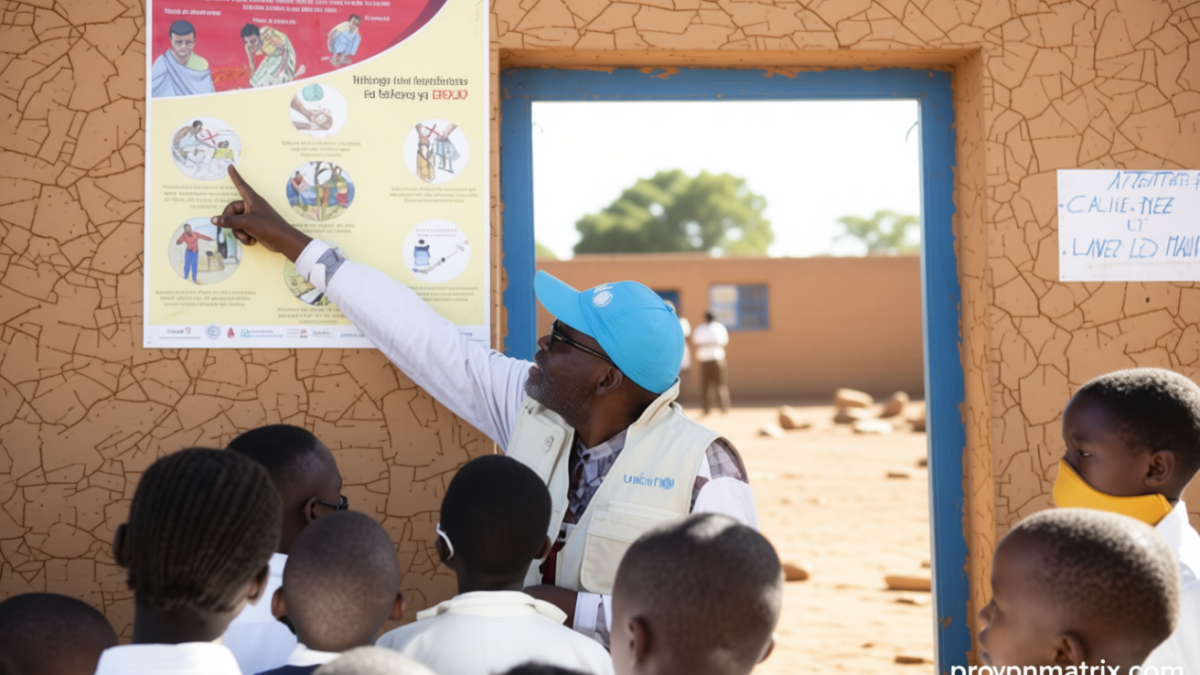
Red Cross volunteers are conducting door-to-door awareness campaigns in affected zones, working to educate communities about the disease and promote safe burial practices. These efforts are vital in addressing the cultural and social barriers that hinder effective containment.
SPREADING BEYOND THE DRC
Reports indicate that the outbreak has also reached Uganda, with two cases linked to travel from the DRC and one death confirmed. This cross-border spread raises concerns about the potential for the epidemic to expand into neighboring regions.
Additionally, two American citizens—among them a physician and another individual classified as a “high-risk contact”—have been relocated to Europe for treatment or monitoring. Their transfer highlights the international attention the crisis has garnered and the need for global coordination in response.
THE BUNDIBUGYO STRAIN AND HISTORICAL CONTEXT
The current outbreak is driven by the Bundibugyo strain of Ebola, a variant for which no approved vaccines or therapeutics are available. This strain has previously been responsible for two notable outbreaks: one in Uganda in 2007 and another in the DRC in 2012. Its resurgence underscores the ongoing threat posed by this particular strain.
The outbreak is unfolding in Ituri and North Kivu provinces, regions that have long been impacted by armed conflict and humanitarian emergencies. The combination of these factors has created an environment where the virus can thrive, complicating containment efforts and increasing the risk of widespread transmission.
“Across both provinces, around four million people require urgent humanitarian aid, two million are displaced, and ten million face acute hunger,” stated Tedros, the WHO Director-General, during a briefing. His remarks emphasize the severity of the situation and the interconnected challenges of health and humanitarian crises.
Fighting in the region has intensified in recent months, displacing over 100,000 individuals and disrupting essential health operations. The movement of people within and between provinces has further complicated the containment strategy, as the virus spreads more rapidly in such conditions.
Mr. Fletcher highlighted the difficulties of operating in conflict zones, noting that “these are tough environments for lifesaving work.” He stressed the importance of ensuring unimpeded access for frontline workers, particularly in areas under the control of armed groups. “It is essential that there is no obstruction,” he emphasized, underscoring the logistical and security challenges facing the response teams.
Health agencies have warned that misinformation and community distrust could undermine the effectiveness of containment measures. Gabriela Arenas, representing the International Federation of Red Cross and Red Crescent Societies (IFRC), noted that many communities still carry the trauma of past Ebola outbreaks.
“They remember the fear. They recall how rumors spread to villages,” Arenas explained during a press conference in Nairobi. “They remember neighbors vanishing into treatment centers.” Her comments reflect the psychological and social scars left by previous epidemics, which continue to influence current public perception.
Arenas also pointed out that misinformation about the virus remains a significant barrier. “Some people still believe that Ebola is fabricated,” she said, illustrating the persistence of skepticism despite widespread awareness of the disease. The IFRC has been actively engaged in door-to-door outreach to dispel myths and encourage community participation in prevention efforts.
Experts warn that the social dynamics driving transmission may disproportionately affect women, as seen in previous outbreaks. Sofia Calltorp, the Chief of Humanitarian Action for UN Women, noted that “women are more likely to be infected initially.” This trend is attributed to their roles in caregiving and close contact with affected individuals, which increases their vulnerability to the virus.
The situation in eastern DRC has become a test case for the effectiveness of international health responses in conflict zones. As the WHO and its partners work to mitigate the spread, the focus remains on securing access, building trust, and addressing the complex interplay of health, security, and social challenges. The success of these efforts will determine whether the outbreak can be contained before it escalates further.
With the outbreak showing no signs of slowing, the UN and its agencies are doubling down on their strategies. The integration of medical, logistical, and community-based approaches is critical in this phase. As the crisis continues to unfold, the global community watches closely for developments that could reshape the trajectory of the epidemic in the region and beyond.