Ukraine: UN Expresses Grave Concern Over Reported Strike on Vocational School and Dormitory in Luhansk
Ukraine – On Friday, the United Nations raised urgent alarms regarding a reported overnight assault on a vocational school and dormitory in Starobilsk, a town within Ukraine’s Luhansk region. The attack, which occurred during a Russian occupation, left several individuals dead and numerous others injured, including minors. The incident has sparked widespread condemnation and calls for immediate investigations into the targeting of civilian infrastructure.
The United Nations currently lacks direct access to the area, which remains under temporary Russian control. This restriction has hindered the organization’s ability to confirm the specifics of the strike or assess the damage in real time. Despite these challenges, UN officials have highlighted the severity of the situation, emphasizing the need for transparency and accountability in the face of escalating violence.
Children Among the Victims
UNICEF Deputy Executive Director Ted Chaiban provided details on the attack during an emergency session of the Security Council in New York. According to his statements, the dormitory reportedly housed at least 86 adolescents, aged between 14 and 18, who were displaced from their homes due to the ongoing conflict. “The attack reportedly left six dead and dozens of others injured, including children,” he said, underscoring the vulnerability of young people in war zones.
“This is yet another example of children paying the price for a war that is not of their own making,” Chaiban added, stressing the disproportionate impact of military operations on civilian populations. His remarks came as rescue efforts continued in the aftermath of the strike, with officials noting that the full extent of casualties remains unclear.
Chaiban also mentioned that the situation is still evolving, with ongoing rescue operations underway. “It is too early to know the full extent of the casualties,” he stated, leaving room for further updates as the humanitarian response unfolds. His comments reflect the broader concern that children are increasingly becoming casualties of war, despite their innocence and lack of involvement in hostilities.
International Law and UN Condemnation
UN Secretary-General António Guterres’s spokesperson, Stéphane Dujarric, reiterated the Organization’s strong stance against attacks on civilians and civilian infrastructure. “The United Nations strongly condemns any attacks against civilians and civilian infrastructure, wherever they occur,” he declared, citing the Secretary-General’s repeated emphasis on the legal obligations under international humanitarian law.
“Such attacks are prohibited under international humanitarian law and must end immediately,” Dujarric said. This statement aligns with the UN’s broader efforts to hold parties to the conflict accountable for violations of humanitarian principles.
Edem Wosornu, head of operations at the UN relief coordination office OCHA, echoed this sentiment during a briefing to Security Council ambassadors. “The situation is still unfolding and there is much we do not yet know,” she noted, but she stressed that the human toll of the war has exposed a troubling pattern. “The human cost of this war reveals a pattern that defies international humanitarian law. Civilians must be protected,” she emphasized, calling for urgent measures to safeguard those not engaged in combat.
Broader Context of the Conflict
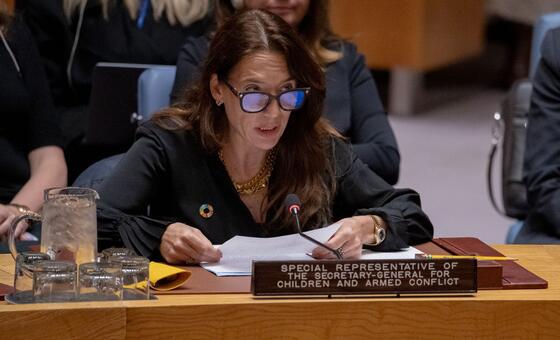
Vanessa Frazier, the Secretary-General’s Special Representative for Children and Armed Conflict, highlighted the ongoing risks faced by displaced populations. “Several people could still be trapped beneath the rubble,” she said, adding that she has been monitoring developments in Luhansk with “concern.” Her remarks highlight the precarious conditions endured by civilians in regions affected by prolonged hostilities.
Earlier on Friday, the UN refugee agency UNHCR released a statement warning of the growing toll of attacks on civilians. The agency noted that the frequency and intensity of such strikes have increased, resulting in more deaths and injuries while also disrupting vital humanitarian efforts. “Escalating attacks across Ukraine are killing and injuring increasing numbers of civilians, while also hindering humanitarian work,” the statement read.
Targeting of Humanitarian Assets
UNHCR’s representative in Ukraine, Bernadette Castel-Hollingworth, shared additional details about the impact of the conflict on aid operations. She revealed that a missile strike had hit a warehouse leased by the agency in the eastern city of Dnipro earlier this week. The attack destroyed emergency shelter materials and supplies intended for displaced families, marking the first such incident on a UNHCR facility since the start of the full-scale Russian invasion in 2022.
“This was the first such attack on a UNHCR facility since the start of the full-scale Russian invasion,” the agency stated in its official communication. The event underscores the growing threat to humanitarian infrastructure, which is critical for supporting vulnerable populations in war-torn areas.
Furthermore, UNHCR warned of a disturbing trend: attacks on humanitarian personnel and operations. Last week, two clearly marked UN convoys were reportedly targeted by drones while delivering aid near frontline zones. “This worrying trend demonstrates a deliberate attempt to undermine the work of humanitarian organizations,” said Castel-Hollingworth, highlighting the need for greater protection for those providing assistance in conflict zones.
Children’s Casualties Since 2022
According to verified data from the UN, the conflict has already claimed over 3,400 lives of children since Russia’s full-scale invasion began in 2022. This figure represents a significant portion of the overall civilian casualties, emphasizing the urgent need for measures to reduce harm to minors. The statistics serve as a stark reminder of the long-term consequences of the war on Ukraine’s youth, who are bearing the brunt of the violence despite being directly affected by it.
As the conflict continues to escalate, the UN is urging all parties to prioritize the protection of civilians and to uphold their responsibilities under international law. The recent strike in Starobilsk, which targeted a dormitory housing adolescents, has intensified calls for accountability and a reevaluation of strategies that put civilian lives at risk. With the human cost of the war mounting, the international community faces mounting pressure to act decisively in safeguarding the most vulnerable populations.
The UN’s statements and reports reflect a growing consensus that the war in Ukraine is not only displacing families but also systematically endangering the lives of children. As rescue operations progress and more information becomes available, the organization remains committed to shedding light on the situation and advocating for the protection of civilian life in all conflict zones.