General Assembly Backs Creation of New UN Institute
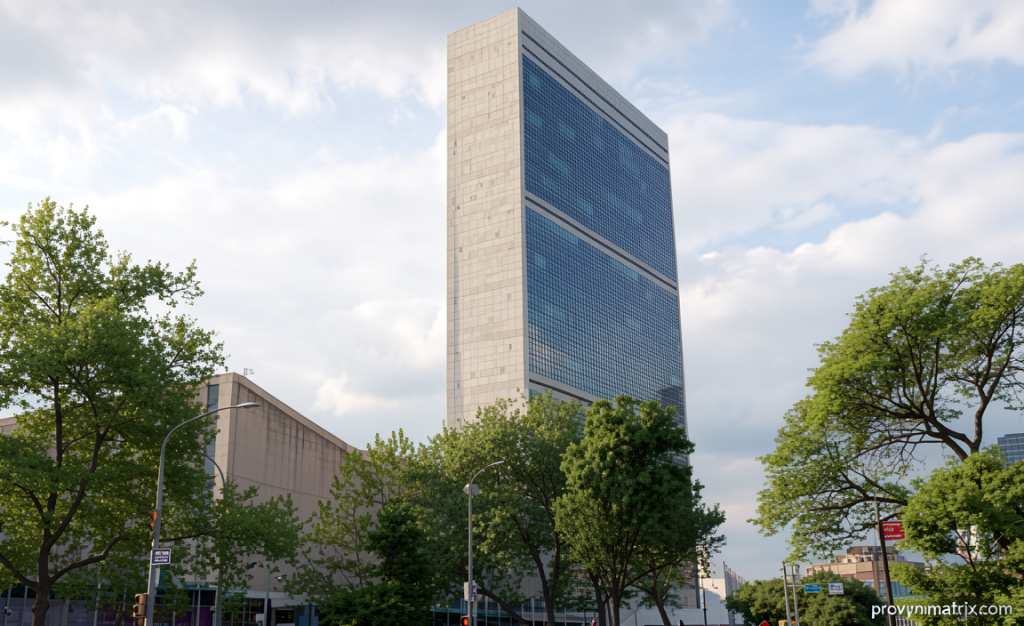
Provpnmatrix.com – The General Assembly backs creation of new institutional capacity under the UN80 reform agenda. On Thursday, all 193 Member States in the New York plenary chamber approved a resolution merging two veteran training bodies into a single organization. The United Nations System Staff College (UNSSC) will be absorbed into the United Nations Institute for Training and Research (UNITAR), producing a consolidated entity named the United Nations Institute for Capability and Learning Innovation (UNICLI), operational from 1 January 2027.
The vote sits at the heart of the UN80 Initiative, the Secretary-General’s programme designed to make the multilateral system more coherent and operationally effective. By collapsing two overlapping mandates beneath one institutional roof, Member States aim to eliminate the duplication and fragmentation that have long diluted the reach of UN learning programmes.
Mandate, Structure, and Expected Impact
UNICLI will function as a unified gateway for capability development, drawing on two complementary traditions. UNITAR has spent decades assisting national governments, diplomatic missions, and public-sector institutions in building technical skills. UNSSC, by contrast, has concentrated on internal UN workforce development — leadership pipelines, cross-agency knowledge exchange, and professional training for staff across the system. Under the merged structure, both streams become accessible through one intake process, simplifying access for Member States, UN entities, and external partners alike.
The consolidation is expected to cut administrative overhead, eliminate redundant course offerings, and produce a more coherent curriculum architecture. Member States that have historically navigated between two separate application processes will find a single, streamlined pathway to the training they require.
Leadership Statements and Reform Context
Michele Gyles-McDonnough, UN Assistant Secretary-General and Executive Director of UNITAR, framed the decision as a necessary evolution of the organization’s learning architecture:
“Member States and the United Nations system are facing increasingly complex and interconnected challenges. The UN must continue to evolve, building stronger capabilities, fostering innovation, and enhancing institutional effectiveness to turn global commitments into tangible results.”
Miguel Panadero, Acting Director of UNSSC, underscored the operational logic behind combining the two bodies:
“By integrating UNSSC’s and UNITAR’s expertise in providing training for the UN system and Member States respectively, the new entity will be better positioned to provide a stronger, more coherent capability development function.”
Later that day, UN Spokesman Stéphane Dujarric told correspondents at Headquarters that the Secretary-General welcomed the Assembly’s vote. In his remarks, the UN chief characterized continuous learning, capability development, and innovation as strategic drivers of the organization’s overall effectiveness rather than peripheral administrative tasks. He also extended an invitation to Member States, UN entities, civil-society partners, and all other stakeholders to participate in shaping the future direction of the new institute.
The UN80 Initiative, rolling out structural and operational reforms since its announcement, positions this merger as one of its most concrete institutional actions to date. Earlier measures under the initiative have addressed budgetary transparency, mission-design reform, and digital transformation; the creation of UNICLI extends that reform logic into the human-capital and knowledge-management domain.
Transition Timeline and Geographic Footprint
The consolidation will unfold in phases through the close of 2026. During the transition window, both UNITAR and UNSSC continue operating under their existing legal and administrative arrangements, ensuring that ongoing programmes, partnerships, and service commitments are not interrupted. No training cohort currently enrolled will face disruption.
Once fully operational, UNICLI will be headquartered in Geneva, Switzerland. Turin, Italy, will retain its role as a dedicated UN learning campus and centre for leadership development, preserving the geographic spread of the institute’s delivery capacity.
Frequently Asked Questions
When does UNICLI become fully operational? The merged institute takes effect on 1 January 2027. Until then, both predecessor entities continue delivering programmes under their current arrangements.
Will existing enrollees or ongoing partnerships be affected during the transition? No. The phased approach through the close of 2026 is designed so that no current cohort, partnership, or service commitment is interrupted.
Where will the new institute be based? UNICLI will be headquartered in Geneva, Switzerland, with Turin, Italy, continuing to operate as a dedicated UN learning campus.
How does this merger relate to the broader UN80 reform agenda? The General Assembly backs creation of new institutional structures as part of the UN80 Initiative’s effort to reduce duplication, improve coherence, and strengthen the system’s capacity to deliver on its mandates.