Scotland’s Cairngorms Blaze Exposes a Continent’s Growing Wildfire Vulnerability
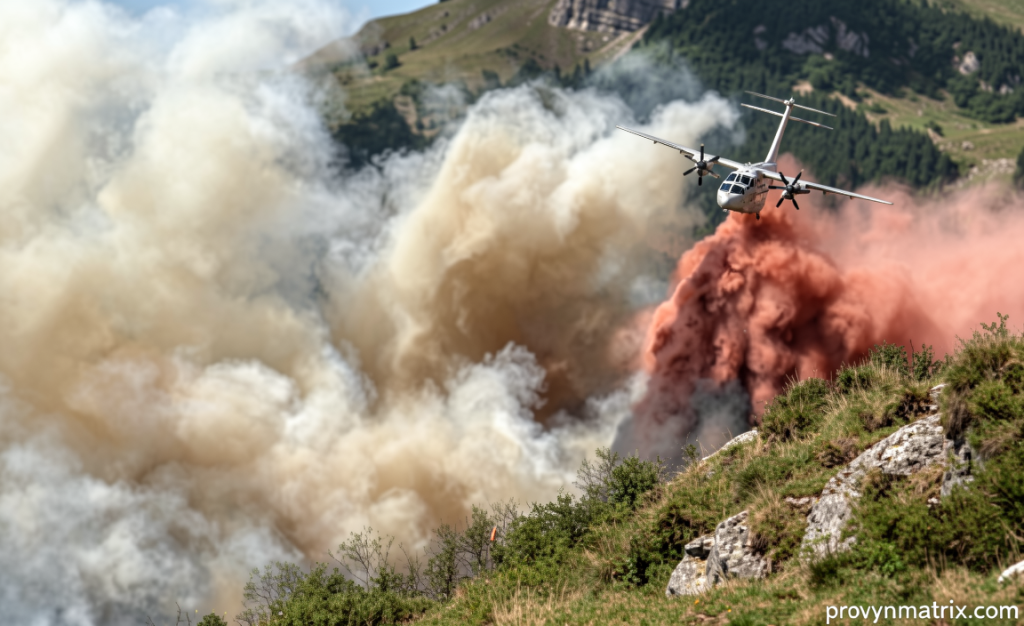
Provpnmatrix.com – In mid-July 2026, a fire caught hold in the peat bogs of Scotland’s Cairngorms mountains and refused to die. More than 500 firefighters, backed by aerial water-dropping and bulldozers carving firebreaks, battled the blaze for over a month before the Scottish Fire and Rescue Service finally stood down its crews. High winds carried the unpredictable flames toward the village of Nethy Bridge, prompting Police Scotland to declare a major incident and evacuate most of the settlement’s roughly 600 residents.
The episode is not an isolated anomaly. It is a symptom of a broader shift: wildfires, long associated with the Mediterranean basin, are now reaching regions that historically experienced cooler, wetter climates. Across the European Union, more than 600,000 hectares of land burned during the first eight months of 2026, figures tracked by the European Forest Fire Information System. While that total falls short of the record-shattering 2025 season, it dwarfs the roughly 280,000-hectare 20-year average, underscoring that the continent’s fire season is no longer a southern-Europe phenomenon.
A Continent Reassessing Its Fire Risk
Human activity remains the primary ignition source for most European wildfires. Yet the pace, reach, and ferocity of those fires are increasingly shaped by warmer temperatures, prolonged dry spells, and shifting land-use patterns tied to climate change. Countries with deep-rooted fire histories—France, Spain, Portugal—continue to face larger and more frequent blazes over extended seasons. Simultaneously, nations in traditionally temperate zones, from the United Kingdom to southern Scandinavia, are now drafting contingency plans for scenarios their grandparents would have considered implausible.
The developing El Niño event adds another layer of uncertainty. This recurrent oscillation in Pacific sea-surface temperatures can amplify temperature anomalies and disrupt rainfall timing, raising the probability of compound climate extremes that compound wildfire conditions across multiple regions at once.
Inside the Cairngorms Emergency
The Scottish fire penetrated the dry peat layer beneath the moorland, generating persistent hotspots and flare-ups that repeatedly defeated containment efforts. Nine days after ignition, with no rainfall breaking the drought, residents of Nethy Bridge faced an escalating threat. James MacEwan, among those evacuated, recalled the anxiety of watching the blaze grow while skies stayed bone-dry.
“We were very fortunate that the wind remained from the west and took the fire towards the hills, otherwise we would have had a serious threat to property and possibly life,” MacEwan said. “The downside was that this took the fire into relatively inaccessible terrain and made containing it extremely difficult.”
The wind direction that spared the village also pushed the fire into rugged, hard-to-reach ground, stretching the suppression operation well beyond a month.
Expert Warnings: Wet Landscapes Are Not Fireproof
Will Hayes, a researcher at the UK’s Leverhulme Centre for Wildfires, Environment and Society, cautions that growing wildfire anxiety has already surfaced in the Atlantic uplands of Ireland and Scotland as well as other stretches of Northern and Central Europe.
“These areas are not becoming Mediterranean landscapes, but traditionally wetter, cooler regions are now experiencing more frequent windows where increasing amounts of vegetation is dry enough to burn and fires can spread,” Hayes warned. “People should not assume that wet or green landscapes are immune to fire. During dry, warm and windy periods, vegetation can become highly flammable, even in upland and northern regions.”
His practical advice for individuals during high-risk weather is straightforward: avoid campfires, barbecues, and careless ignition sources such as cigarette lighters, and heed local fire warnings without exception.
Preparedness Beyond the Fire Service
Hayes argues that national-level preparedness must extend far beyond emergency response. Landscape management decisions made years before a spark—fuel loading, grazing regimes, drainage design, urban-rural interface planning—determine whether a small ignition becomes a manageable incident or a catastrophic event.
“Wildfire prevention is not just about fire services, it is about how landscapes are managed before they burn,” he explained. “Wildfire risk should be treated as a land-use, climate-adaptation and public-health issue, not just an emergency-response problem.”
That framing aligns with the World Health Organization’s Strategic Toolkit for Assessing Risks (STAR) methodology, which equips public-health authorities to conduct rapid, evidence-based assessments of compound hazards—including heatwaves and wildfire smoke—alongside other government sectors. Cyprus and Ireland have recently completed their first-ever STAR assessment workshops, using the framework to identify and prioritise pressing health threats ranging from extreme heat to smoke inhalation during fire events.
Those workshops lay the groundwork for smarter, more strategic emergency preparedness: integrated planning that treats air quality, respiratory health, evacuation logistics, and ecosystem management as a single operational picture rather than separate departmental silos. As fire seasons lengthen and shift poleward, the question for cooler European nations is no longer whether they will face larger blazes, but how quickly they can convert decades of institutional inertia into actionable adaptation.
Related Reading
Frequently Asked Questions
What is As wildfires spread north UN agencies?
As wildfires spread north UN agencies is the main topic of this guide. The article explains the context, practical details, and next steps readers should understand.
Why does As wildfires spread north UN agencies matter?
As wildfires spread north UN agencies matters because readers are looking for a useful answer, not just a short summary. Good content should match search intent and help them decide what to do next.