Cross-Border Crime Demands Cross-Border Answers: The Case for Global Police Coordination
Provpnmatrix.com – Criminal syndicates no longer respect national boundaries. They route stolen money through digital channels, move trafficking victims across multiple jurisdictions, and exploit gaps between agencies that operate within rigid territorial limits. The result is a persistent asymmetry: offenders operate fluidly across borders while the institutions tasked with stopping them remain constrained by them. Recognising this structural mismatch, the United Nations marks 7 September each year as the International Day of Police Cooperation, a date dedicated to underscoring why no single national force can dismantle transnational networks in isolation.
The Scale of the Problem
The numbers behind organised crime are staggering. The UN Office on Drugs and Crime (UNODC) estimates that organised criminal groups are responsible for roughly 95,000 homicides annually worldwide. Approximately one-fifth of all intentional killings globally are attributed to such groups. These figures encompass everything from drug-cartel violence to contract murders orchestrated by trafficking rings, and they underscore why bilateral or multilateral coordination is not merely desirable but operationally essential.
UN Secretary-General António Guterres framed the stakes plainly:
“By working together across borders, law enforcement agencies can better support survivors, apprehend perpetrators, disrupt criminal networks and advance safety for all.”
INTERPOL and the Architecture of Cooperation
The most visible mechanism for cross-border police collaboration is the International Criminal Police Organization, commonly known as INTERPOL. The body links law-enforcement agencies in 196 member states, enabling the exchange of data on suspects, wanted persons, and criminal patterns. Crucially, INTERPOL does not supplant national sovereignty: domestic police retain full authority to investigate cases and enforce local statutes. The organisation functions as a connective tissue, not a replacement.
Beyond INTERPOL, the UN engages regional policing bodies and national authorities to build capacity for cross-jurisdictional operations. The UN’s Inter-Agency Task Force on Policing further coordinates policing-related mandates across various UN entities, aiming to produce a coherent institutional approach while minimising duplication of effort.
UN Police: Advisors, Protectors, Not Global Constables
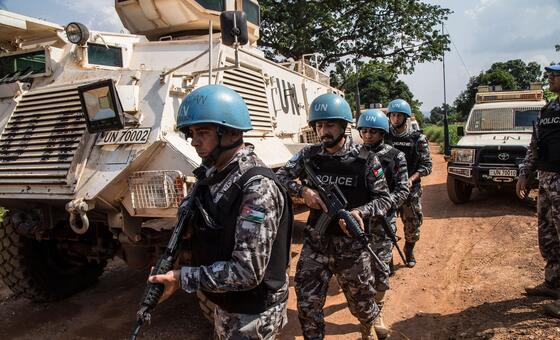
A common misconception is that UN Police constitute a world police force. In practice, their mandate is narrower and more specific. For more than six decades, UN Police officers have been embedded within peacekeeping and special political missions, deployed to contexts where conflict has fractured the rule of law and eroded public confidence in judicial systems. More than 7,700 UN Police personnel are currently authorised to serve across 14 peace operations worldwide. Their tasks include protecting civilians and human rights, advising and training national police services, and assisting countries navigating the transition from active conflict to stable governance.
Under-Secretary-General for Peace Operations Jean-Pierre Lacroix articulated the institutional purpose:
“UN Police play a critical role in supporting Member States to strengthen policing institutions that are effective, accountable and responsive to the needs of all communities.”
From Phishing Rings to Trafficking Networks: Cooperation in Practice
Concrete outcomes illustrate why coordination matters. In one recent operation, police in Côte d’Ivoire and Switzerland worked jointly through INTERPOL channels to dismantle a phishing scheme that had extracted more than $1.4 million from Swiss victims. The case involved digital fraud infrastructure spanning two continents, and its resolution depended entirely on information-sharing between agencies that would otherwise have operated in separate silos.
In the Central African Republic, UN Police have partnered with national counterparts to build investigative capacity targeting trafficking and other forms of transnational organised crime. Marginalised communities in CAR bear disproportionate exposure to exploitation, and strengthening local investigative capability is a direct response to that vulnerability.
UNODC complements these operational efforts by providing technical assistance to countries seeking to prevent and prosecute organised crime, trafficking, corruption, and other transnational offences. The agency’s role is advisory and capacity-building in nature, helping states design legislation, train prosecutors, and develop forensic infrastructure.
Trust as the Foundation
The theme for this year’s observance is “Protecting against Vulnerability – Building Trust and Legitimacy in Policing.” The framing reflects a growing recognition that technical coordination alone is insufficient. If communities do not trust the institutions charged with their protection, cooperation frameworks lose their operational base. Displacement, conflict, and economic precarity create fertile ground for criminal networks to recruit from and exploit vulnerable populations, but they simultaneously deepen scepticism toward the very agencies meant to intervene.
Lacroix addressed this tension directly:
“At a time when confidence in public institutions is under strain in many parts of the world, policing institutions face a dual responsibility: to protect communities from harm and to demonstrate fairness, accountability and transparency in the exercise of their authority.”
A Human Measure
Behind institutional language and statistical summaries, the ultimate test of policing cooperation is whether it reaches an individual in crisis. In the Central African Republic, a UN police officer named Gladys Nkeh, originally from Cameroon, assisted a 13-year-old girl who had been raped, arranging medical care and supporting authorities in arresting the assailant. Years later, the girl named her own child Gladys, in recognition of the officer who had intervened at the most critical moment.
Such episodes remind observers that the machinery of international cooperation—data exchanges, joint task forces, capacity-building programmes—exists ultimately to ensure that a child in a conflict-affected region can access protection, justice, and recovery. The scale of the challenge, measured in tens of thousands of annual homicides and billions in illicit flows, makes the work urgent. The human stories at its centre make it necessary.
Related Reading
Frequently Asked Questions
What is Advance safety for all?
Advance safety for all is the main topic of this guide. The article explains the context, practical details, and next steps readers should understand.
Why does Advance safety for all matter?
Advance safety for all matters because readers are looking for a useful answer, not just a short summary. Good content should match search intent and help them decide what to do next.