‘We are catching up’ – WHO chief on DR Congo’s Ebola fight
We are catching up – On Wednesday, the World Health Organization (WHO) Director-General, Tedros Adhanom Ghebreyesus, outlined a cautious but optimistic assessment of the ongoing Ebola outbreak in the Democratic Republic of the Congo (DRC). While acknowledging that the epidemic remains a formidable challenge, he highlighted improvements in containment efforts, stating that the situation is “showing signs of progress.” However, he emphasized that critical gaps persist in testing infrastructure, surveillance systems, vaccine development, and fostering community confidence in the response.
Leadership and International Collaboration
Tedros provided an update to journalists in Geneva just a day after his return from the DRC. During his visit, he engaged with various stakeholders, including government officials, healthcare workers, and local leaders, to evaluate the progress of the outbreak response. He expressed confidence in the DRC’s dedication to combating the virus, noting that the country’s leadership is playing a pivotal role in managing the crisis. Despite the outbreak’s rapid spread to neighboring Uganda, Tedros stressed that the DRC’s commitment remains the cornerstone of the fight.
“Outbreaks of this scale require swift action, and the DRC has demonstrated a strong will to lead,” Tedros remarked. “While we are still behind, the government’s efforts are showing measurable results, and we are gradually gaining ground.”
The current strain, Bundibugyo, is a rare variant of the Ebola virus that has historically posed challenges for treatment. Although no specific cure exists, three vaccines are currently in development, offering hope for future prevention. Tedros noted that 344 confirmed cases have been recorded in the DRC, with 60 fatalities reported. However, the number of suspected cases has dropped significantly, from over 1,000 last week to 116, as teams work to clear backlogs and refine diagnostic protocols.
Regional Spread and Operational Hubs
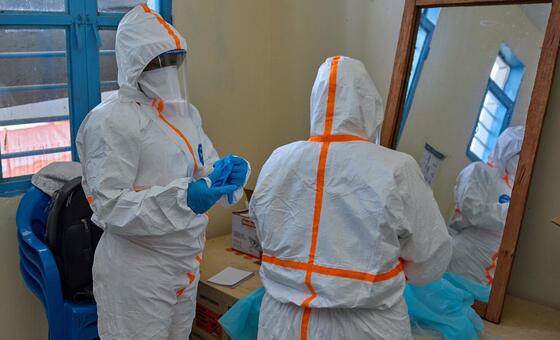
The outbreak is concentrated in the eastern province of Ituri, with cases also reported in North and South Kivu. This region is grappling with persistent violence from armed groups, alongside other health threats like malaria and malnutrition, which complicate the response. To address the crisis, three Ebola treatment centers have been established in Bunia, the capital of Ituri, with a combined capacity of 80 beds. Additional units are being set up in five regional cities, and more are expected to join the effort soon.
Uganda has reported one confirmed death and 15 cases, including a resident from the DRC who traveled from the United Arab Emirates (UAE). A U.S. citizen, infected in the DRC, is receiving treatment in Germany. These cases underscore the interconnected nature of the outbreak, which has expanded beyond the DRC’s borders. Despite the spread, WHO’s risk assessment remains unchanged: the national level is classified as very high, while the regional level is high. Global risk, however, is considered low.
Key Challenges and Strategic Priorities
Tedros outlined several pressing issues that must be addressed to control the outbreak effectively. One of the primary concerns is the need to scale up laboratory and diagnostic capabilities. “Faster testing is essential to identify cases early and prevent further transmission,” he said. Another challenge lies in contact tracing, which is hindered by security threats, displaced populations, and frequent movement across regions. The current follow-up rate, approximately 45 percent, must be increased to over 90 percent to achieve a decisive advantage in the fight against the virus.
WHO has also called on countries with broad travel restrictions to reconsider their policies. Tedros argued that these measures disrupt supply chains and impede the flow of medical resources. Instead, he advocated for exit screening at airports, ports, and border crossings as a more targeted approach to monitoring movement without causing unnecessary disruption.
Community Trust and Health Equity
Building trust within local communities was identified as a critical factor in the success of the outbreak response. Tedros highlighted that “community mistrust is a serious barrier,” with some leaders doubting the reality of Ebola. “They told me they believe the virus is not real,” he said. This skepticism can delay reporting of symptoms and reduce participation in health initiatives, which is why collaboration with local leaders and grassroots organizations is vital.
“Without the support of the people, no strategy can succeed,” Tedros added. “We must work together to ensure that everyone understands the threat and the importance of early intervention.”
While biomedical solutions like vaccines and therapeutics are being advanced, Tedros stressed that they are not the sole determinant of the outbreak’s resolution. “The key to ending this crisis lies in leadership, ownership, and partnership,” he said. “It’s not just about science—it’s about people.” This perspective reflects the dual focus on immediate containment and long-term health system strengthening.
Historical Context and Future Goals
The DRC has experienced 16 previous Ebola outbreaks, and Tedros was resolute in his belief that this one can be contained. However, he underscored that the true measure of success will be more than just halting the current spread. “Preventing future outbreaks and addressing broader health needs is the ultimate goal,” he explained. This includes improving access to essential services like malaria treatment, nutrition support, and chronic disease management in the affected regions.
Tedros also highlighted the importance of sustaining efforts even after the outbreak subsides. “When it does end, our commitment to supporting the government and local communities will not wane,” he said. “We will continue to invest in building the health infrastructure and humanitarian systems that these communities deserve.”
In conclusion, the response to the Ebola outbreak in the DRC is a testament to the resilience of local leadership and the dedication of international partners. While the path to eradication is fraught with obstacles, the combination of scientific advancements and community engagement offers a promising strategy. As the situation evolves, the WHO remains vigilant, working closely with the DRC to ensure that the lessons learned from this outbreak contribute to a more robust health system for years to come.