UN Deplores Another Wave of Russian Attacks Across Ukraine
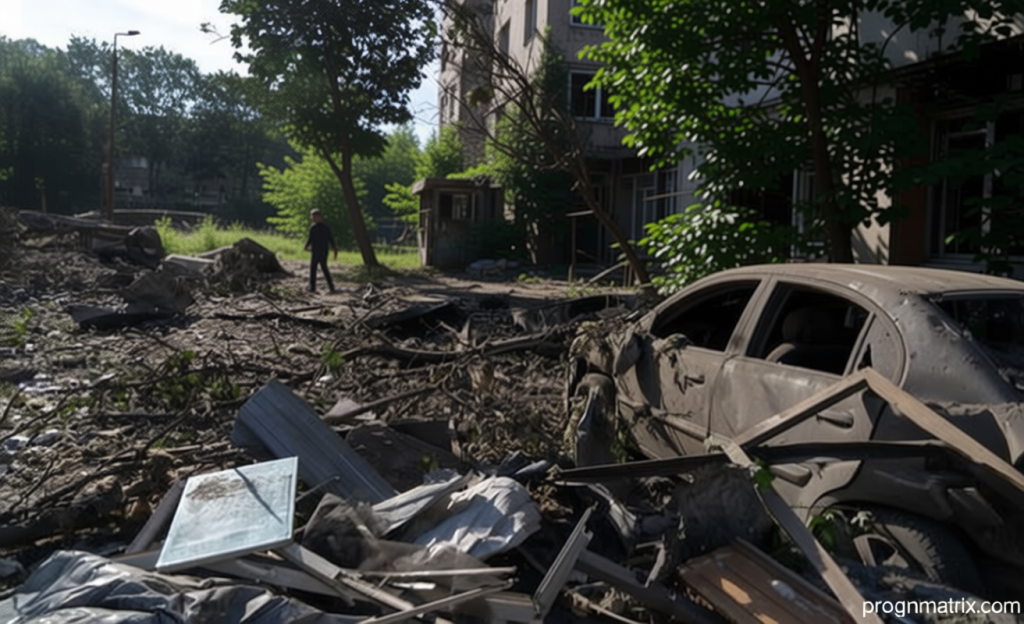
UN deplores another wave of Russian – The United Nations has expressed deep concern over a series of overnight attacks that targeted three major Ukrainian cities, resulting in significant civilian casualties and widespread destruction. According to the UN Humanitarian Coordinator in the region, the strikes left several individuals dead, injured numerous others, and caused extensive damage to residential areas, medical facilities, and commercial establishments. The conflict continues to escalate, with new waves of violence disrupting daily life and intensifying the humanitarian crisis.
Russian Assaults on Kyiv, Dnipro, and Kharkiv
Matthias Schmale, the UN Humanitarian Coordinator, strongly criticized the large-scale Russian bombardment of Kyiv, Dnipro, and Kharkiv, noting that these cities have been repeatedly struck within the past weeks. The attacks disrupted the peaceful beginning of the summer school break for many families, forcing children and their caregivers to seek refuge in underground shelters. “Instead of enjoying the start of the school summer break, children and their families spent the night in underground shelters, woken up by air raid sirens, explosions and uncertainty,” he said in a statement.
“Instead of enjoying the start of the school summer break, children and their families spent the night in underground shelters, woken up by air raid sirens, explosions and uncertainty,” he said.
Schmale emphasized that the war has inflicted a profound toll on civilians, particularly on their mental well-being. The constant threat of attacks has created an atmosphere of fear and anxiety, with no respite for those living in the affected regions. He called for an immediate halt to the aggression and urged adherence to international law to safeguard civilian lives and infrastructure.
Secretary-General Condemns Escalation
UN Secretary-General António Guterres issued a strong condemnation of the attacks, as conveyed by his spokesperson, Stéphane Dujarric, during a press briefing in New York. The statement reiterated Guterres’ ongoing appeal for a full, immediate, and unconditional ceasefire. “The Russian Federation’s inflammatory rhetoric and escalation of attacks should stop, paving the way for a just peace,” Schmale added, aligning with Guterres’ stance.
The UN Human Rights Monitoring Mission in Ukraine (HRMMU) reported that the attacks affected not only Kyiv and Dnipro but also other regions such as Zaporizhzhia, Sumy, Chernihiv, and Poltava. These areas experienced explosions that further compounded the destruction. The mission highlighted that Ukraine’s Air Force documented the launch of 656 long-range drones and missiles during the massive assault. Despite efforts to intercept many of these weapons, 30 ballistic missiles, three cruise missiles, and 33 long-range drones successfully struck 38 locations, causing critical damage.
Russian Justification and Regional Impact
Russian authorities issued a statement explaining that the bombardment was a response to a recent Ukrainian strike in Starobilsk, located in the Luhansk region. That attack reportedly resulted in the deaths of 21 civilians. The Russian military claimed the strikes were necessary to counter Ukrainian aggression, though the HRMMU noted the disproportionate impact on civilian populations.
While Kyiv and Dnipro bore the brunt of the damage, other parts of the country also faced severe consequences. HRMMU teams visited sites in these cities, where ongoing rescue operations revealed that many people remained trapped under debris. “Though civilians took protective measures and sought shelter, the attack killed at least 22 civilians and injured 145, including children,” said Danielle Bell, the head of the HRMMU. Her comments underscored the alarming human cost of using explosive weapons in densely populated areas.
Testimonies from the Frontlines
A firsthand account from a 13-year-old girl named Valeriia, who lived in Kyiv, provided a poignant glimpse into the chaos of the attacks. Valeriia shared her experience of spending the night in a basement with her mother, describing the emotional toll of the violence. “I thought I wasn’t going to survive,” she said. “I completely broke down and was in tears when the explosions became so powerful that they blew open the shelter door.”
“I thought I wasn’t going to survive. I completely broke down and was in tears when the explosions became so powerful that they blew open the shelter door.”
The HRMMU also highlighted the dangers faced by emergency workers during these attacks. In Kyiv, an emergency responder was among those killed, illustrating the risks these personnel endure while trying to aid civilians. This incident further emphasized the precarious conditions under which rescue operations take place.
Children at the Center of the Crisis
The UN Children’s Fund (UNICEF) expressed sorrow over reports of a three-year-old boy being killed in Dnipro and the injuries sustained by 10 children in attacks across Ukraine. The agency condemned the loss of young lives, calling it a tragic and senseless outcome of the ongoing conflict. “The brutal, senseless devastation of young lives must end,” UNICEF stated in a tweet, highlighting the urgent need to protect children from the effects of war.
Valeriia’s story resonated with UNICEF’s broader concerns about the psychological and physical trauma inflicted on Ukrainian youth. Her experience reflects the broader narrative of children being caught in the crossfire of escalating military operations. The organization stressed that the current situation demands immediate action to reduce the suffering of innocent civilians, particularly children, who are the most vulnerable.
Long-Range Weapons and Rising Casualties
According to the HRMMU, the increased reliance on long-range missiles and drones has significantly contributed to the surge in civilian casualties. Data shows that the number of such incidents this year is roughly 20% higher than during the same period in 2025. This trend is attributed to the use of advanced weaponry, which has expanded the reach of attacks and heightened the risk to civilian populations.
Schmale noted that the persistent use of these weapons has made it increasingly difficult for civilians to find safety. The UN monitoring mission emphasized that the attacks have not only caused physical destruction but have also disrupted essential services, such as healthcare and education, further straining the population’s ability to recover. “The loss of life, injuries, and damage to civilian infrastructure underscore the foreseeable human cost of using explosive weapons in populated areas,” Bell said, reinforcing the mission’s call for greater protection.
As the conflict continues, the UN remains committed to documenting the full extent of the damage and advocating for a lasting ceasefire. The recent attacks serve as a stark reminder of the devastation being wrought on Ukraine’s cities and the urgent need for international intervention to shield civilians from further harm. With each new assault, the human toll grows, demanding attention from global leaders and the international community.