Geneva talks seek a path out of Sudan’s devastating drone-fuelled conflict
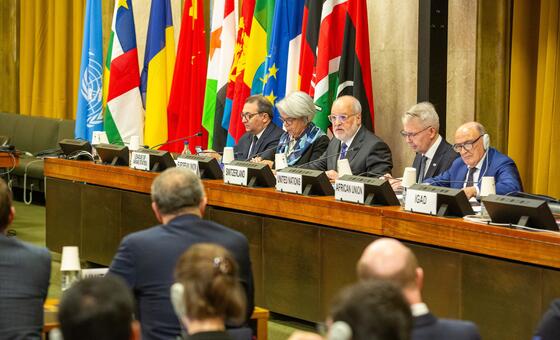
Provpnmatrix.com – International efforts to curb Sudan’s war returned to Geneva on Wednesday, as representatives from nearly two dozen countries met to coordinate a route toward a ceasefire and an eventual civilian political transition.
The conflict, now in its fourth year, began in April 2023 when fighting erupted between the Sudanese Armed Forces (SAF) and the paramilitary Rapid Support Forces (RSF). The two forces had previously worked together after seizing power in Sudan’s 2021 coup, but their rivalry has since driven a conflict that has devastated communities, displaced families and damaged essential infrastructure.
The Geneva gathering brings together mediators and international partners rather than the warring parties themselves. Neither Sudan’s Government nor the RSF is represented, because the consultations were designed to help outside actors align their peace initiatives and avoid fragmented diplomatic efforts.
Focus on reducing violence
Pekka Haavisto, the UN Secretary-General’s Personal Envoy for Sudan, opened the discussions with an appeal for practical action to reduce hostilities. The first session centred on de-escalation and the steps that could help establish conditions for a broader ceasefire.
“Our first session, devoted to de-escalation, will offer an opportunity to explore practical ways forward,” said Pekka Haavisto.
He urged delegates to use their individual channels of contact to foster confidence and support an environment in which a comprehensive agreement could become possible. The immediate challenge is not only to halt combat, but also to build enough trust for sustained negotiations in a country where armed confrontation has repeatedly undermined political progress.
Participants are also expected to examine the prospects for a Sudanese-led transitional phase. The intended process would involve an inclusive and credible dialogue reflecting the aspirations of Sudan’s people. Haavisto stressed that external partners should assist Sudanese people in determining their common future while respecting the country’s wide range of experiences, communities and views.
Drone attacks deepen civilian suffering
One of the most alarming features of the conflict has been the growing use of drones. Deadly attacks have struck civilians and public infrastructure, prompting repeated condemnation from humanitarian and human rights officials. Their use has added another dimension to a war already marked by severe restrictions on safety, movement and access to vital services.
“The war in Sudan has become a drone war; it kills mostly civilians,” said Alexandre Fasel, Switzerland’s State Secretary.
Switzerland is co-hosting the Geneva meeting with the United Nations. Fasel linked the continuing violence directly to hunger across the country, warning that famine-like conditions persist in Darfur, Kordofan and other areas. In this context, a ceasefire is not simply a diplomatic objective: it is central to whether food, medical assistance and protection can reach people facing extreme hardship.
Fasel underlined that international humanitarian law applies regardless of whether a political agreement has been achieved. The Geneva Conventions require protection for civilians and allow humanitarian assistance to reach those in need during conflict.
“The protection of civilians and humanitarian access must not wait for a ceasefire and a political solution. Civilians are suffering and dying today.”
The humanitarian emergency is vast. Nearly 34 million people across Sudan require humanitarian support, OCHA has said. UNICEF has also warned that eight million Sudanese children are currently out of school. The disruption to education carries consequences far beyond the classroom, depriving children of stability and placing an additional burden on any future effort to rebuild a peaceful and functioning society.
Conflict-related sexual violence has also returned as a means of intimidation and humiliation, with civilians often targeted because of ethnicity or perceived allegiance. Addressing such abuses remains inseparable from discussions about civilian protection, accountability and Sudan’s longer-term recovery.
Building coordination among mediators
The Geneva consultations form part of a continuing diplomatic process. Previous meetings have been held twice in Cairo, in June 2024 and January 2026, as well as in Djibouti in July 2024, Nouakchott in December 2024 and Brussels in June 2025.
On the sidelines of the latest meeting, Haavisto was expected to meet regional and international partners in the “Quad” mechanism, comprising the United States, Saudi Arabia, the United Arab Emirates and Egypt. He was also due to engage with the “Quintet,” which includes the African Union, the Intergovernmental Authority on Development, the United Nations, the European Union and the League of Arab States.
These overlapping groups demonstrate the scale of international concern, but they also highlight why coordination matters. A durable peace process will require mediators to reinforce one another’s efforts, support humanitarian access and keep attention focused on the voices of Sudanese people affected by the war.
Wednesday’s political discussions followed a humanitarian-focused day at the UN in Geneva involving delegations, senior UN officials and international non-governmental organizations working in Sudan. The International Committee of the Red Cross and the Sudan INGO Forum were among those taking part.
For civilians living through the conflict, progress will be measured less by the language of diplomatic meetings than by whether violence falls, food arrives, schools reopen and communities can live without fear. The Geneva talks aim to help move Sudan closer to those urgently needed outcomes.
Related Reading
Frequently Asked Questions
What is Sudan conflict?
Sudan conflict is the main topic of this guide. The article explains the context, practical details, and next steps readers should understand.
Why does Sudan conflict matter?
Sudan conflict matters because readers are looking for a useful answer, not just a short summary. Good content should match search intent and help them decide what to do next.