‘Some question if Ebola is real’: how trust is central in fighting DRC outbreak
Some question if Ebola is real – In the Democratic Republic of the Congo (DRC), where the Ebola outbreak continues to pose a significant threat, humanitarians emphasize that effective containment depends heavily on cultivating trust within local communities. This insight was highlighted by experts during a recent briefing, underscoring the critical role of public confidence in overcoming the crisis.
Progress in Testing Capacities
The outbreak, declared on 15 May, has seen notable advancements in testing capabilities, according to Tarik Jašarević, spokesperson for the World Health Organization (WHO). He noted that the organization has expanded its efforts to identify cases, a key step in controlling the spread of the Bundibugyo virus. Testing facilities are now operational in six key locations across the DRC: Bunia and Mongbwalu in Ituri Province, Bukavu and Lwiro in South Kivu, Goma in North Kivu, and the capital, Kinshasa.
Additionally, four new laboratories have been activated in Uganda, where the virus has been imported from the DRC. As of 14 June, these labs have confirmed 19 cases and identified one probable infection. While this progress is encouraging, officials warn that gaps in reporting and detection remain a challenge.
Community Distrust and Misinformation
Bruno Michon, Operations Manager for the Ebola outbreak at the International Federation of the Red Cross and Red Crescent Societies (IFRC), stressed that trust is not just a supportive factor—it is essential. “Without trust, we cannot detect cases early, ensure safe burials, or protect families from transmission,” he explained. This sentiment echoes concerns raised by local communities, some of whom question the reality of the outbreak.
“Some people still question whether the disease is real,” Mr. Michon said. “They believe the outbreak may have been invented to attract foreign aid.” Others view traditional burial practices as cultural traditions under threat, perceiving safe and dignified burials as an attack on their customs. This skepticism, rooted in fear and misinformation, has complicated the response efforts in the conflict-ridden east of the DRC.
The region, already marred by persistent violence, has become a battleground for both the virus and public perception. Community distrust of external agencies has fueled resistance to health measures, with some locals reluctant to engage with medical teams. This distrust is exacerbated by the spread of rumors on social media, which have linked the outbreak to perceived agendas, further alienating the population.
Challenges in the Field
Early in the outbreak, tensions escalated to the point where two treatment centers were attacked and set ablaze. These incidents, occurring in a region frequently affected by conflict, displaced over 100,000 people and disrupted containment efforts. At the time, the WHO attributed the attacks to misinformation campaigns that circulated widely, sowing doubt among communities.
“When people are afraid, they may not report symptoms,” Mr. Michon explained. “They avoid treatment centers out of fear of contamination, staying home when they have a fever and feeling ashamed to tell their families they are sick.” This stigma, he added, often leads families to bury loved ones using traditional methods without awareness of the risks involved.
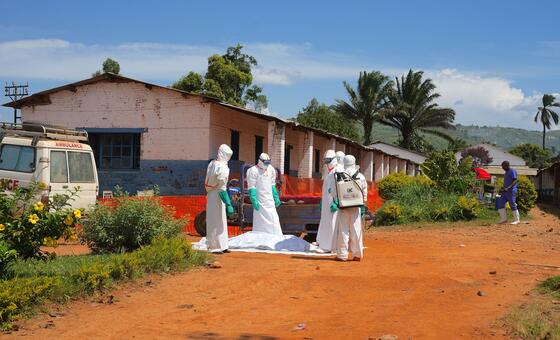
To address these challenges, the IFRC has implemented community-centered strategies. For instance, they introduced body bags with transparent windows, allowing families to see the deceased’s face and begin the grieving process. This small but meaningful adjustment has helped ease fears about the burial process.
When communities expressed concern that chlorine was being used to poison them, officials adapted their approach. Rather than arguing, they demonstrated the preparation of disinfectants, ensuring transparency. These efforts reflect a broader commitment to aligning health interventions with cultural sensitivities, a process that requires time and patience.
Escalating Risks and Ongoing Efforts
Despite these hurdles, OCHA, the UN humanitarian affairs office, reported that 808 Ebola cases have been confirmed across Ituri, North Kivu, and South Kivu provinces as of 14 June. The agency warned that the ongoing violence in the DRC’s eastern regions continues to strain aid operations, forcing humanitarian teams to navigate both physical and social barriers.
“Escalating clashes and resulting displacement risk are heightening the transmission potential of Ebola,” OCHA stated. “People moving between provinces increase the chances of spreading the virus, especially as they carry it unknowingly.” This dynamic has created a cycle of fear and mistrust, complicating efforts to isolate affected areas.
In response, humanitarian partners are intensifying their support for Congolese health authorities. This includes enhancing patient care, improving surveillance systems, and implementing prevention measures. Key to these efforts is risk communication, which aims to bridge the gap between scientific knowledge and local beliefs.
Mr. Michon reiterated that trust is the cornerstone of the Ebola response. “It is not optional—it is lifesaving,” he said. Building this trust involves more than medical interventions; it requires engaging with communities, addressing their fears, and respecting their traditions. The IFRC’s approach highlights how cultural adaptation can turn skepticism into cooperation.
As the outbreak enters a critical phase, the interplay between trust and public health outcomes remains a central theme. With 808 confirmed cases and the virus spreading in regions plagued by instability, the need for sustained community engagement has never been more urgent. The WHO and IFRC are working tirelessly to ensure that every step taken is both effective and accepted, recognizing that without trust, the fight against Ebola will face insurmountable obstacles.
In the end, the success of the response hinges on a delicate balance. It requires not only medical resources and scientific expertise but also the ability to connect with the people most affected. As Mr. Michon concluded, “Trust is central to every aspect of the Ebola response. It is the foundation upon which all other efforts are built.”