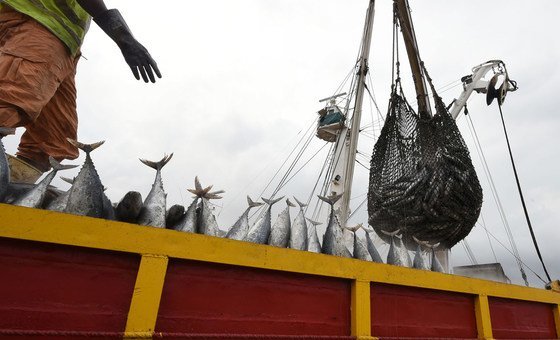
Global Fish Production Surpasses Records, Yet Climate Risks Cast Long Shadow
Global fish production hits new high – The UN Food and Agriculture Organization (FAO) has released a significant analysis revealing that aquaculture now constitutes the primary source of fish for global consumption. While this shift signals a transformative era in seafood supply, the report also highlights pressing concerns about environmental degradation and the sustainability of current practices. As the industry expands, the challenge lies in balancing growth with the preservation of marine ecosystems.
A New Era in Seafood Production
In 2024, global fisheries and aquaculture production reached an unprecedented 188.2 million tonnes, reinforcing seafood’s role as a vital component of nutrition and economic stability for billions. This milestone is underscored in the 2026 edition of The State of World Fisheries and Aquaculture, which presents a comprehensive overview of the sector’s trajectory. For the first time in history, aquaculture accounts for the majority of fish consumed by humans, marking a pivotal change in how the world sources its protein.
The FAO report emphasizes that aquatic foods provide critical nutrients, including proteins, omega-3 fatty acids, and essential vitamins, which are often scarce in other dietary sources. These benefits are especially pronounced in low-income countries where access to diverse food options is limited. The study also highlights the role of fish as a primary protein source for coastal and island communities, where it contributes over 50% of total animal protein intake.
Economic and Social Impacts
Beyond its nutritional value, the seafood industry plays a crucial role in global employment. Approximately 63.8 million people are directly involved in fisheries and aquaculture, with women comprising a notable portion of the workforce, particularly in processing and trade. When considering the entire value chain, the sector supports the livelihoods of roughly 600 million individuals worldwide, underscoring its economic significance.
Aquaculture’s expansion has been exponential, with production reaching 103.3 million tonnes in 2024. This growth continues a trend that has reshaped the global fish supply for decades. The report identifies this shift as a “turning point” for food systems, as farmed fish now outproduce wild-caught fish for human consumption. This transition has far-reaching implications, from food security to the balance of marine ecosystems.
Regional Dynamics and Potential
Asia remains the largest producer of seafood, but the growth of aquaculture is gaining momentum in Africa and Latin America. This expansion is seen as a promising avenue for rural development and poverty alleviation, particularly in underserved regions. Small-scale aquaculture, in particular, is highlighted as a tool to enhance local economies and improve dietary quality.
The rise of aquaculture has not only increased the availability of seafood but also diversified the ways in which fish can be cultivated. Innovations in this sector are being driven by the need to meet growing demand while minimizing ecological impact. However, the report warns that without careful management, the industry’s rapid growth could lead to environmental strain, such as habitat loss and water pollution.
Environmental Challenges and Climate Threats
Despite its successes, the industry faces mounting risks. Intensive aquaculture practices, if not regulated, can lead to overuse of natural resources, pollution, and the spread of diseases. The FAO stresses that governments must implement stronger governance frameworks and promote sustainable methods to ensure that the sector’s expansion does not compromise environmental health.
Climate change is also reshaping the landscape of global fisheries. Warming oceans, increasing acidity, and shifting species habitats are already affecting traditional fishing grounds. These changes threaten the communities that rely on fishing for their livelihoods, particularly in regions where marine resources are a primary economic driver. The report calls for immediate investment in climate adaptation strategies and ecosystem-based management to protect vulnerable marine ecosystems.
Call for Transformative Action
“Transformative change is needed,” the assessment concludes, urging governments to address harmful subsidies, combat illegal fishing, and support science-based management. These measures are critical to ensuring that the seafood industry continues to thrive without depleting the planet’s resources. By adopting sustainable practices, policymakers can safeguard both the environment and the communities that depend on it.
The report also emphasizes the importance of innovation in aquaculture, such as the integration of technology to monitor environmental impact and improve efficiency. This includes the development of closed-loop systems that reduce waste and pollution, as well as the promotion of local knowledge to adapt practices to regional conditions. Without these changes, the industry risks becoming a major contributor to environmental degradation rather than a solution to food and economic challenges.
As the world moves toward a future where aquaculture dominates fish production, the focus must remain on sustainability. The FAO report serves as both a celebration of progress and a warning of the path ahead. It highlights the need for a coordinated global effort to protect the oceans while ensuring that the benefits of seafood remain accessible to all.