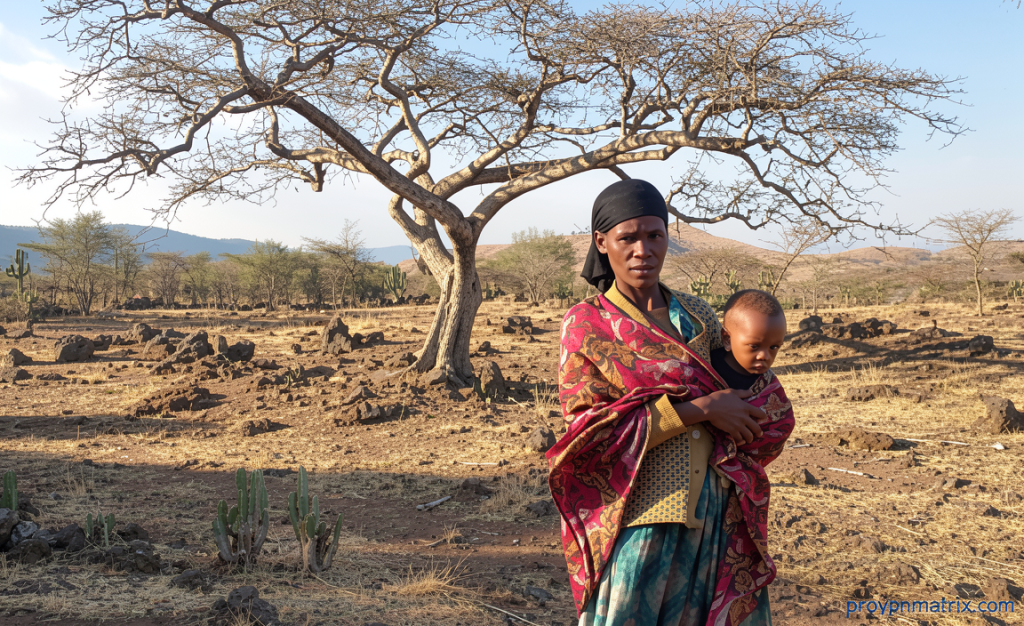
El Niño’s Growing Threat: 49 Million Faces Acute Hunger as Climate Shocks Intensify
Provpnmatrix.com – The United Nations World Food Programme has issued a stark warning about the escalating food crisis driven by a strengthening El Niño weather pattern. According to the agency’s latest assessment, nearly 50 million additional individuals living in highly vulnerable communities worldwide will be pushed into acute hunger conditions as the phenomenon intensifies. This projection represents one of the most significant food security challenges in recent years, affecting populations across multiple continents.
The WFP announced on Wednesday that it is coordinating with international partners to intensify interventions in eight priority countries. These efforts target communities already grappling with interconnected crises including persistent poverty, ongoing conflicts, high unemployment rates, and increasingly frequent climate extremes. The agency’s strategy emphasizes proactive measures designed to prepare populations for anticipated floods, droughts, and severe storms before these events disrupt agricultural cycles and food supplies.
El Niño is a massive threat to the food security of millions who are already vulnerable. The sooner we help families to prepare for these climate shocks, the greater our ability to save lives and protect livelihoods.
Carl Skau, the WFP’s Acting Executive Director, emphasized the urgency of addressing this crisis through preventive measures rather than reactive responses. His statement underscores the critical importance of timing in humanitarian interventions, noting that early preparation significantly amplifies the effectiveness of relief efforts.
Understanding the Scope of Acute Hunger
Acute hunger represents a severe condition where individuals cannot meet their basic daily nutritional requirements. This differs from chronic food insecurity, which describes longer-term patterns of insufficient food access. The WFP’s analysis indicates that 49 million additional people could experience acute hunger beginning in September 2026, with the situation potentially worsening through the end of 2027.
The total number of people facing acute food insecurity worldwide is projected to climb from 225 million to approximately 274 million individuals. This represents an increase of roughly 22 percent, driven primarily by El Niño’s influence on rainfall patterns, temperature fluctuations, and extreme weather events. The agency’s assessment examined 45 countries that were already classified as food insecure before the current El Niño cycle began.
Regional Vulnerabilities and Disproportionate Impacts
Central America and Southern Africa Lead in Projected Increases
Central America is expected to experience the most dramatic proportional surge in food insecurity, with projections indicating an 83.1 percent increase across all analyzed areas in the region. This staggering figure reflects the region’s heavy reliance on rain-fed agriculture and limited infrastructure for climate adaptation.
Southern Africa faces equally substantial challenges, with more than 18 million people potentially experiencing deteriorated food security conditions. This represents a 26 percent increase for the region. Many households in southern African nations depend primarily on subsistence agriculture that requires consistent rainfall patterns, making them particularly susceptible to El Niño’s disruption of seasonal precipitation.
Broader Global Implications
Latin America and the Caribbean region could witness one of the sharpest absolute increases in food insecurity, with over 16 million people affected. Eastern Africa and South and Southeast Asia are also forecast to experience significant impacts, though the severity varies across different countries within these regions.
Asia and the Pacific may see approximately 8.2 million additional people facing acute food insecurity. West and Central Africa are projected to experience a 12 percent increase in food insecurity, affecting nearly six million additional individuals. The WFP notes that El Niño’s effects manifest differently across regions, with some areas already experiencing below-average rainfall and flooding, while others anticipate deteriorating conditions during critical planting and harvest periods.
The Economics of Early Action
One of the most compelling arguments for proactive intervention centers on cost-effectiveness. Research demonstrates that every dollar invested in prevention measures can save between three to seven dollars in future losses and emergency response costs. This economic principle forms the foundation of the WFP’s anticipatory action strategy, which has been operational since May in six countries: South Sudan, Chad, Mauritania, Uganda, Guatemala, and El Salvador.
Through these early interventions, the WFP has deployed more than 14 million dollars in lifesaving responses, supporting approximately half a million people. The agency has expanded its use of pre-arranged financing mechanisms, including disaster risk insurance, credit facilities, and digital payment systems, to ensure funds are available quickly and at lower transaction costs when emergencies emerge.
Historical Context and Future Projections
The current El Niño event follows the pattern of the 2015-2016 phenomenon, which impacted the food security of between 60 and 100 million people globally. While the current projection of 49 million additional people affected is substantial, it represents a more targeted estimate based on improved modeling and earlier intervention capabilities.
El Niño is expected to reach its peak intensity between September and December 2026, but its consequences will extend well into 2027. This extended timeline reflects the phenomenon’s lasting impact on future harvests and agricultural productivity. Drought conditions, flooding events, and extreme temperature variations are already placing communities at heightened risk, according to WFP assessments.
The WFP continues to work closely with the Food and Agriculture Organization of the United Nations (FAO), the Office for the Coordination of Humanitarian Affairs (OCHA), and numerous other partners. Together, they maintain active prevention plans in more than 50 countries, supporting both governmental and community-level initiatives designed to reduce vulnerability and build resilience against climate-induced food crises.
As global temperatures continue to rise and climate patterns become increasingly unpredictable, the lessons learned from this El Niño cycle will inform future humanitarian strategies. The integration of early warning systems, financial mechanisms, and community-based adaptation measures represents a comprehensive approach to addressing one of the most pressing challenges facing vulnerable populations worldwide.
Related Reading
Frequently Asked Questions
What is Strengthening El Niño to push 49 million?
Strengthening El Niño to push 49 million is the main topic of this guide. The article explains the context, practical details, and next steps readers should understand.
Why does Strengthening El Niño to push 49 million matter?
Strengthening El Niño to push 49 million matters because readers are looking for a useful answer, not just a short summary. Good content should match search intent and help them decide what to do next.