As Elections Near, South Sudan Faces Atrocity Risk
Provpnmatrix.com – As elections near, South Sudan stands at a crossroads that a UN human rights panel says could tip the nation back into mass atrocity. Fifteen years after independence, the country’s first national vote since 2011 is approaching amid renewed fighting, collapsing institutions, and what commissioners describe as a rapidly closing window for prevention.
The independent Commission on Human Rights in South Sudan delivered its assessment on Thursday, framing the moment as one of acute danger. The convergence of resumed armed clashes, institutional decay, and political exclusion, the panel argued, places the state at one of its most perilous junctures since the civil war of 2013–2018.
“Multiple risk factors for atrocity crimes are converging… The window to prevent a return to the scale of atrocities and displacement endured between 2013–2018 is closing, but it has not yet completely shut.”
Fractured Ceasefire and Unresolved Security Architecture
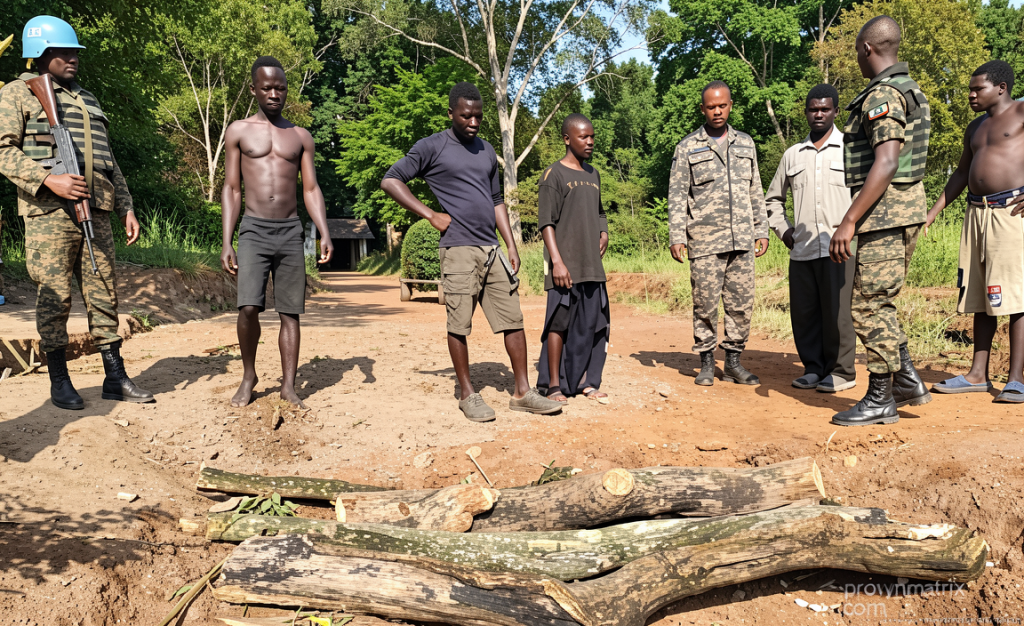
Active fighting has resumed in Upper Nile, Jonglei, and Unity states, while Western and Central Equatoria have logged separate incidents of clashes and civilian deaths. Between August 2025 and January 2026, observers recorded 407 violations of the ceasefire arrangement — a figure that underscores how fragile the pause in hostilities has become.
The underlying peace architecture remains incomplete. The Revitalized Agreement on the Resolution of the Conflict in South Sudan (R-ARCSS), signed in 2018 to end the civil war and rebuild state institutions, has seen almost half of its principal provisions left unimplemented nearly a decade later. Among the most consequential gaps is the failure to unify competing security forces, leaving multiple armed actors operating under rival command structures.
Institutional Decay and the Shrinking of Civic Space
The panel described a “worsening political, security, humanitarian and human rights situation” in which renewed conflict has returned alongside entrenched impunity, exclusionary governance, systemic corruption, a contracting civic space, and inflammatory public rhetoric. Equally troubling, the commissioners observed, is the simultaneous weakening of the very mechanisms designed to counter those risks: ceasefire monitoring bodies have been undermined, independent judicial institutions have lost autonomy, and inclusive political dialogue has been effectively sidelined.
“Inclusive politics are now being abandoned” in Juba, the commissioners stated, adding that constitutional safeguards have been eroded while accountability mechanisms “remain largely absent.”
Significant portions of the population continue to be excluded from meaningful political participation. Without a return to genuine, inclusive dialogue, the upcoming electoral contest risks entrenching existing fault lines rather than offering a peaceful avenue for resolving them.
The Atrocity Crimes Framework Applied
The Commission’s assessment aligns with the UN Framework of Analysis for Atrocity Crimes, a reference document cataloguing eight early-warning indicators of genocide, crimes against humanity, war crimes, and ethnic cleansing. Applying that framework to current conditions, the panel concluded that most of the eight indicators are present simultaneously and intensifying. Between 2013 and 2018, the country endured a civil war in which hundreds of thousands were displaced, thousands killed, and communities subjected to systematic violence along ethnic lines. The commissioners’ language — that the window is “closing” — signals they view the present trajectory as one that, without intervention, could replicate that earlier catastrophe on a comparable scale.
What the Commissioners Demand
Commission Chair Yasmin Sooka, a senior South African human rights lawyer, insisted that citizens who have “waited 15 years to cast their first ballots” possess an inalienable right to choose their government through free, peaceful, and democratic elections. The right to vote, she emphasized, does not evaporate because the security environment is unstable; rather, it demands that the state create conditions under which that right can be exercised safely.
Frequently Asked Questions
What is the UN Commission warning about? The independent Commission on Human Rights in South Sudan warns that conditions resembling those that produced genocide and ethnic cleansing between 2013 and 2018 are re-emerging ahead of the country’s first post-independence national vote.
How many ceasefire violations have been recorded recently? Observers logged 407 violations of the ceasefire arrangement between August 2025 and January 2026, spanning Upper Nile, Jonglei, Unity, Western Equatoria, and Central Equatoria.
What is the R-ARCSS and why does its non-implementation matter? The Revitalized Agreement on the Resolution of the Conflict in South Sudan, signed in 2018, was meant to end the civil war and rebuild state institutions. Nearly a decade later, almost half of its principal provisions remain unimplemented, including the unification of competing security forces.
What does the Commission say about the right to vote? Chair Yasmin Sooka stated that the right to choose a government through free and democratic elections is inalienable and does not lapse because of an unstable security environment; the state bears the obligation to create safe conditions for voting.