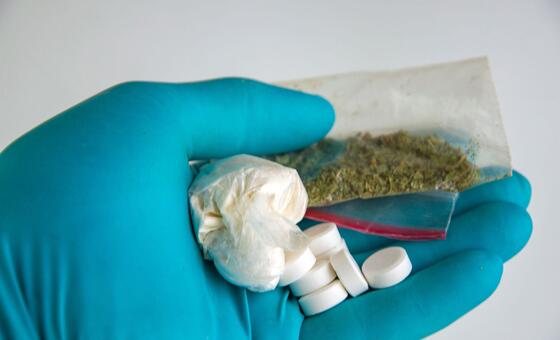
Record Drug Usage Global Rise Amid Surge in Potent Synthetic Substances
Global drug use reaches record high – The United Nations World Drug Report 2026 reveals a staggering increase in drug consumption worldwide, with synthetic substances playing a pivotal role in transforming illicit markets and intensifying health risks for marginalized populations. According to the latest findings, the number of people using drugs reached an all-time high in 2024, surpassing 331 million individuals—equivalent to 6.2 percent of the global population aged 15 to 64. This represents a significant jump from the 5.2 percent recorded a decade earlier.
Monica Juma, Executive Director of the UN Office on Drugs and Crime (UNODC), emphasized the alarming trend in the emergence of new drugs. “We have witnessed a sharp surge in novel substances entering the market, and some of these are more powerful or hazardous than their predecessors,” she stated. The report underscores the accelerating pace of innovation in drug production, with synthetic compounds increasingly dominating the landscape.
Cannabis remains the most commonly used drug, accounting for 256 million users in 2024. Opioids follow closely with 63 million users, while amphetamines, cocaine, and ecstasy trail behind at 32 million, 25 million, and 21 million respectively. However, the dynamics of the drug trade are shifting rapidly, driven by the proliferation of synthetic alternatives. In 2024 alone, authorities identified 755 new psychoactive substances, including 118 that were previously unknown. This marks a fivefold increase in the variety of drugs detected in seizures compared to the year 2000.
Chloé Carpentier, the lead researcher for the report, noted the growing complexity of the drug market. “The market is becoming very diverse, but also perhaps more dangerous,” she remarked in an interview with UN News. “We don’t always know what we are taking, and first responders don’t know what they are responding to.” This uncertainty poses a critical challenge, as the potency of synthetic drugs continues to outpace traditional narcotics.
The global opioid market is at a critical juncture. After Afghanistan’s 2022 ban on opium cultivation, illicit heroin production plummeted. While opium production in Myanmar rose from 420 tonnes in 2021 to over 1,000 tonnes by 2025, combined with output from Laos and Mexico, it has not matched the more than 6,000 tonnes produced in Afghanistan during 2022. Instead, traffickers are increasingly turning to synthetic opioids such as fentanyls, nitazenes, and orphines, which offer higher potency and greater risk.
The report warns that this transition from plant-based opiates to synthetic variants could permanently reshape the global opioid market. These new compounds, some of which are even more potent than fentanyl, may lead to more severe health consequences. “We see a lot of nitazenes now,” Ms. Carpentier added. “The worry is really that synthetic opioids might replace heroin and lead to much more harm.” This shift highlights the evolving nature of drug-related threats.
Methamphetamine has become a truly global market, with trafficking networks expanding across the Near and Middle East, Africa, and parts of Europe. Seizures of the drug have increased by an average of 13 percent annually, reflecting its widespread presence. Suppliers have also diversified, extending beyond Myanmar to include regions such as North America, West and Southern Africa, and Southwest Asia. This expansion underscores the drug’s adaptability and the challenges of containing its spread.
Meanwhile, cannabis trafficking has grown increasingly international. Between 2015 and 2024, 57 countries and territories outside North America identified the region as a source of seized cannabis, compared to just 11 during the preceding decade. This shift illustrates the growing role of the Near and Middle East in the global cannabis supply chain, driven by changes in cultivation and distribution patterns.
Drug use is not only influenced by the substances themselves but also by socioeconomic factors. The report highlights how poverty, homelessness, poor mental health, and unequal healthcare access contribute to the severity of drug-related harms. Women, in particular, face significant barriers to treatment despite progressing more quickly to drug dependence. Globally, only one in 23 women with drug use disorders receives treatment, compared to one in nine men. Additionally, women who inject drugs are 20 percent more likely to live with HIV than their male counterparts.
Adolescence is identified as a crucial period for drug initiation, with Ms. Carpentier noting, “Adolescence is really a critical period when the brain is still developing. Drug use during adolescence will have long-lasting effects on cognition and behaviour.” This insight underscores the importance of early intervention and prevention strategies to mitigate long-term impacts.
Conflict and humanitarian crises further exacerbate drug use challenges. Displaced populations, including refugees and internally displaced persons, are more vulnerable to developing drug use disorders. Often, humanitarian responses prioritize immediate needs like food and shelter, leaving access to treatment as a secondary concern. This creates a cycle in which instability fuels illicit markets, while trafficking profits sustain further violence. The report stresses that international cooperation is essential to address these interconnected issues.
As drug markets grow more complex, the need for unified global efforts becomes increasingly apparent. Ms. Carpentier emphasized, “We cannot achieve anything without international cooperation.” This statement reflects the report’s call to action for governments, organizations, and communities to work together in combating the rising tide of drug use and its multifaceted consequences.