Venezuela Earthquake: Displacement Crisis and Health System Strain
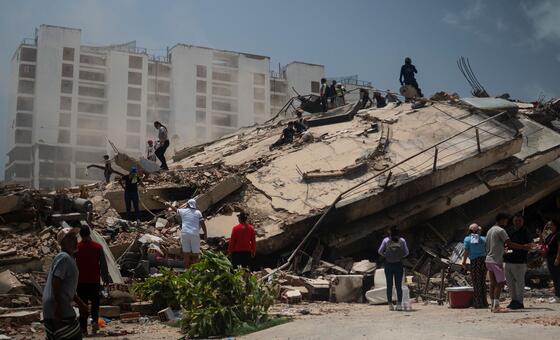
Venezuela quake – On Tuesday, rescue teams remained actively deployed in Venezuela as the aftermath of recent earthquakes continued to unfold. Thousands of survivors, displaced from their homes, faced mounting challenges in securing shelter, with humanitarian organizations sounding alarms about the potential for disease outbreaks due to disrupted living conditions and limited access to clean water and sanitation facilities.
UNHCR’s Warnings on Food and Basic Services
Six days following the seismic events, the United Nations High Commissioner for Refugees (UNHCR) reported severe food scarcity in La Guaira, the most impacted region. The agency highlighted that essential infrastructure such as power, communication networks, and transportation systems had collapsed, creating significant obstacles for aid distribution. Meanwhile, community tensions escalated as logistical hurdles restricted the flow of humanitarian assistance to those in need.
“We are witnessing widespread food shortages in La Guaira, where basic services have failed and connectivity has been severely disrupted,” stated Carlotta Wolf, a UNHCR spokesperson. “This has led to growing frustration among displaced populations as they struggle to obtain essential supplies.”
UNHCR’s rapid assessment, conducted across La Guaira, the Capital District, Miranda, Aragua, and Carabobo, revealed that approximately half of the affected individuals were relying on family or neighbors for temporary housing. However, nearly 40% of survivors had no stable shelter, occupying streets, public spaces, churches, schools, or makeshift camps that lacked adequate safety and hygiene standards. The survey also identified a notable presence of unaccompanied and separated children, raising concerns about their well-being and vulnerability in the crisis.
Impact on Health Infrastructure and Personnel
The UN World Health Organization (WHO) emphasized the critical state of healthcare systems in several affected areas. According to WHO data, 21 facilities across Caracas, La Guaira, Miranda, and Falcón were operating under extreme pressure. Three of these were in critical condition, while six had suffered structural damage or were only partially functional. The remaining facilities, though still operational, were overwhelmed by the surge in patients, leading to delayed treatments and compromised biosafety protocols.
“Health services are under immense strain, with trauma cases flooding the system and morgue operations struggling to keep pace,” said Christian Lindmeier, WHO spokesperson. “The loss of medical staff and damaged infrastructure has created a perfect storm of challenges for the population’s health and safety.”
The crisis has also disrupted forensic and morgue services, complicating efforts to identify and document casualties. This has heightened the urgency of addressing gaps in casualty registration and tracking missing persons, as the situation remains volatile. Lindmeier further warned that the risk of infectious disease outbreaks is increasing, particularly in areas with pre-existing low vaccination rates and the absence of health workers.
Threats from Disease Outbreaks
WHO identified several diseases as potential threats, including measles, diphtheria, pertussis, and vector-borne illnesses like yellow fever, dengue, chikungunya, Zika, and malaria. The spokesperson noted that the destruction of health facilities, coupled with the displacement of personnel, has created conditions ripe for rapid transmission. “The combination of overcrowded shelters and inadequate hygiene measures is exacerbating the risk of outbreaks,” Lindmeier stated.
Dr. Lindmeier also stressed that the situation was compounded by pre-earthquake low vaccination coverage, which has left the population more susceptible to preventable diseases. “The loss of health workers, especially those in maternal care, has further strained the system, making it harder to address both immediate and long-term health needs,” he added. The threat of outbreaks now looms large, with the potential to worsen the humanitarian crisis and increase mortality rates among vulnerable groups.
Aid Efforts and Their Limitations
Despite the challenges, international aid organizations have begun delivering critical supplies. A 47-metric-ton shipment from UNICEF, sourced from the EU’s Copenhagen warehouse, arrived in Venezuela on Tuesday. This delivery included essential items for health, water, and education, aiming to support over 100,000 children and families for the next three months. However, UNICEF estimated that more than 680,000 children required assistance, prompting a $52 million appeal for additional resources.
Combined with an earlier aid delivery from Panama, the UNICEF shipment represents a significant step toward alleviating the immediate needs of affected communities. Yet, the scale of the disaster and the complexity of recovery efforts highlight the limitations of current aid. “While these supplies will provide temporary relief, they are not a long-term solution,” noted Wolf. “The focus must remain on restoring infrastructure and ensuring sustained access to medical care.”
Community Response and Survival Strategies
As the disaster unfolded, local communities adapted to the new reality. Survivors shared resources, while volunteers worked tirelessly to distribute food and water. However, the lack of organized support and the unpredictability of the situation have left many in a state of desperation. “There is panic among people who want aid delivered immediately,” Wolf explained. “They are willing to take risks to secure what they need, even if it means living in unsafe conditions for now.”
The survey conducted by UNHCR also revealed the resilience of displaced families, many of whom were able to find temporary refuge with relatives or neighbors. This informal network of support has helped reduce the severity of the crisis in some areas, though it has not eliminated the risks. “The improvisation in shelter solutions reflects the urgency of the moment,” Wolf added. “But without reliable infrastructure, these efforts cannot sustain the population in the long term.”
Looking Ahead: Challenges and Priorities
As the recovery process begins, officials and humanitarian groups are prioritizing the restoration of critical services. The confirmed death toll stands at 1,719, with at least 5,034 injuries reported and 15,866 individuals affected or displaced. These figures underscore the magnitude of the disaster and the need for coordinated international efforts. “The scale of this crisis demands urgent action,” said Lindmeier. “Without rapid intervention, the health and safety of survivors will continue to deteriorate.”
While aid deliveries are a positive development, the challenge of reaching all affected individuals remains. “The logistics of distributing supplies to remote areas and makeshift camps are complicated by damaged roads and limited communication,” Wolf noted. “This is a test of both human resilience and the global response’s ability to adapt to real-time challenges.”
In conclusion, the earthquake has left Venezuela in a state of emergency, with displaced survivors struggling to meet basic needs and health systems teetering on the brink of collapse. The combined efforts of UNHCR, WHO, and other organizations are crucial, but the path to recovery will require sustained commitment and resources to address both the immediate and enduring impacts of the disaster.