UN Agencies Caution That Gaza’s Food Security Gains Remain Precarious Without Continued Support
Provpnmatrix.com – Humanitarian organizations operating in the Gaza Strip have issued a joint warning that recent improvements in food security and child nutrition could quickly deteriorate without ongoing assistance. While the region has witnessed meaningful progress through expanded humanitarian operations and increased commercial traffic, experts emphasize that this advancement remains vulnerable to reversal.
The Food and Agriculture Organization, UNICEF, and the World Food Programme released their assessment as residents of the conflict-affected territory continue efforts to rebuild local food systems, restore essential services, and recover their livelihoods. The collective message from these agencies underscores that while positive developments are evident, they must be sustained through consistent access, adequate funding, and comprehensive recovery support.
Current Food Security Landscape
According to the latest analysis conducted by the IPC, the UN-backed global food security monitoring system, approximately 1.4 million individuals—representing 67 percent of Gaza’s total population—are currently facing crisis-level or worse acute food insecurity. This classification corresponds to IPC Phase 3 or higher, indicating significant challenges in meeting basic nutritional needs.
This figure marks a notable improvement from the end of last year, when 1.6 million people, or 77 percent of the population, experienced similar or more severe conditions. Nevertheless, approximately 212,000 residents continue to endure emergency-level circumstances classified as IPC Phase 4. Many of these individuals reside in proximity to the Israeli-controlled “Yellow Line,” where humanitarian access and availability of essential services remain particularly constrained.
Impact of Ceasefire and Aid Expansion
UN agencies highlighted that the rapid improvement in conditions demonstrates how swiftly circumstances can transform when humanitarian assistance and commercial activities are substantially scaled up. Following the October 2025 ceasefire agreement between Israel and Hamas, humanitarian operations have expanded considerably across the territory.
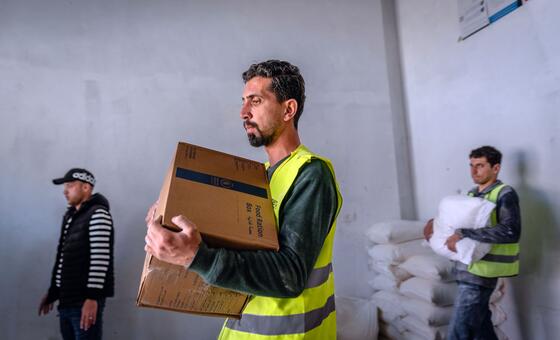
During May alone, food distribution programs reached approximately 1.5 million people, while multipurpose cash assistance peaked at around 700,000 recipients. Nutrition support programs extended to 60 percent of children under five years of age, with parallel increases in access to treatment for acute malnutrition.
These figures stand in stark contrast to September 2025, when only roughly 500,000 individuals received some form of food assistance, and nutrition coverage for children under five remained below one percent. The agencies noted that immediate improvements in food security were observable following the scale-up, and the IPC analysis confirms that this positive trajectory has persisted.
There is progress on food security in Gaza, but it is fragile and can easily be reversed, said Carl Skau, WFP Acting Executive Director. The overall humanitarian situation remains brutal: families lack water, sanitation and medicine. We need sustained access, funding and stability so people of Gaza can begin recovery.
Challenges and Future Projections
Despite these encouraging developments, food rations continue to fall short regarding quantity, quality, and dietary diversity. Commercial imports of fresh produce and protein sources remain inconsistent, and while access into Gaza has improved, only the Kerem Shalom/Abu Salem border crossing in the southern region remains operational. This limitation restricts the flow of essential goods required for recovery, leaving most residents dependent on humanitarian aid.
Malnutrition rates have shown improvement, primarily attributed to the rapid expansion of nutrition prevention programs and enhanced access to treatment for both severe and moderate malnutrition cases. However, these gains depend heavily on continued assistance and have been achieved despite persistent shortages of nutritious food, recurring disease outbreaks, limited access to safe water and sanitation facilities, and the near collapse of local livelihoods.
Acute malnutrition has fallen, but many children are still going hungry, and some children may never fully recover from prolonged lack of proper nutrition, said UNICEF Executive Director Catherine Russell.
Looking ahead, approximately 74,000 children are projected to require treatment for acute malnutrition over the coming year, while roughly 25,000 pregnant and breastfeeding women will also need nutrition support. Four governorates—North Gaza, Gaza, Deir Al-Balah, and Khan Younis—are expected to face “alert” levels of malnutrition, corresponding to IPC Phase 2. Some areas near the “Yellow Line” remained inaccessible to analysts during the survey period, resulting in insufficient data for complete classification.
While substantial recovery of livelihoods and broader economic activity has not yet commenced, early indicators suggest that local food production can resume where farmers and herders gain access to cropland, agricultural inputs, productive assets, veterinary support, and other essential services, including energy for irrigation. In the livestock sector specifically, sheep inventories have grown by 33 percent in regions where support has been maintained consistently.
Communities are also beginning to rebuild social infrastructure and restore basic services, though progress varies significantly across different areas depending on access conditions and resource availability.
Related Reading
Frequently Asked Questions
What is Gaza s food gains could unravel?
Gaza s food gains could unravel is the main topic of this guide. The article explains the context, practical details, and next steps readers should understand.
Why does Gaza s food gains could unravel matter?
Gaza s food gains could unravel matters because readers are looking for a useful answer, not just a short summary. Good content should match search intent and help them decide what to do next.