Motorbike Riders at the Heart of Congo’s Deadliest Ebola Fight
Provpnmatrix.com – Ebola – In the dense river valleys of northeastern Congo, a man on a battered motorcycle is often the first person a sick neighbour will see. Now, those riders — long the invisible arteries of rural healthcare — are being recruited as frontline sentinels in what has become the most lethal Ebola epidemic in recorded history. The World Health Organization announced on Tuesday a sweeping expansion of community-based surveillance built around the motorbike transport network, a move designed to close the gap between a patient’s first symptoms and the moment a sample reaches a laboratory.
The announcement came just one day after another ambulance serving the outbreak response was attacked in the field, underscoring how fragile the operational environment remains. Dr Thierno Baldé, WHO Incident Manager for the Bundibugyo virus disease in the Democratic Republic of the Congo, addressed reporters by video link from Bunia, the outbreak’s geographic centre, while the Geneva press room listened in.
“Almost on a daily basis we face some kind of reaction from the communities. These are difficult situations. People are having their relatives who are sick, who are dying.”
A Toll That Has Surpassed Every Previous Outbreak
Local authorities confirmed on Monday that the Bundibugyo epidemic has claimed 2,325 lives, eclipsing the 2,299 deaths recorded during the 2018–2020 Ebola crisis in the same country. The case-fatality ratio has climbed to 46 per cent under government tallies, a figure that reflects both the virulence of the Bundibugyo strain and the difficulty of reaching remote patients quickly enough for supportive care to matter.
Confirmed cases have now passed the 5,000 threshold, and infections have been documented in a sixth province, Bas-Uele, extending the geographic footprint of the epidemic well beyond the initial hotspots in Ituri and Mbanki territories. Dr Baldé acknowledged the severity of the situation while stressing that response teams are working around the clock to contain transmission.
“The situation is quite difficult, but people are working here days and nights trying to control this outbreak.”
Why the Biker Becomes the Watchman
The rationale for centring the response on motorcycle transport operators is straightforward: in regions where paved roads are scarce and ambulances are scarce, the motorbike is the default means of moving a patient from a village to a health post, or of carrying a body to a burial site. Riders therefore encounter symptomatic individuals and deceased patients at a frequency unmatched by any other occupational group in the affected zones. Some have lost several family members to the virus in a single household.
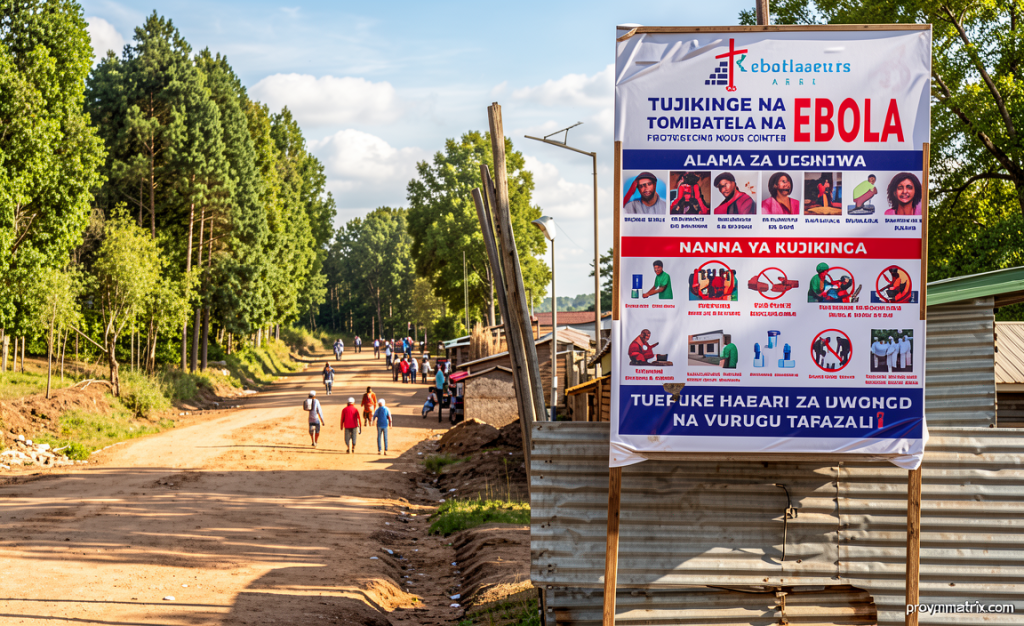
Hand-washing stations and disinfectant supplies have already been distributed to rider associations. The next step, Dr Baldé explained, is to formally enlist riders as surveillance and response officers — individuals trained to recognise a suspected case, notify the nearest surveillance team, and ensure the patient is tested before being moved further.
“They need to be able to tell us wherever they transport a sick person, contact the surveillance team and enable the suspected case to be tested.”
The outreach is being conducted, in the words of the WHO official, “in a very dignified manner,” through persuasion and explanation rather than coercion, framing participation as protection for the rider’s own household.
Scaling Up the Epidemiological Machinery
Beyond the rider programme, WHO outlined a multi-layered operational surge:
One hundred additional expert epidemiologists are slated for deployment across health zones in the affected territories. They will be backed by more than 500 community health workers whose mandate includes active contact tracing, identification of infected individuals, and persuasion of those individuals to accept isolation and supportive treatment. Over the preceding fortnight, roughly 400 hospital beds have been added across facilities in multiple localities, easing the bottleneck that previously forced patients to wait days for a treatment slot.
Burial practices represent another critical intervention point. Dr Baldé stressed the need to equip village-level burial attendants with chlorine solutions and protective gloves so that bodies can be handled safely and with dignity, reducing the exposure events that historically seed new transmission chains.
He pointed to the localities of Lita and Nizi as early indicators of progress. Six to seven weeks earlier, those communities were overwhelmed by a surge of deaths; by Tuesday, only a handful of new cases and fatalities were being reported, and burials were occurring at appropriate intervals under supervised conditions.
“Today, we are reporting only few cases, few deaths, and those deaths are being safely and dignifiedly buried at the right time. We have seen a kind of stabilization of the situation where we are capable of intervening as quick as possible.”
Vaccine and Therapeutic Pipelines Accelerate
The Bundibugyo strain, declared a public health emergency of international concern by DRC authorities on 15 May, currently has no licensed vaccine and no approved antiviral treatment. That gap is narrowing. WHO’s Director-General told the International Health Regulations Emergency Committee — convening for its second session on the epidemic — that clinical trials are advancing for vaccines and therapeutics developed specifically against the Bundibugyo virus.
For the first time, two vaccines designed expressly for Bundibugyo have entered human trials. A separate candidate, which demonstrated cross-protection in animal studies, is being proposed for phase III evaluation, the final large-scale stage before regulatory approval. The committee was expected to issue updated risk-level guidance to member states in its recommendations.
The convergence of grassroots surveillance through transport workers, expanded epidemiological capacity, additional treatment beds, and an accelerating vaccine pipeline marks a decisive inflection point in an epidemic that, six weeks ago, appeared to be spiralling beyond containment. Whether the strategy succeeds will depend on sustained financing, faster data sharing between provinces, and the continued willingness of communities to cooperate with response teams in an environment where fear and grief still shape every encounter.
Related Reading
Frequently Asked Questions
What is Ebola?
Ebola is the main topic of this guide. The article explains the context, practical details, and next steps readers should understand.
Why does Ebola matter?
Ebola matters because readers are looking for a useful answer, not just a short summary. Good content should match search intent and help them decide what to do next.