70,000 Ebola Vaccine Doses Rushed to DR Congo as Bundibugyo Outbreak Claims Record Toll
Provpnmatrix.com – The Democratic Republic of the Congo has entered its most lethal Ebola chapter yet, with more than 2,300 deaths confirmed since the current outbreak was formally declared on 15 May. In response, the United Nations’ International Vaccine Coordination Group (ICG) has approved the immediate release of 70,000 doses of the Ervebo vaccine to Kinshasa, a move designed to shield frontline communities and medical personnel from the Bundibugyo strain of Ebola virus disease now sweeping the country’s eastern provinces.
A Vaccine Built for a Different Strain
The Ervebo product was originally engineered to combat the Zaire ebolavirus, the species responsible for the 2014–2016 West African epidemic — the single deadliest Ebola outbreak ever recorded. Its deployment against the Bundibugyo variant therefore carries a degree of scientific uncertainty. The World Health Organization acknowledged on Thursday that it remains unproven whether Ervebo will confer meaningful protection against this particular strain.
“Early laboratory and animal data suggest it may provide some protection,” WHO stated in a press release. “Thus, the clinical trial is expected to provide important new evidence, which is essential for policymakers to inform future use of the Ervebo vaccine.”
That caveat shapes how the 70,000 doses will be distributed. The ICG has earmarked 20,000 of them specifically for a controlled clinical trial within the affected regions of the DRC, while the remaining 50,000 will go directly to health workers on the front lines. Because severe adverse reactions to Ervebo have proven exceedingly rare across prior clinical trials, some residents in outbreak-affected zones may also receive the vaccine outside the formal trial framework.
Scale of the Crisis
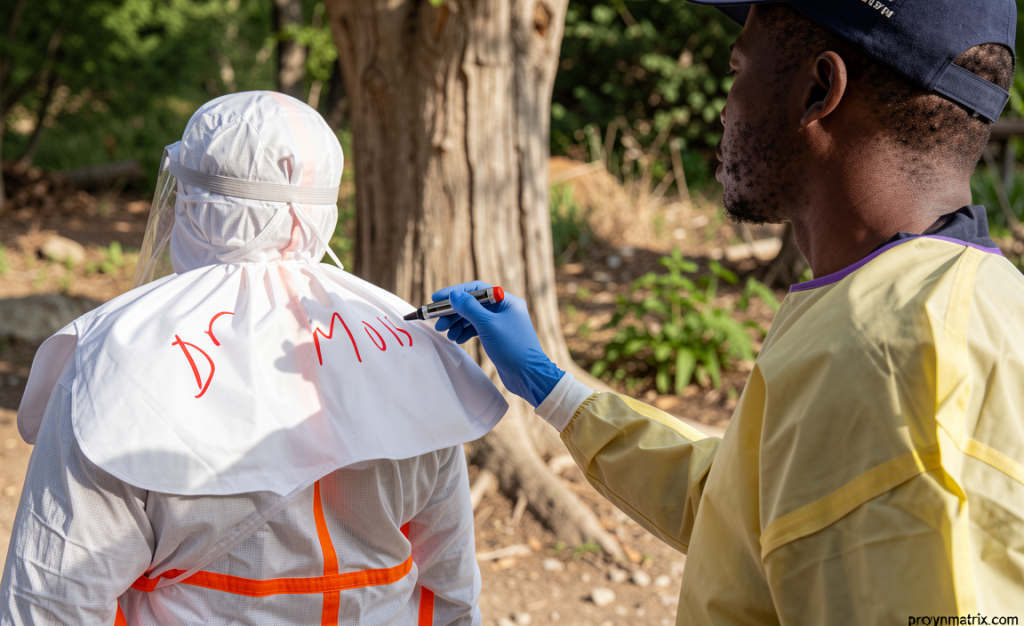
The numbers underscore the urgency behind the allocation. As of Wednesday’s latest data release, total confirmed cases had climbed to 5,021. Local authorities have not published updated mortality figures since Monday, but the death toll already surpasses every previous Ebola episode in Congolese history. Among the hardest hit are the very people tasked with containing the virus: more than 160 health workers have contracted Ebola, and 40 have died, according to Julien Harneis, the UN Senior Ebola Coordinator, who posted the figures on Thursday.
WHO Director-General Tedros Adhanom Ghebreyesus welcomed the ICG’s decision on Thursday, describing the shipment as
“an important example of global solidarity in action.”
Conflict Compounds the Emergency
The outbreak is unfolding against a backdrop of sustained armed conflict in eastern DRC. Fighting between the Congolese Government and the Rwanda-backed M23 armed group — alongside several other militia factions — has crippled containment operations. Medical teams are routinely blocked from reaching conflict zones, health centres have been destroyed or forced to close, and thousands of residents have been displaced. Under those conditions, contact-tracing and safe burial practices, both pillars of Ebola control, become nearly impossible to implement.
The M23 group has gone further, publicly touting its capacity to run a parallel Ebola response independent of Kinshasa. According to news reports, the militia claims to have established its own health administration, including oversight of laboratories and disease-surveillance activities. On Thursday, M23 announced it would suspend shared taxi services and boat crossings to and from Government-held zones affected by Ebola, in an effort to limit transmission within territory under its control.
The UN has imposed sanctions on the M23 militia and has strongly condemned its record of atrocities against civilians — including forced recruitment, mass killings, and sexual violence — citing “numerous reports, investigations and testimonies.”
The Broader Role of the ICG
The International Vaccine Coordination Group manages and coordinates emergency supplies of vaccines and antibiotics for countries facing major outbreaks. Its involvement in the DRC is not new: between 2021 and July 2026, the ICG allocated 56,000 Ervebo doses to respond to multiple successive Ebola episodes within the country. The current shipment of 70,000 doses represents the largest single allocation to date, reflecting both the scale of the Bundibugyo outbreak and the government’s formal request for doses from the global stockpile, submitted last week.
Harneis, commenting on the allocation in a post on X (formerly Twitter), framed the delivery in terms of morale as much as medicine:
“This allocation of vaccines gives hope for everyone in the affected areas and in particular for frontline health workers.”
What Comes Next
The clinical trial embedded within this allocation will generate the first substantive evidence on Ervebo’s efficacy against the Bundibugyo strain. If the data prove encouraging, future outbreaks of this variant could be met with a proven prophylactic tool rather than an experimental one. If results are inconclusive, the episode will underscore the need for strain-specific vaccine development and broader stockpiling. Either way, the next weeks of trial implementation will be shaped by the same obstacles that have already made containment so difficult: active hostilities, disrupted health infrastructure, and a population in constant motion. The vaccine doses are now in transit; whether they reach the people who need them before the virus reaches them depends on factors no shipment can solve alone.
Related Reading
Frequently Asked Questions
What is DR Congo receives 70 000 Ebola?
DR Congo receives 70 000 Ebola is the main topic of this guide. The article explains the context, practical details, and next steps readers should understand.
Why does DR Congo receives 70 000 Ebola matter?
DR Congo receives 70 000 Ebola matters because readers are looking for a useful answer, not just a short summary. Good content should match search intent and help them decide what to do next.