Glacier Collapse Triggers Catastrophic Flash Floods Across Nepal and China’s Tibet Region
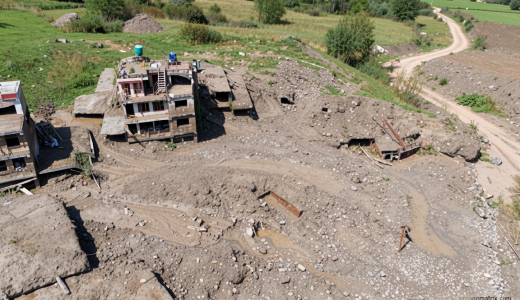
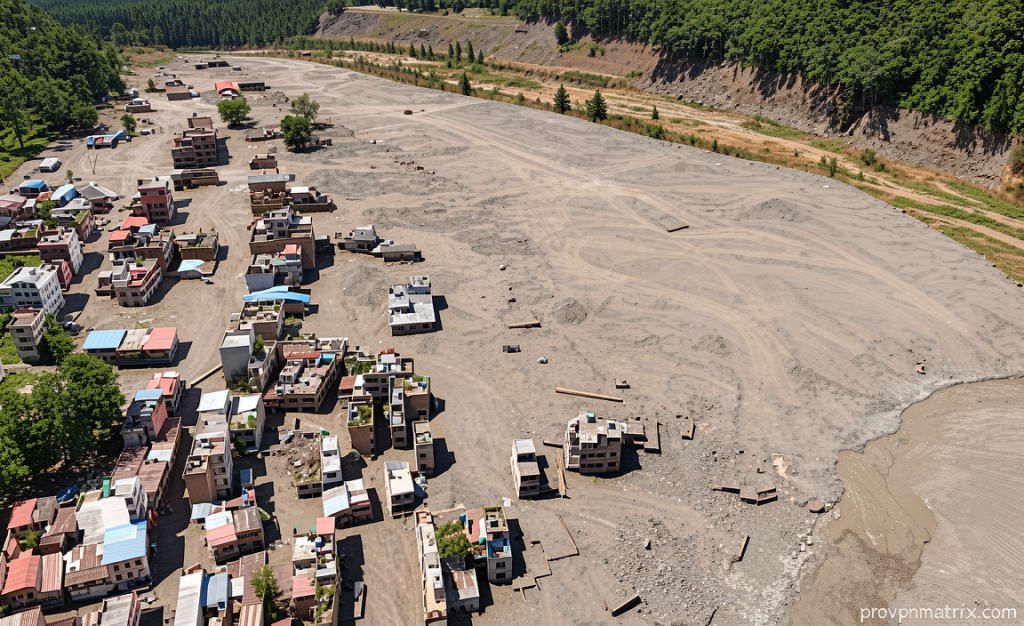
Provpnmatrix.com – A day after a wall of floodwater tore through mountain towns and villages across the Himalayas, rescue crews are scrambling to reach isolated communities while hundreds remain unaccounted for in both Nepal and China. The sudden surge, linked to a collapsed glacier high in the steep-sided valleys of the range, has left entire settlements submerged, infrastructure shattered, and families separated from one another in what officials describe as one of the worst natural disasters to strike the region in recent memory.
The Human Toll Continues to Climb
In China’s Tibet autonomous region, authorities confirmed that approximately 560 people are still missing following Wednesday’s inundation. The UN country office documented widespread destruction and significant casualties across the area. In Nepal, the death toll continues to rise, and hundreds more remain unaccounted for in the districts of Rasuwa, Nuwakot, and Dhading, where the force of the water swept away homes, classrooms, and medical facilities within minutes.
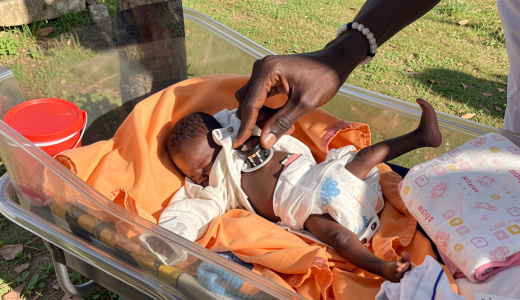
UNICEF confirmed that at least 17,000 children have been directly impacted by the flooding in those three Nepali districts. Alice Akunga, the UNICEF Representative to Nepal, described scenes of unimaginable speed and violence:
“Children across Rasuwa and Dhading saw their lives being literally washed away in front of their eyes in a very short span of time, with homes, classrooms, and medical facilities damaged.”
“Too many lost their lives and loved ones. With the death toll still rising, we know this tragedy is far from over. Children who have survived the floods now face heightened risks of disease, malnutrition, violence and exploitation.”
Akunga added that UNICEF teams are already on the ground scaling up support, though she stressed the agency urgently requires additional resources to reach every child in need.
Infrastructure Devastation Cuts Off Entire Communities
The physical destruction extends far beyond individual homes. Roads, bridges, hydropower installations, water supply networks, and telecommunications lines have been badly damaged or destroyed outright, according to UNICEF’s Thursday assessment. Affected areas are largely inaccessible, which severely hampers the delivery of lifesaving aid to people who may be stranded without food, clean water, or medical care.
Rasuwa district, located roughly 80 kilometres north of Kathmandu, bore the brunt of the impact. The towns of Timure, Rasuwagadhi, and Syabrubesi — a well-known trekking gateway for tourists, mountaineers, and pilgrims heading toward the Langtang valley — were hit particularly hard. The area had also previously been struck by a 7.8-magnitude earthquake, compounding structural vulnerabilities in already fragile mountain settlements.
UN Mobilises Emergency Response Across Multiple Agencies
The United Nations relief chief, Tom Fletcher, announced on X that an initial $2 million has been released from the UN Global Emergency Fund (CERF) “to save lives with emergency medical care, shelter, water.”
“The United Nations is mobilising supplies and humanitarian teams and we pledge to support national efforts to deliver emergency aid and support,” Secretary-General António Guterres said.
The UN office in Nepal confirmed on Facebook that agencies are deployed to affected areas carrying food, medical supplies, and relief materials in support of the government-led response, and that they stand ready to do more.
WHO Dispatches Emergency Health Kit and Field Shelters
In direct support of frontline health workers, the World Health Organization dispatched an interagency emergency health kit containing medicines and supplies sufficient to deliver basic health services to up to 10,000 people. Six multipurpose tents were also provided to help sustain health-service delivery in communities where permanent facilities have been destroyed.
“These supplies are intended to support frontline health workers as they continue providing critical care and responding to the immediate health needs of affected populations,” the UN agency explained on Facebook.
“WHO remains committed to working closely with health authorities and partners to assess the evolving situation, support emergency health services and help ensure that people continue to access the care they need during this difficult time.”
Food and Relief Logistics Begin Rolling Out
On Thursday, the UN World Food Programme (WFP) and UNICEF planned to commence deploying staff and trucks loaded with relief supplies into the hardest-hit districts. These operations aim to bridge the gap between the initial emergency response and longer-term recovery, ensuring that displaced families receive nutrition, shelter materials, and basic necessities while they await reconstruction.
Satellite Assessment Aids Damage Mapping
Efforts to rapidly gauge the full scale of the disaster continued through secure satellite imagery and analysis of the flooded area, provided via UN-SPIDER — the UN platform for Space-based Information for Disaster Management and Emergency Response. Managed by the UN Office for Outer Space Affairs (UNOOSA), the initiative connects disaster-management experts with space agencies to support risk reduction, early-warning systems, and emergency-response coordination. In a region where ground access is limited by destroyed roads and bridges, such orbital data becomes indispensable for directing rescue and relief operations.
Geological Context: Why the Himalayas Are Increasingly Vulnerable
The suspected trigger — a collapsed glacier perched above steep-sided valleys — underscores a growing pattern in the high Himalayas. Warming temperatures are destabilising glacial ice and the moraine walls that hold it in place, increasing the likelihood of sudden outburst floods and associated mudslides. Communities built along river corridors below these glaciers face compounding risk, particularly where prior seismic events, such as the 7.8-magnitude earthquake that previously shook the same region, have already weakened slopes and structures. For residents of Rasuwa, Nuwakot, and Dhading, the convergence of seismic fragility, glacial instability, and monsoon-season rainfall creates a layered hazard that demands sustained investment in early-warning infrastructure and community preparedness well beyond the immediate emergency.
Related Reading
Frequently Asked Questions
What is Shock and devastation remain a day after?
Shock and devastation remain a day after is the main topic of this guide. The article explains the context, practical details, and next steps readers should understand.
Why does Shock and devastation remain a day after matter?
Shock and devastation remain a day after matters because readers are looking for a useful answer, not just a short summary. Good content should match search intent and help them decide what to do next.