Plastic Tide: Uganda’s Lake Albert Faces a Crisis at Its Shores
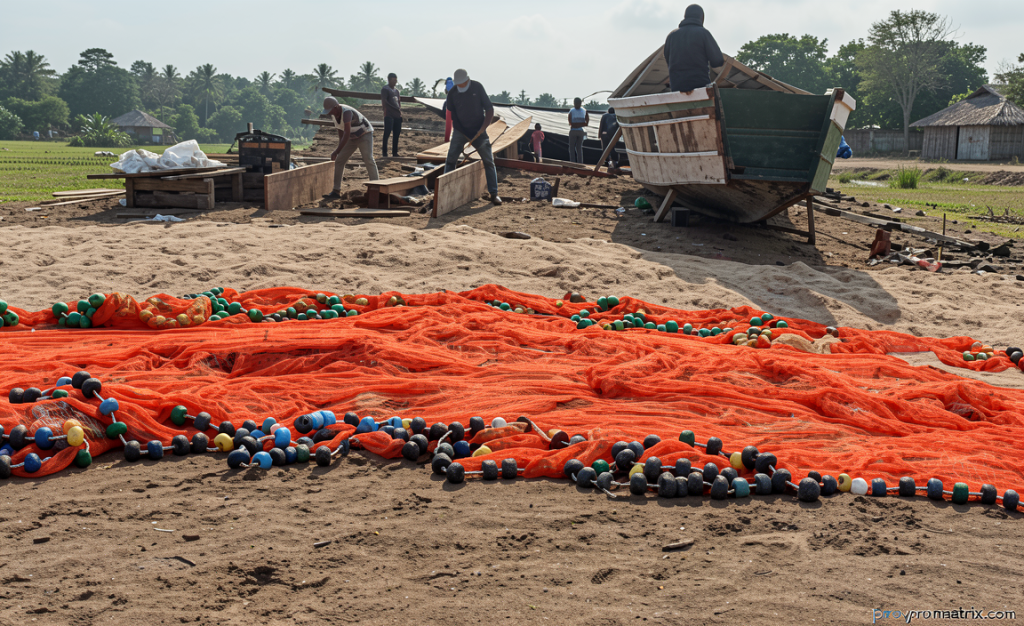
Provpnmatrix.com – Before the sun clears the horizon along the Nkondo coastline in Uganda’s Kikuube district, boats are already cutting through the grey water of Lake Albert. For the families clustered around this vast freshwater body, the lake is not scenery or recreation — it is the mechanism through which meals are prepared, children are fed, and households survive each day. Yet that same water is quietly filling with plastic bags, industrial residue, and agricultural runoff, and the people who depend on it are sounding alarms that have gone largely unanswered.
A Lifeline Under Siege
The threat is no longer theoretical. Solomon Wamara, who chairs the fishers’ association operating on Lake Albert, has made clear that the community’s tolerance for inaction has run out. Speaking around World Lake Day, observed every year on 27 August, Wamara framed the issue in terms that go well beyond sanitation:
“It is a good time to highlight the threats facing this lake that is our lifeline.”
Wamara explained that discarded plastic bags and assorted debris, once tossed along riverbanks or village edges, eventually migrate into the lake itself. Once submerged, they degrade the very zones where juvenile fish spawn and mature. The contamination does not stop at the shoreline; it follows the waterways upstream.
Rivers as Conduits of Contamination
Three tributaries — the Wambaya, the Waki, and the Nguse — carry agricultural chemicals, household waste, and untreated sewage directly into Lake Albert. Wamara stressed that these waterways are not peripheral to the problem; they are the primary arteries through which pollution reaches the lake’s breeding grounds.
“River pollution affects fish breeding grounds and also food security. These rivers are essential for the survival of fish and communities that depend on the lake. The lake is our life.”
The implication is straightforward: if the rivers continue to deliver their toxic cargo, the fish populations that sustain tens of thousands of households will contract, and the economic base of the district will erode within a generation.
Global Context: A Shrinking Water World
The situation in Kikuube mirrors a pattern documented worldwide. A 2024 joint report from the UN Environment Programme (UNEP) and UN-Water found that surface water bodies are either shrinking or disappearing entirely in regions inhabited by 93.1 million people. In addition, more than one-quarter of monitored freshwater systems are growing progressively turbid as a result of pollution. The UN has separately flagged the decline of freshwater species linked to decades of environmental degradation, underscoring that Lake Albert’s troubles are both locally rooted and globally symptomatic.
Government Response and Institutional Reform
Godwin Angalia, the Kikuube district commissioner, brings a particular credibility to conservation discourse: he grew up in a fishing family and worked as a fisher himself before entering public office. He described lakes as foundational pillars of local economies and daily existence.
“As a government, we value lakes because they enable the lives of millions of citizens. They also provide various resources that support society.”
Angalia acknowledged that Lake Albert contends with multiple simultaneous pressures — environmental contamination, illegal fishing operations, and habitat destruction. Among the most critical assets he identified is the Bugoma Forest, whose watershed function sustains the lake’s hydrological balance and the biodiversity within it.
“Of course, rivers like Nguse and Wambaya have been polluted. Also, the Bugoma Forest is very important for the life of Lake Albert and the creatures in it.”
His administration is pursuing two parallel tracks: curbing pollution generated by human activity while simultaneously safeguarding the upstream water sources that replenish the lake. Village-level leaders have been instructed to monitor and report individuals who damage lake resources or pollute the environment to the appropriate authorities.
Putting Fishers at the Centre of Conservation
Rather than treating traditional fishers as obstacles to regulation, Angalia’s approach positions them as co-managers of the resource. The government has begun establishing indigenous community committees tasked with assisting fisheries management in their respective zones. The rationale is practical: fishers possess intimate, generational knowledge of spawning cycles, seasonal migrations, and sustainable harvest thresholds that no external survey can replicate.
“We fishermen ourselves know that we should not catch young fish. We use natural and environmentally friendly methods in fishing.”
Wamara, for his part, has called for monthly cleanliness campaigns to be scaled up and extended to additional communities around the lake. He also cautioned against imposing heavy fiscal burdens on traditional fishers; instead, he urged authorities to facilitate lawful, sustainable fishing so that conservation does not become synonymous with poverty.
What Comes Next
The convergence of rising population pressure, expanding agricultural frontage along the Wambaya and Nguse basins, and persistent plastic pollution places Lake Albert at a tipping point. Without coordinated enforcement of river-bank waste management, protection of the Bugoma Forest watershed, and genuine inclusion of fisher communities in governance structures, the lake’s capacity to feed its surrounding populations will continue to diminish. The message from Nkondo’s shores is unambiguous: the water that sustains these communities is running out of time to be saved.
Related Reading
Frequently Asked Questions
What is The lake is our life?
The lake is our life is the main topic of this guide. The article explains the context, practical details, and next steps readers should understand.
Why does The lake is our life matter?
The lake is our life matters because readers are looking for a useful answer, not just a short summary. Good content should match search intent and help them decide what to do next.