Nuclear Test Survivors March Through UN Halls, Demanding an End to the Bomb’s Legacy
Provpnmatrix.com – In the corridors of the United Nations headquarters in New York, a small procession of diplomats, scientists, and survivors paused before a large photograph showing crowds demanding the closure of a vast desert test range in central Asia. The image, displayed in the General Assembly building, captured a moment from 1991 when Kazakhstan finally silenced the explosions that had scarred its northern steppe for four decades. The walk, organized under the #StepUp4Disarmament campaign, preceded the General Assembly’s high-level meeting marking the International Day against Nuclear Tests, observed each year on 29 August.
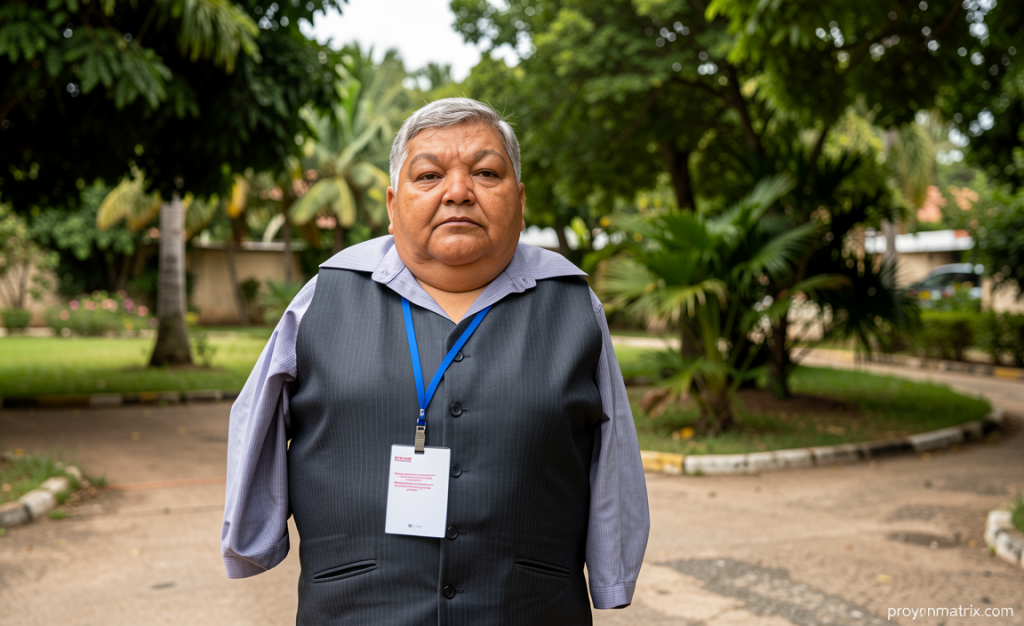
At the head of the group walked Karipbek Kuyukov, a Kazakh artist and lifelong anti-nuclear advocate who was born without arms — a physical consequence of radiation exposure his parents endured near the Semipalatinsk polygon. Kuyukov, who creates paintings by gripping his brush with his lips and toes, has spent decades carrying a single message: that no generation should be forced to absorb the biological cost of another nation’s weapons programme.
A Site of 456 Explosions
The Semipalatinsk test site, located in northern Kazakhstan, hosted 456 nuclear detonations between 1949 and 1989 under Soviet authority. Hundreds of thousands of residents in surrounding communities were subjected to elevated radiation levels, and the health consequences have propagated through families across multiple generations. Kuyukov’s own parents were living witnesses to those blasts.
“My parents were living witnesses of those tests, and as a result, I was born without arms,” Kuyukov said.
The site’s closure on 29 August 1991 — a date the General Assembly later designated, at Kazakhstan’s initiative, as the International Day against Nuclear Tests — represented not merely an environmental remedy but a political turning point. This year marks 35 years since the last explosion at Semipalatinsk.
“I can say with pride that my country, Kazakhstan, began its path to sovereignty precisely with that peaceful decision,” Kuyukov told the assembled delegates. “I believe this is a great honour for us and can serve as a worthy example for other countries.”
From Protest to Policy
Kuyukov was 20 years old when Kazakh poet Olzhas Suleimenov ignited the Nevada-Semipalatinsk anti-nuclear movement, linking the suffering of Central Asian communities to that of Indigenous peoples near the United States’ Nevada test site. Kuyukov recalled standing shoulder to shoulder with a chief of the Shoshone nation at a demonstration, and joining peaceful rallies at the gates of Semipalatinsk alongside activists from French Polynesia — where France had conducted tests at Mururoa Atoll — and from Japan.
“The entire nation rose up against this monster, against the Semipalatinsk polygon,” he recalled.
The movement’s success in forcing the site’s shutdown demonstrated that sustained civilian pressure could compel governments to abandon weapons-testing programmes, a precedent that resonates today as geopolitical tensions raise fresh anxieties about whether nuclear explosive testing might resume.
UN Voices: Silence Was Earned, Not Given
Addressing participants before the walk, UN High Representative for Disarmament Affairs Izumi Nakamitsu emphasized that the quiet which fell over Semipalatinsk three and a half decades ago was the product of collective will, not historical accident.
“It was achieved through the determination of people, communities and leaders who rejected nuclear testing,” she said.
Kazakhstan’s Permanent Representative to the UN, Kairat Umarov, framed the procession in simpler terms: a “very simple but very powerful way to remind us that every step towards disarmament matters.”
The CTBT at Thirty
The same year also marks the 30th anniversary of the opening for signature of the Comprehensive Nuclear-Test-Ban Treaty (CTBT), the multilateral instrument designed to ban all nuclear explosions for testing or other purposes. Robert Floyd, Executive Secretary of the CTBT Organization, spoke to young participants in the walk about the intergenerational nature of disarmament work.
“The day will come when your generation will lead, will make the decisions, will be in the boardrooms, will be in the assembly halls,” Floyd said. “And we will be cheering on your great steps forward.”
The CTBT, though never formally entering into force due to the absence of ratification by a handful of key states, has functioned as a de facto norm: only a handful of nuclear tests have been conducted since the treaty’s 1996 opening, compared with dozens per year in earlier decades. Its continued relevance depends on political will that, as Nakamitsu warned later in the General Assembly, is under strain amid deepening geopolitical competition.
“The world must never witness another nuclear explosion,” Nakamitsu recalled, echoing the Secretary-General’s message.
No Border Is Safe
Annalena Baerbock, President of the General Assembly, underscored that radioactive fallout does not respect national boundaries.
“In an interconnected world such as ours, there is no truly ‘remote region’ immune from the effects or dangers of nuclear testing,” she said.
That point was made viscerally by Tina Cordova, a fourth-generation survivor of the 1945 Trinity test in New Mexico — the first atomic detonation in human history. Cordova, who also joined the morning’s symbolic walk, described five generations of cancer in her family and the absence of any warning before or after the blast.
“We were the first people exposed to radiation anyplace in the world as ash fell from the sky in the days after the bomb,” she told the Assembly. “We were never warned before or after of the danger, so we lived our lives off the land as we always did.”
Cordova closed her remarks with a direct appeal to delegates: after 81 years since that first Trinity explosion, it is time, she urged, to free families, children, and grandchildren from the continuing threat of nuclear weapons.
The Unfinished Work
For Kuyukov, whose life embodies both the cost and the resilience of those affected by nuclear testing, the struggle now extends beyond his own generation. The walk through the UN corridors was not a commemoration of a closed chapter but a reminder that disarmament remains an open process — one that requires each successive cohort of leaders, scientists, and citizens to take the next step before the silence achieved at Semipalatinsk, Mururoa, and other test sites is allowed to erode.
Related Reading
Frequently Asked Questions
What is Every step towards disarmament matters nuclear?
Every step towards disarmament matters nuclear is the main topic of this guide. The article explains the context, practical details, and next steps readers should understand.
Why does Every step towards disarmament matters nuclear matter?
Every step towards disarmament matters nuclear matters because readers are looking for a useful answer, not just a short summary. Good content should match search intent and help them decide what to do next.