Himalayan Collapse Sends a Wall of Ice and Debris Down Nepal-China Trade Corridor, Killing Hundreds
Provpnmatrix.com – A seismic instrument in the high Himalayas recorded a magnitude-5.2 tremor on Wednesday morning at 8:37. For a brief moment, seismologists assumed they were tracking an earthquake. What they were actually measuring was something far stranger: a mountainside giving way, dragging roughly 1,200 meters of glacier ice, fractured bedrock, and sediment down toward the valley floor along the Nepal-China border.
Within hours, rivers swelled with a slurry of water, boulders, and mud. At one monitoring station along the affected waterway, the water level climbed nine meters in thirty minutes. Towns and villages strung along one of Nepal’s principal trade arteries with China were swept. By Friday, death tolls across Nepal and Tibet had surpassed 500, while more than 1,500 people remained unaccounted for, among them hundreds of foreign nationals.
A Researcher’s Personal Reckoning
Dipesh Chapagain, a 40-year-old climate scientist who spent his childhood in the hills of eastern Nepal and now investigates mountain hazards at the United Nations University in Bonn, Germany, had been discussing precisely this kind of scenario with a colleague just one day before the collapse. For him, the topic was never purely academic.
“When I was kid, it was not like that,” he recalled. “Or when my parents were kids or my grandparents, that was not the major challenge [they faced].”
His own immediate family escaped harm. Yet the weight of the news still pressed on him.
“It’s always hard to get these devastating messages from back home,” he said. “It’s getting more frequent and more intense.”
What the Satellite Data Shows
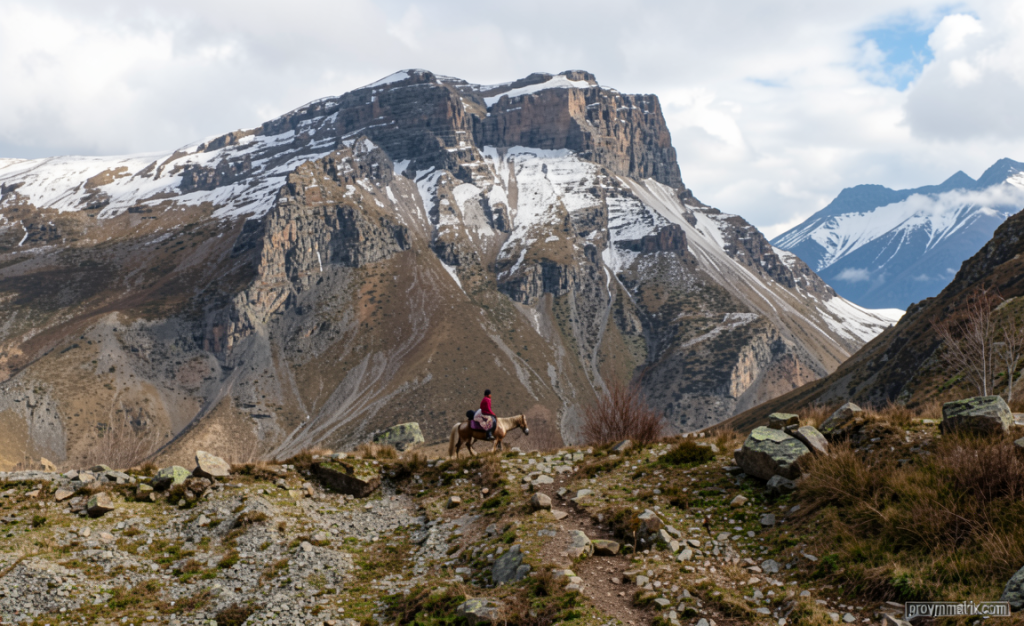
Experts are still reconstructing the precise chain of events. Satellite imagery analysis points to bedrock failure beneath a glacier, sending a massive volume of ice and rock into the Lhende Khola, a tributary of the Bhotekoshi River. That initial avalanche then triggered a cascading flood that tore through inhabited valleys downstream.
The mechanics, Chapagain emphasized, differ from the glacial lake outburst floods his team studies under the Global Mountain Safeguard Research programme, abbreviated GLOMOS, housed within UNU’s Institute for Environment and Human Security.
“This time, the intermediate step was skipped,” Chapagain explained.
In a typical glacial lake outburst, meltwater accumulates in basins carved around retreating glaciers, often dammed by unstable ice or loose debris. When those natural barriers fail, enormous quantities of water are released almost instantaneously. Wednesday’s event, by contrast, appears to have involved a direct rock-and-ice collapse from the mountainside, generating a torrent without the intermediary lake stage. Researchers are examining whether the debris temporarily dammed the river before the obstruction itself gave way, though Chapagain cautioned that this secondary sequence had not yet been confirmed.
A Fivefold Surge in Flood Frequency
The distinction between collapse-triggered floods and lake-burst floods matters for prediction and early-warning design, even though downstream the visual signature can look nearly identical: a vast, fast-moving pulse of water, ice, and rubble released with little warning into narrow, populated valleys.
GLOMOS researchers recently catalogued 493 glacial lake outburst events spanning the earliest available records through 2024. Their findings show these disasters have become roughly five times more frequent since 1950, climbing from an average of about seven per decade to 34. The acceleration tracks closely with rising temperatures across the Hindu Kush Himalaya, where glaciers are retreating at rates unprecedented in the instrumental record and permafrost is thawing across vast alpine zones.
Why the Downstream World Should Care
The consequences of destabilizing high-altitude terrain extend far beyond the mountain villages that bear the immediate brunt of each event. The Hindu Kush Himalaya region drains into ten major river basins. Approximately 2.1 billion people across South and East Asia depend on those rivers for drinking water, irrigation, hydropower, and livelihoods. A single catastrophic release of meltwater and debris can alter sediment loads, shift river courses, and overwhelm infrastructure for months or years.
It remains unclear whether climate change directly caused Wednesday’s specific collapse. What is clear is that global warming is rapidly reshaping the high-altitude environment in which such disasters occur. As ice retreats and permafrost thaws, rock that was once supported or bound by frozen ground can lose its structural integrity. Increased meltwater further saturates slopes, reducing friction and accelerating erosion. The result is a landscape where failure events that were once rare become routine, and where the magnitude of each event grows harder to forecast.
Shifting Settlement Patterns Amplify the Risk
The mountains are not the only variable changing. The geography of human habitation below them is shifting as well. Chapagain recalled that when he was a child, families in many of Nepal’s hilly districts traditionally built their homes higher on the slopes while cultivating rice and other crops on flatter ground closer to river channels. His own family’s garden sat on a mountaintop; its rice paddies lay below, near the water.
That pattern is eroding. Urbanization, road construction, and the economic pull of river-valley towns are drawing populations into precisely the corridors where flood and debris flows concentrate. The intersection of a destabilizing cryosphere and a densifying downstream population means that each successive event carries a larger human cost than the one before it, even if the physical mechanics remain the same.
For the communities along the Bhotekoshi corridor and the broader Nepal-China trade route, the question is no longer whether such disasters will recur. The question is how quickly warning systems, land-use planning, and international cooperation can adapt to a Himalaya that is melting faster than any generation in living memory has experienced.
Related Reading
Frequently Asked Questions
What is As the Himalayas melt deadly floods?
As the Himalayas melt deadly floods is the main topic of this guide. The article explains the context, practical details, and next steps readers should understand.
Why does As the Himalayas melt deadly floods matter?
As the Himalayas melt deadly floods matters because readers are looking for a useful answer, not just a short summary. Good content should match search intent and help them decide what to do next.