Haiti’s Gang War Escalates Beyond the Capital as Kenscoff Massacre Marks a New Front
Provpnmatrix.com – A farming community perched on the ridgeline above Port-au-Prince was engulfed in flames and gunfire late Sunday night, when armed assailants swept through Kenscoff, torching homes and striking residents with bullets. By the following morning, corpses littered the narrow streets while survivors combed the rubble for missing family members. At least 47 people lost their lives and another 22 sustained injuries in what witnesses described as a coordinated assault on the once-quiet hillside settlement.
The attack represents one of the bloodiest single incidents in a region that had long been spared the worst of Haiti’s gang warfare. Its significance extends well beyond the immediate carnage: it signals that armed factions are no longer content to contest turf within the capital’s boundaries but are actively probing outward into surrounding agricultural and residential zones.
A Grim Statistical Portrait
The Kenscoff killings arrived just hours after the United Nations Integrated Office in Haiti (BINUH) published a quarterly report charting the widening geographic footprint of gang violence across the country. The document covers April through June and records at least 1,408 deaths and 656 injuries nationwide. That total represents roughly a 14 per cent reduction compared with the first three months of the year — a modest numerical dip that, as the report itself notes, conceals sharply divergent realities from one region to the next.
Breaking down the causes: more than half of all casualties were directly attributable to gang actors. Approximately 40 per cent occurred during state-led security operations aimed at dismantling those gangs, while around 5 per cent were tied to informal self-defense groups and vigilante collectives operating outside official command structures.
“These figures show that the population continues to bear an unacceptable toll from violence,” said Carlos Ruiz Massieu, head of BINUH and the UN’s senior representative in Haiti, in a statement issued alongside the report.
Pressure in the Capital, Displacement Elsewhere
Government and police operations have tightened their grip on several neighbourhoods within the Port-au-Prince metropolitan area, notably Delmas and Tabarre. Yet the report suggests that in multiple instances the effect has been to push violence laterally rather than extinguish it. Gang members displaced from one sector simply migrated toward adjacent corridors where enforcement was thinner.
The most violent quarter of fighting unfolded in the sprawling Plaine du Cul-de-Sac and the adjacent Cité Soleil district, where rival factions waged extraordinarily lethal battles over territory and control of illicit revenue streams. Those clashes claimed 463 lives, wounded hundreds more, and left scores of women raped. Over 18,000 residents abandoned their homes during the period, and basic health and education services in the affected zones were suspended entirely.
The Plaine du Cul-de-Sac holds particular strategic weight: it sits astride two principal arterial roads that link the capital’s container port and the Varreux oil terminal to Haiti’s northern departments. Whoever controls those corridors controls a significant share of the country’s import and fuel logistics, making the area a prize worth fighting over.
Expansion Beyond the Capital
Well outside the metropolitan perimeter, armed groups continued to push into previously uncontested territory. In the Artibonite — Haiti’s principal agricultural basin, located northwest of the capital — gangs struck farming communities, killing residents inside their houses and shooting cultivators working in open fields. Farther south, the Village de Dieu faction executed a series of raids around Séguin, an area that until recently had been largely untouched by sustained gang violence. BINUH assessed that these incursions may represent attempts to establish new revenue channels, including tolls or extortion levies on roads feeding toward the port of Marigot.
Kenscoff itself has endured roughly a dozen separate gang attacks since the previous year, according to UN records, underscoring how difficult containment has proven in practice.
Sexual Violence and Kidnapping at Scale
Perhaps the most harrowing dimension of the crisis is the scale of sexual violence documented by the UN office. At least 796 victims of gang-related rape were recorded during the second quarter alone. In the overwhelming majority of cases, multiple perpetrators acted together. The report cautioned that true numbers are almost certainly far higher, because survivors frequently refrain from reporting out of fear of reprisal, social stigma, or deep-seated distrust of police and judicial institutions.
In zones contested by competing factions, rape functioned as an instrument of punishment and terror. Women were beaten and raped — sometimes in the presence of their own children — simply because their homes fell within territory claimed by a rival gang. Houses were ransacked and set alight in the same sweep.
Kidnapping for ransom also climbed sharply, with at least 81 abductions logged during the quarter.
Civilians Caught in the Crossfire of State Operations
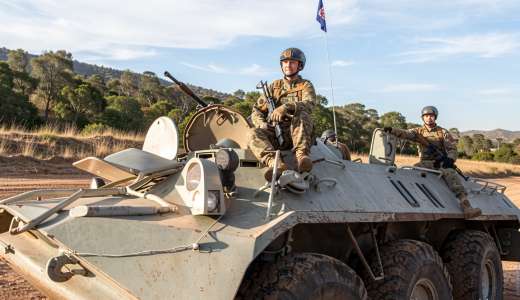
As the government intensified its campaign to dislodge gangs from urban strongholds, civilians increasingly found themselves in the path of operations designed to target armed groups. More than 800 people were killed or injured during security-force actions in the quarter. Those operations have grown more technologically complex, increasingly incorporating explosive drones deployed by a joint task force composed of Haitian police officers and personnel from a foreign private military company. At least 95 of the casualties recorded in that category were civilians with no known affiliation to any gang.
The report further noted that nine civilians, including six children, were killed or wounded in specific incidents where the distinction between combatants and bystanders broke down entirely.
What Comes Next
The convergence of facts in this quarter’s data — geographic spread of gang activity, rising civilian casualties from state operations, and the persistent undercounting of sexual violence — points to a security environment in which neither the government’s kinetic campaign nor the gangs’ territorial ambitions have produced a stable equilibrium. For communities like Kenscoff, already battered by repeated incursions, the message is stark: the front line of Haiti’s internal conflict is no longer fixed, and the next strike may come from any direction.
Related Reading
Frequently Asked Questions
What is Haiti ramps up the fight against?
Haiti ramps up the fight against is the main topic of this guide. The article explains the context, practical details, and next steps readers should understand.
Why does Haiti ramps up the fight against matter?
Haiti ramps up the fight against matters because readers are looking for a useful answer, not just a short summary. Good content should match search intent and help them decide what to do next.