Twelve Months of Grief, One Day of Recognition: Syria’s Women Who Refuse to Forget
Provpnmatrix.com – Every year on 19 December, the United Nations will mark a date set aside specifically for women who spend years — sometimes decades — searching for relatives swallowed by conflict, detention, or state machinery. The General Assembly adopted that designation on Monday, and for the women of Syria, whose families have been scattered across a decade-plus of civil war, the resolution lands as both validation and an unfinished promise.
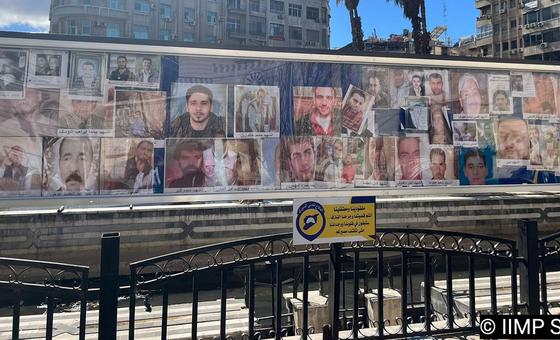
The scale of Syria’s missing-persons crisis defies easy comprehension. Estimates from the Independent Foundation for Missing Persons in Syria place the number of unaccounted-for individuals somewhere between 130,000 and 300,000. Those figures encompass soldiers, civilians, journalists, and political detainees whose last known location is a checkpoint, a courthouse, or a prison corridor. For the families left behind, the absence is not a single event but a continuous wound, reopened daily by unanswered questions.
A Mother’s Decade of Searching
Yasmin Al-Mashaan lost five brothers during the Syrian conflict. Three were killed — two during peaceful demonstrations, one by a sniper loyal to the former Bashar Al-Assad government. Two were forcibly disappeared, their fates sealed behind closed doors. It was not until she stumbled upon a photograph of her brother Uqba among the so-called “Caesar photos” that the abstract grief sharpened into a mission. That cache of images, smuggled out of Syria in 2013, documented the deaths of thousands held in government custody and became one of the most significant pieces of evidence in the country’s transitional-justice record.
“I took it upon myself to seek the truth for all the victims who do not know the fate of their loved ones.”
Al-Mashaan now serves with Syria’s National Commission for Transitional Justice, one of the bodies tasked with documenting abuses and pursuing accountability in the post-Assad era. She also founded the Caesar Families Association, a network uniting families of enforced-disappearance victims across Syria. Her work has made her one of the country’s most prominent advocates in the missing-persons file, and she was present at UN Headquarters on Monday when the resolution was adopted.
“All the resilience and sacrifices made have been honored by recognising the right of women to search for their loved ones,”
she told UN News, framing the Assembly’s decision not as a symbolic gesture but as a formal acknowledgment of a right long denied.
The Weight of Sednaya
For Amina Khoulani, the search began before the revolution ever took shape. In 2003, she was arrested alongside her husband and four brothers by the Assad regime. While she, her husband, and one brother were eventually released, the remaining three family members were executed at Sednaya prison — the sprawling detention complex on the outskirts of Damascus that became synonymous with enforced disappearance. Khoulani fled Syria, settling first in Lebanon and later in the United Kingdom, where she continued her advocacy from exile.
“At the beginning of the Syrian revolution, I became involved in the human rights struggle, and as a result of this involvement, my husband, my four brothers and I were arrested and imprisoned in the regime’s prisons.”
Khoulani, a member of the Syrian National Commission for Missing Persons, helped establish the first association of Syrian women dedicated to searching for missing relatives. For her, the new Assembly decision carries a specific political weight: it formally rejects the notion that women’s roles in conflict and aftermath are peripheral.
“An affirmation that the role of women was not a secondary role, but rather a truly active role.”
From Damascus to Washington: A Universal Grief
The search for the missing is not confined to Syria. Debra Tice, mother of American journalist Austin Tice — kidnapped in Syria in 2013 and never seen again — traveled to New York for the vote. She spoke to the particular, corrosive pain mothers endure when a loved one vanishes without explanation, without a body, without a date to mark.
“Hold onto your desire to find them and to know exactly where they are.”
She urged every searcher, wherever they stand, to keep the question alive.
“The best thing one could hope for is to embrace them again, if that is possible, if they are found, if they can get out of somewhere and return to the arms of their loved ones.”
Hope as a Political Act
Ambassador Ibrahim Al-Ulabi, Syria’s Permanent Representative to the United Nations, closed the day’s proceedings by reframing the narrative around resilience rather than solely around suffering. He acknowledged that Syrian women involved in searching for the missing have carried enormous burdens and undertaken a task of staggering difficulty.
“We do not just want to remember the suffering, we also want to recall the resilience and efforts made. And we hope, as we move forward in this new chapter of Syria’s history, to also recall hope.”
The designation of 19 December does not close any file. It does not open a single prison door or locate a single body. What it does is place the act of searching — performed overwhelmingly by women, in Syria and beyond — onto the international calendar as a recognized right rather than a private grief. For Al-Mashaan, for Khoulani, for Tice, and for the hundreds of thousands of families still waiting, that recognition is a starting point, not a destination. The search, as they have insisted for years, continues.
Related Reading
Frequently Asked Questions
What is Don t give up?
Don t give up is the main topic of this guide. The article explains the context, practical details, and next steps readers should understand.
Why does Don t give up matter?
Don t give up matters because readers are looking for a useful answer, not just a short summary. Good content should match search intent and help them decide what to do next.