Food Convoy Wiped Out in South Kordofan as Sudan’s War Continues to Target Humanitarian Logistics
Provpnmatrix.com – Sudan – Two fully loaded trucks carrying emergency food supplies were reduced to wreckage in an aerial strike outside the town of Dilling, South Kordofan state, Sudan, on 30 August. The World Food Programme confirmed on Wednesday that the attack obliterated 50 metric tonnes of staple commodities—cereals, yellow split peas, vegetable oil, and salt—that had been earmarked to sustain roughly 5,800 people for an entire month. The vehicles bore the agency’s banners and flags, marking them unmistakably as humanitarian assets en route to the state capital, Kadugli.
A Pattern of Escalating Violence Against Aid Infrastructure
The incident is not an isolated event. Since January of this year, WFP has documented eight separate aerial strikes that have damaged its facilities and interrupted delivery operations across Sudan. Each episode strips communities already on the brink of starvation of their narrow window of relief, forcing agencies to reroute convoys, rebuild storage sites, and absorb costs that were never budgeted for a war zone of this scale.
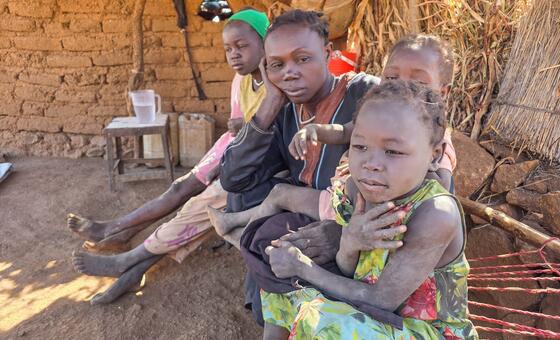
South Kordofan sits in the southern reaches of Sudan, sharing a porous border with South Sudan. The state has long been a corridor for displaced families fleeing fighting further north, and its markets and roads have become critical arteries through which international agencies move grain, cooking oil, and therapeutic supplements. When those arteries are struck from above, the downstream effect is immediate: families in Kadugli, where WFP currently supports close to 58,000 people at emergency or worse levels of food insecurity, find their next scheduled delivery simply gone.
The Broader Conflict and Its Human Toll
The strikes come amid a war that has consumed Sudan since April 2023, when the Sudanese Armed Forces and the Rapid Support Forces—once allied under General Abdel Fattah al-Burhan and General Mohamed Hamdan Dagalo—turned on one another in a contest for control of Khartoum and, ultimately, the country. What began as a power struggle between two military camps has metastasized into a full-scale civil war with regional dimensions, drawing in allied militias, displacing millions, and collapsing the state’s capacity to feed its own population.
By last year’s count, approximately 30 million Sudanese required some form of humanitarian assistance—a figure that places the country among the largest displacement and food-crisis emergencies on the planet. The war has shattered supply chains, emptied grain silos, and pushed staple-food prices beyond the reach of most households. In states like South Kordofan, where agricultural output has been disrupted by both fighting and the collapse of fuel and fertilizer markets, external food aid is not a supplement to local production; it is the sole lifeline for tens of thousands.
WFP’s Response and the Question of Accountability
The agency issued a strong condemnation of the Dilling strike, describing it as the latest illustration of the increasingly hostile operating environment confronting it and other humanitarian organizations working inside Sudan. In a statement released Wednesday, WFP called on every party to the conflict to respect international humanitarian law by safeguarding civilians, aid personnel, and humanitarian assets.
“Attacks on aid workers and humanitarian operations are unacceptable and must stop,” WFP said, urging all sides to uphold international humanitarian law by protecting civilians, aid workers and humanitarian assets.
The appeal lands against a backdrop of repeated UN calls for an end to the war. Diplomatic efforts—mediated through the African Union, the Intergovernmental Authority on Development, and various bilateral channels—have yet to produce a durable ceasefire. Meanwhile, the physical infrastructure of aid delivery continues to degrade: warehouses are hit, convoys are ambushed, and staff are killed or injured. Each loss narrows the already constrained corridor through which grain and oil can reach the people who need them.
What the Destruction Means on the Ground
Fifty metric tonnes of mixed staples, in practical terms, translates into daily rations for nearly six thousand individuals over thirty days. For a family of five in a Kadugli displacement camp, that is roughly one month of cereal porridge, cooking oil for a handful of meals, and the salt needed to make those meals palatable and nutritionally adequate. When that month vanishes in a single airstrike, the gap must be filled from reserves that are themselves finite, or from new procurement cycles that take weeks to arrange. In the interim, children face skipped meals, therapeutic feeding programs lose continuity, and the clinical deterioration that follows—wasting, micronutrient deficiency, increased susceptibility to infection—becomes harder to reverse.
The marked nature of the trucks underscores a point that international humanitarian law makes explicit: assets clearly identified as belonging to a neutral relief agency are to be spared. Their destruction, whether by deliberate targeting or by the collateral effects of imprecise munitions, erodes the very distinction between combatant and civilian that the law exists to protect. For the families in South Kordofan waiting for a delivery that will now arrive weeks late, the abstraction of legal principle collapses into a very concrete question: what will they eat tomorrow?
Related Reading
Frequently Asked Questions
What is Sudan?
Sudan is the main topic of this guide. The article explains the context, practical details, and next steps readers should understand.
Why does Sudan matter?
Sudan matters because readers are looking for a useful answer, not just a short summary. Good content should match search intent and help them decide what to do next.