Survival by Degrees: Gaza’s Women-Headed Households Navigate Daily Impossibility
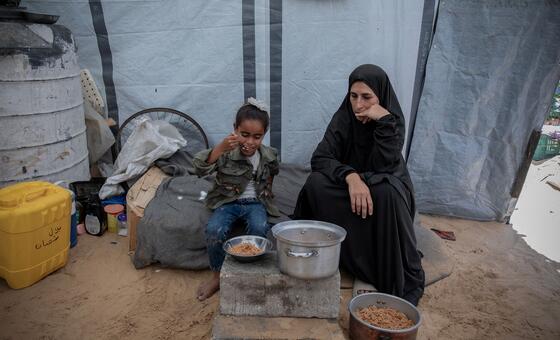
Provpnmatrix.com – In the rubble-strewn streets of Gaza, a quiet but devastating demographic shift has taken hold. Nearly one in four households across the enclave is now led by a woman — an estimated 86,290 families — a figure that represents roughly double the share recorded before October 2023. Behind each of those numbers sits a mother, widow, or eldest daughter making split-second calculations about which child eats first, whether to spend scarce cash on water or medicine, and how to keep a family alive when the ground beneath them may be struck at any hour.
UN Women’s Sofia Calltorp, who heads the agency’s humanitarian action division, described the situation to journalists in Geneva on Tuesday, framing the daily reality of these women as a series of “impossible decisions” forced upon them by ongoing Israeli airstrikes and persistently scarce resources.
A Ceasefire That Has Not Stopped the Killing
The data arrives eleven months after a ceasefire agreement was struck between Hamas fighters and Israel. Yet the truce has done little to quiet the sky. Since October 2025, Israeli air bombardment and ground operations have claimed the lives of 246 Palestinian women and girls in Gaza.
“This is equivalent to six women and girls killed every week between October 2025 and 28 July 2026,” Ms. Calltorp said.
The broader casualty picture, as tallied by Gazan health authorities and relayed through the UN Office for the Coordination of Humanitarian Affairs (OCHA), stands at 1,303 fatalities and 4,336 injuries since the ceasefire took effect. Exchanges of fire continue despite the agreement, and humanitarian corridors remain constrained by insecurity and military operations.
Names Behind the Statistics
Among those lost in the post-ceasefire period are individuals whose stories underscore how indiscriminate the violence remains. Raghad Ashour, eighteen years old, was killed in an Israeli strike while walking to her eleventh-grade high school examination in Gaza City. Dina Almadhoun, thirty-one, died in a separate strike also in Gaza City. A six-year-old girl was killed when a helicopter strike hit an encampment housing displaced families in the Mawasi area of Khan Younis.
“Killed in an Israeli strike on her way to her 11th grade high school exam in Gaza City,” Ms. Calltorp recounted of Ashour.
Displacement, Shelter Collapse, and the Shrinking Map
The war that erupted following Hamas-led terror attacks on Israel in October 2023 has left the vast majority of Gaza’s roughly 2.1 million residents displaced. Palestinians are now confined to less than forty percent of the Gaza Strip, as Israeli authorities continue to restrict civilian movement beyond demarcated zones known as the “Yellow” and “Orange” lines.
When the Yellow Line was first drawn following the ceasefire, it enclosed approximately fifty-three percent of the territory. Subsequent expansions of military control have pushed that figure lower, leaving around two-thirds of Gaza either entirely inaccessible or subject to severe access restrictions. Civilians are funneled into crowded, unsafe pockets where infrastructure has been reduced to fragments.
More than half the population — fifty-eight percent, by OCHA’s assessment — faces critical or catastrophic shelter needs. Women who head households are disproportionately affected: UN Women’s analysis indicates they are likelier than male-headed families to lack adequate shelter, food, and cash. They are also more likely to have been displaced or to have had their homes destroyed outright.
“They are also more likely to be displaced or have their home destroyed,” Ms. Calltorp stressed.
Humanitarian Access Under Siege
Across the enclave, access to food, drinking water, hygiene supplies, and essential services remains what Calltorp described as “severely limited.” Restrictions on humanitarian convoys, persistent insecurity, and continued bombardment compound the crisis for families already stretched beyond endurance.
“There are restrictions on humanitarian access, insecurity and continued Israeli bombardment,” she explained. “Women heading households are every day forced to make impossible decisions on how to allocate scarce resources, how to access assistance and simply ensure the survival of those in their care.”
The implications extend beyond immediate survival. When women bear sole responsibility for household provisioning under conditions of near-total resource scarcity, the psychological toll compounds material deprivation. Children’s schooling is interrupted, chronic conditions go untreated, and intergenerational knowledge of coping strategies — often passed through extended family networks — is severed when those networks are scattered across displacement camps or lost entirely.
A Call for Full Implementation
UN Women closed its briefing with a direct appeal: the ceasefire must be implemented in full effect, humanitarian assistance must reach those in need at scale and without obstruction, and programming must be built around the specific needs of women and girls, including those heading households.
“Responding to the realities faced by all women-headed households is essential to ensuring that women are seen, counted, empowered and supported,” the agency stated.
For the 86,290 women now steering households through a landscape of craters, checkpoints, and ration lines, the question is no longer whether aid arrives in time. It is whether the architecture of protection — legal, logistical, and political — will hold long enough for the next impossible choice to become, at last, a survivable one.
Related Reading
Frequently Asked Questions
What is In Gaza women headed households face?
In Gaza women headed households face is the main topic of this guide. The article explains the context, practical details, and next steps readers should understand.
Why does In Gaza women headed households face matter?
In Gaza women headed households face matters because readers are looking for a useful answer, not just a short summary. Good content should match search intent and help them decide what to do next.