Syria’s Post-War Path Demands Justice, Inclusion, and Institutional Reform, UN Investigators Urge
Provpnmatrix.com – Geneva — Nearly two years after the collapse of Bashar al-Assad’s decades-long rule, Syria’s fragile transition toward democratic governance faces its most critical test: whether the new authorities can deliver accountability for a decade of atrocities while simultaneously building institutions that protect every citizen. That was the central message delivered Tuesday by the UN Independent International Commission of Inquiry on the Syrian Arab Republic as it briefed the Human Rights Council in Geneva.
The Commission, whose members serve without salary and are not UN staff, was established by the President of the Human Rights Council in the wake of unrest that erupted in March 2011 and spiralled into a civil war lasting more than ten years. Its mandate requires it to examine every alleged violation of international human rights law committed since that date. In its latest update, the panel struck a tone of cautious optimism tempered by pointed warnings.
Progress Acknowledged, but Gaps Remain
The investigators commended the Syrian government and its citizens for concrete steps taken since the regime’s fall, including the creation of a legislative body and a constitutional court — institutions that did not exist under the Assad dictatorship. Yet the Commission stressed that constructing rights-respecting state machinery while confronting the weight of past massacres, disappearances, and systemic repression is an inherently complex undertaking.
A particular concern was the narrow scope of judicial proceedings to date. The panel welcomed ongoing dialogue with the authorities but cautioned that the small number of trials conducted so far falls far short of what justice demands for a population that endured systematic abuses across every governorate.
“Comprehensively addressing not only past but also recent violence is an essential step for reconciliation,” said Commissioner Monia Ammar, pointing to violence on the coast and western Syria in early 2025, in Sweida in July 2025, and following hostilities in January with the Kurdish-backed Syrian Democratic Forces (SDF).
Ammar added that many hundreds of people remain reported missing, a figure that underscores how incomplete the truth-finding process still is.
Israeli Military Activity on Syrian Territory
A substantial portion of the briefing was devoted to what the Commission described as an expanding Israeli military presence inside Syria. Operations cited include ground incursions, patrols, raids, and searches that have triggered displacement of local populations. As of September, Israeli forces had detained 49 individuals within Syrian territory, including two children, some of whom are being held incommunicado.
“We are deeply alarmed by violations of human rights and international humanitarian law by Israel on Syrian territory, which may amount to war crimes,” said Commissioner Fionnuala Ní Aoláin.
The Commission characterised the activity as “increasingly sustained and entrenched,” signalling a shift from sporadic cross-border strikes to a more permanent operational footprint.
Northeast Syria: Hostilities, Camps, and Mass Transfers
The panel also detailed its investigation into alleged violations during the January clashes between government forces and the SDF, including reported killings of detainees. Separately, the deteriorating conditions at detention camps holding individuals alleged to have ties to ISIL (also known as Da’esh) drew sharp criticism.
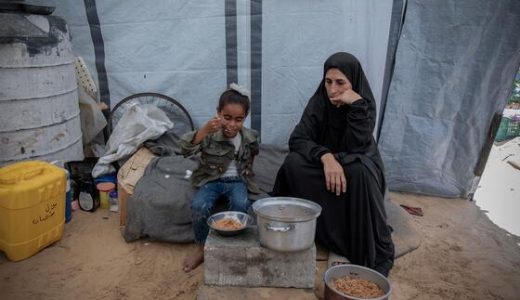
The Commission renewed its call for the immediate closure of the Al Rawj camp, which shelters more than 2,000 people — predominantly women and children — and urged that all foreign nationals held there be repatriated to their countries of origin. More than 100 foreign children remain detained in the northeast, some since 2019, raising questions about indefinite detention and family reunification.
Perhaps the most striking figure presented was the “mass forcible transfer” earlier this year of more than 5,700 men and boys to Iraq by United States forces. The group reportedly represented over 60 nationalities, including Syrians, and the Commission voiced deep concern over the circumstances of the operation.
Broader Rights Challenges
Beyond the military and detention issues, the investigators catalogued a range of ongoing human rights challenges: insufficient accountability mechanisms, a fragile civic space, the political and economic aftershocks of conflict, gender-based harms, continued instability in Sweida, and post-conflict detention practices in the northeast. Other concerns included reported deaths in custody, arrests of activists, persistent hate speech and online harassment, and threats of violence directed at women, with particular attention to women activists.
A Call to the International Community
In closing, the Commission affirmed that the Human Rights Council and the broader international community bear a vital responsibility in supporting Syria’s efforts to entrench respect for fundamental rights. The panel underlined its own commitment to accompanying the country through its transition.
“Syria can fulfill the aspirations of its people if it manages to break the legacies of past violence and advances solid foundations to prevent recurrence based on respect for fundamental human rights,” said Ms. Ammar.
For a nation emerging from one of the longest and most destructive civil wars of the twenty-first century, the message is unambiguous: institutional reform without accountability will not hold, and accountability without inclusion will not last. The next phase of Syria’s transition will be measured not by the existence of a parliament or a court on paper, but by whether those bodies can reach into the past, answer the families of the disappeared, and guarantee that the patterns of the previous decade are rendered structurally impossible.
Related Reading
Frequently Asked Questions
What is Syria s transition hinges on justice?
Syria s transition hinges on justice is the main topic of this guide. The article explains the context, practical details, and next steps readers should understand.
Why does Syria s transition hinges on justice matter?
Syria s transition hinges on justice matters because readers are looking for a useful answer, not just a short summary. Good content should match search intent and help them decide what to do next.