When hunger and hemorrhagic fever collide in eastern Congo
Provpnmatrix.com – The fastest Ebola outbreak ever recorded has turned eastern Democratic Republic of the Congo into a zone where two crises reinforce each other in a vicious loop: people who cannot eat are far less able to follow the isolation and hygiene protocols that slow transmission, and people trapped in displacement camps have nowhere to go when symptoms appear. The World Food Programme has now made explicit what many field workers have long understood — that a purely medical response to the current epidemic will fail unless adequate nutrition reaches the same communities.
The programme’s Country Director for the DRC, David Stevenson, framed the issue plainly in recent remarks: Ebola is unquestionably a health emergency, yet the geography of this outbreak overlaps almost perfectly with decades of armed conflict, chronic food insecurity, and mass displacement. A response that treats only the virus, he argued, ignores the conditions that make the virus so lethal in this particular corner of Central Africa.
A strain with a history of speed
The present epidemic, declared on 15 May, is driven by the Bundibugyo species of Ebola virus — a variant that has appeared only a handful of times since the genus was first identified roughly five decades ago. Its pace has been extraordinary: more than 5,500 confirmed cases and 2,642 deaths were logged within the first 100 days alone, a trajectory that has outstripped the capacity of treatment infrastructure in the affected provinces.
Eastern DRC is not new to Ebola. Since the virus was first isolated in the region about fifty years ago, the country has endured seventeen distinct outbreaks. Ituri province, now the epicentre of the current wave, has also been a persistent theatre of inter-communal and armed-group violence, meaning that many residents have experienced repeated displacement, interrupted agriculture, and severed supply chains long before the first case was confirmed this year.
Nutrition as a clinical intervention
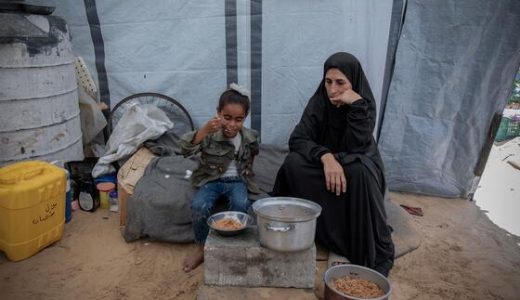
Stevenson’s central argument is that caloric intake is not a peripheral welfare concern but a determinant of whether households can comply with the behavioural changes Ebola demands — staying home during incubation, avoiding contact with the sick, attending vaccination sessions, and maintaining the hygiene routines that break transmission chains.
“If you can’t feed your family, it’s pretty difficult to adhere to health protocols, which is so necessary now.”
He elaborated that asking displaced families to alter deeply ingrained daily behaviours while they face empty plates is, in his words, a proposition that “is not going to work.” The epidemic is advancing faster than the response can scale, which means the underlying vulnerabilities — malnutrition, lack of shelter, absence of clean water — must be addressed simultaneously with the medical campaign.
“People changing their behaviours, people becoming more compliant to what is needed in the response of Ebola without the basic means to feed themselves is not going to work.”
The IPC scale and what it signals
Stevenson has visited Ituri and reported that more than 500,000 people in the province are classified at IPC Phase 4 — the second-highest rung on the Integrated Phase Classification scale used by humanitarian agencies to grade acute food insecurity. Phase 4 indicates that households are consuming almost nothing, selling assets, or relying on emergency relief to survive. In practical terms, these families have no buffer against an additional shock, whether that shock is a market disruption, a displacement event, or a viral illness that removes a breadwinner from work for weeks.
Reaching the unreachable
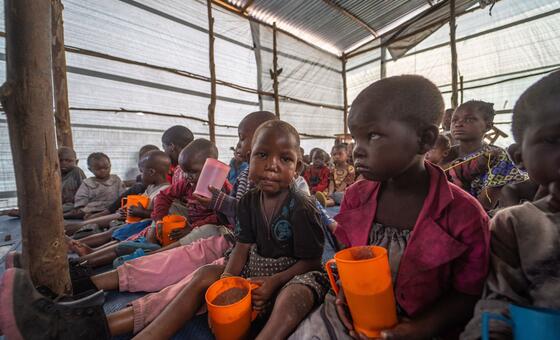
The logistical challenge of delivering food to the communities most at risk is severe. Roads in the affected eastern provinces are frequently impassable, particularly during the rainy season, and many target villages are accessible only by footpath or small aircraft. Stevenson acknowledged the difficulty but insisted that WFP logistics teams consistently find routes to deliver rations, even when the terrain appears forbidding.
WFP’s DRC Ebola operation ranks among the agency’s largest global deployments, sitting alongside its programmes in Ukraine, the Gaza Strip, Sudan, and South Sudan. The scale of the operation underscores both the urgency and the resource gap: the agency is asking for substantially increased financial backing to expand both the number of Ebola treatment centres and the volume of food assistance reaching remote rural areas.
“I’m stunned that we don’t have the response from the international community directly supporting the food assistance that’s needed so that collectively we can end Ebola.”
Stevenson described the international funding environment as one of apparent indifference relative to the scale of the emergency. Given the mortality figures and the speed of spread, he said it is incumbent on him to make the appeal with maximum clarity and urgency.
“Given the level of the challenge that’s out there, it’s really incumbent on me to be very clear with such an appeal, and we’re asking for support now.”
What recovery looks like when nutrition is present
During a recent visit to an Ebola treatment centre in the affected zone, Stevenson witnessed a patient being discharged after full recovery. The woman, he recalled, “let out this amazing smile” as she prepared to return home. The centre’s medical head explained that her survival was attributable not only to the clinical care she received but also to the nutritional support provided alongside treatment — adequate calories, protein, and micronutrients that allow the immune system to mount an effective response.
“Obviously, this woman who had recovered from Ebola recovered not only because of the medical care she received, but also because of good nutrition, because of food support, which is essential collectively for individuals affected.”
Stevenson drew a direct line from that single recovery to the broader strategy: the same logic that sustains one patient in a treatment bed applies to an entire province. A comprehensive programme that pairs medical intervention with food assistance is, in his assessment, now better recognised by the international community but still badly under-resourced. The gap between recognition and funding, he implied, is where lives are being lost.
The practical implication for donors and multilateral bodies is straightforward. Every additional treatment centre built in Ituri and neighbouring provinces must be accompanied by a parallel expansion of food distribution capacity, or the centres will fill with patients who arrived too late because their households could not sustain them through the incubation period. The epidemic’s speed leaves little time for phased rollouts; the combined health-and-nutrition package must scale simultaneously across the affected eastern provinces.
Related Reading
Frequently Asked Questions
What is Ebola response in eastern DR Congo?
Ebola response in eastern DR Congo is the main topic of this guide. The article explains the context, practical details, and next steps readers should understand.
Why does Ebola response in eastern DR Congo matter?
Ebola response in eastern DR Congo matters because readers are looking for a useful answer, not just a short summary. Good content should match search intent and help them decide what to do next.