IAEA opens Vienna conference with focus on safety, verification and nuclear cooperation
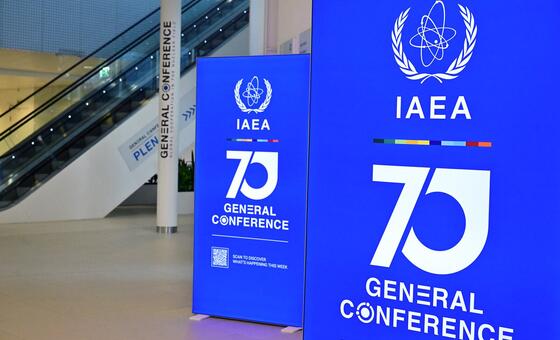
Provpnmatrix.com – The International Atomic Energy Agency began its 70th General Conference in Vienna on Monday with a call to protect nuclear safety, strengthen international verification and expand access to peaceful nuclear technology. The annual gathering, expected to draw roughly 4,000 participants during the week, comes at a time when armed conflict, energy needs and concerns over nuclear proliferation are placing unusual pressure on the global system.
Rafael Mariano Grossi, the IAEA Director General, said the agency continues to find purpose in a shared commitment among specialists, governments and international partners despite the tensions shaping world affairs. He pointed to work carried out far from the spotlight: cancer experts training oncologists in Africa, technical teams working to reduce the risk of a nuclear emergency in Ukraine, and inspectors conducting verification activities.
“We are stubbornly optimistic that we are going to get that done as well.”
Ukraine and Iran remain central concerns
Nuclear safety in Ukraine remains one of the most urgent matters before the agency. Grossi highlighted a seventh locally negotiated ceasefire around the Zaporizhzhia nuclear power plant, arranged with the cooperation of Moscow and Kyiv. The pause made it possible to undertake essential repairs after the plant’s external electricity supply had been interrupted for the tenth time in June.
Reliable off-site power is critical for a nuclear power plant because it supports systems needed to maintain safety. The repairs therefore represented an important measure to lower the chance of an accident at Europe’s largest nuclear power station, even as the wider conflict continues.
Grossi also addressed Iran’s nuclear programme, acknowledging the country’s difficult security environment while emphasizing the importance of continuing safeguards work. The IAEA’s verification role is intended to provide assurance that nuclear activities remain exclusively peaceful. He warned that lasting predictability, confidence and trust will be difficult to achieve without renewed cooperation.
Syria was also cited as an example of why multilateral institutions remain important. Verification of Syria’s compliance with nuclear safeguards obligations, Grossi said, shows how the IAEA and the United Nations can help move difficult issues toward more normal and manageable conditions.
A growing role for peaceful nuclear energy
Alongside the immediate security challenges, the conference heard a more optimistic assessment of nuclear energy’s future. Grossi said many countries, including developing nations, increasingly see nuclear power as part of their economic development and energy-planning strategies.
Updated projections indicate that worldwide nuclear generating capacity could rise to more than three times its current level by 2060. Countries are looking for ways to meet increasing demand for electricity while improving energy security, and nuclear generation is gaining renewed attention within that discussion.
The potential growth presents practical questions as well as opportunities. New nuclear programmes require trained personnel, sound regulatory systems, safety culture and the ability to manage technology responsibly over the long term. Grossi said the IAEA supports member states through training, capacity-building and transfers of nuclear technology designed to help countries participate on a more equal footing.
He also noted emerging areas where nuclear energy may be considered. The rapid spread of artificial intelligence has increased interest in the energy needs of data centres, while shipping accounts for 80 per cent of global trade and is another sector examining future energy options. These developments underline why safety rules, safeguards and international technical cooperation will remain central as nuclear technologies evolve.
Health, disease control and environmental work
The IAEA’s work reaches far beyond electricity production and inspections. Grossi highlighted cooperation in cancer treatment, efforts to address zoonotic diseases and programmes related to environmental protection. Nuclear science can be used in medicine, agriculture, water management and other civilian fields when supported by appropriate expertise and oversight.
For countries building their scientific and medical capacity, access to equipment alone is not enough. Training for doctors, technicians, regulators and researchers can determine whether nuclear applications deliver lasting public benefits. The agency’s technical cooperation work is intended to help make those benefits more widely available.
Grossi described the breadth of the IAEA’s mission as uniquely valuable and urged member states to sustain their backing for the organization. Its responsibilities combine highly sensitive security-related work with technical assistance intended to improve health, development and resilience.
UN calls for funding and cooperation
United Nations Secretary-General António Guterres said the conference was taking place during a period of deep international turbulence and uncertainty. His message was delivered by Monica Juma, Director-General of the United Nations Office at Vienna.
Guterres warned that attacks involving nuclear facilities are becoming more frequent, while factors driving proliferation are accelerating as safeguards come under strain. At the same time, he said the world stands near a major transformation in nuclear power generation, one that must be managed carefully and monitored closely.
“More than ever, our world needs the IAEA’s professionalism, impartiality, and technical excellence.”
The Secretary-General called on member states to cooperate fully with the agency in verifying the peaceful character of Iran’s nuclear programme and in its efforts to prevent a disaster at Zaporizhzhia. He also urged governments to provide reliable, sustainable financing for the IAEA Technical Cooperation Fund, which helps developing countries access peaceful nuclear applications.
The week in Vienna will bring delegates together to debate policy, review the agency’s work and consider how international cooperation can respond to a changing nuclear landscape. The central message from the opening session was that technical competence, impartial verification and sustained diplomatic engagement remain essential when the consequences of failure can extend far beyond national borders.
Related Reading
Frequently Asked Questions
What is IAEA chief underscores commitment to nuclear?
IAEA chief underscores commitment to nuclear is the main topic of this guide. The article explains the context, practical details, and next steps readers should understand.
Why does IAEA chief underscores commitment to nuclear matter?
IAEA chief underscores commitment to nuclear matters because readers are looking for a useful answer, not just a short summary. Good content should match search intent and help them decide what to do next.